
Nest vs Ecobee 2026: Best Smart Thermostat for Manhattan
As New York City heads into another summer, Manhattan homeowners face a familiar question: how do you keep a luxury apartment comfortable without watching energy costs spiral out of control? The answer increasingly starts with one decision - which smart thermostat belongs on your wall.
The Nest and Ecobee have dominated the smart thermostat market for years, but choosing between them for a Manhattan apartment is not as simple as reading a standard consumer review. Pre-war fan coil units, co-op board restrictions, multi-zone systems, and the unique demands of Con Edison billing all factor into which device will actually deliver the energy savings these brands promise.
This guide cuts through the marketing to give Manhattan homeowners a clear, practical comparison - covering features, energy savings data, installation considerations, and which thermostat is the better fit for different apartment types. If you are planning a broader renovation that includes smart home integration, KS Renovation Group can help you choose and install the right system as part of a comprehensive upgrade.
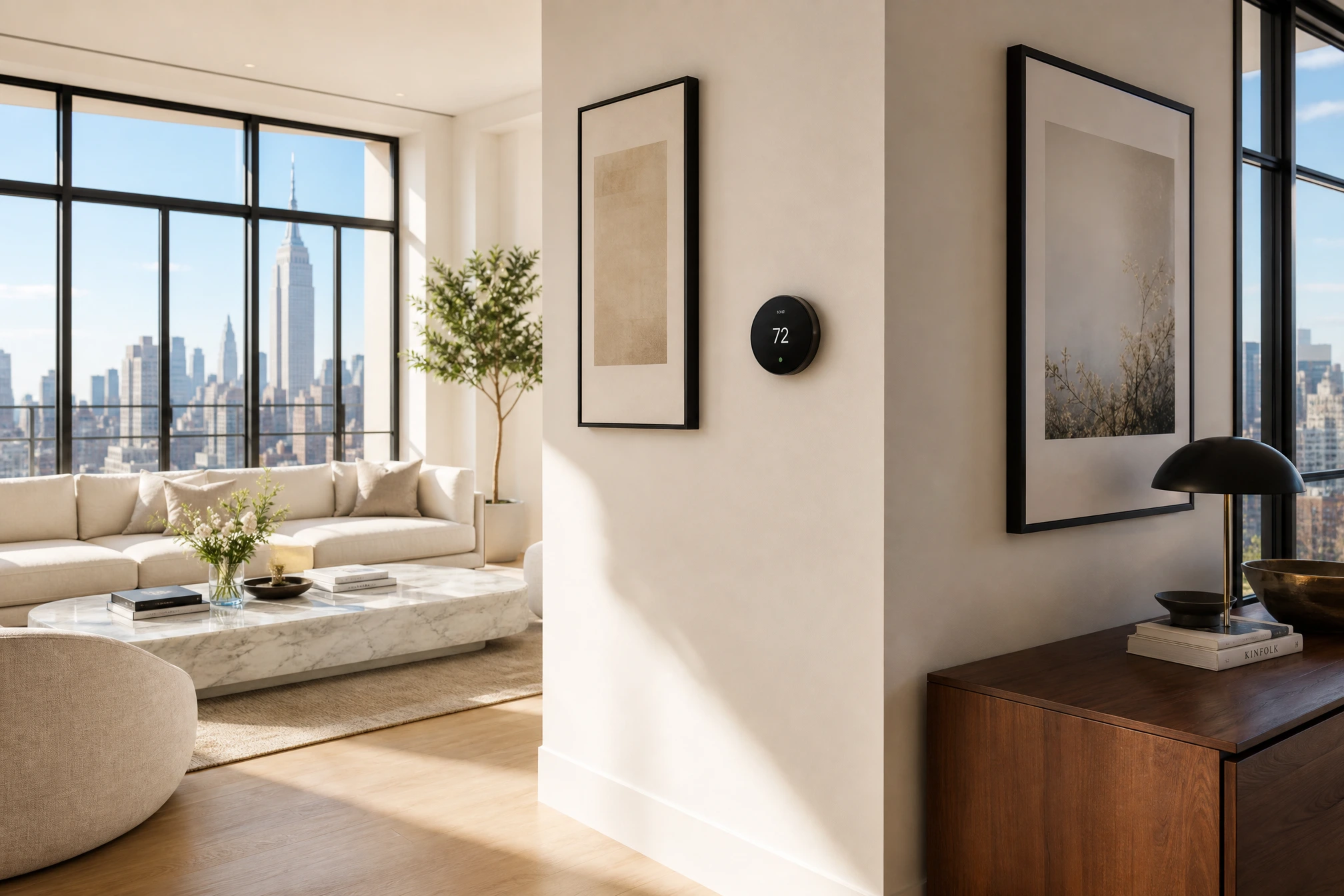
Why Your Thermostat Choice Is Different in Manhattan
The Manhattan HVAC Challenge
Most thermostat reviews assume a single forced-air system serving an entire home. Manhattan apartments rarely work that way.
Pre-war buildings - which make up a significant share of Manhattan’s co-op and condo stock - were built with steam radiator heat, a system that runs at building-wide pressure and cannot be individually controlled by a standard smart thermostat. If your building uses steam heat, neither Nest nor Ecobee controls your radiators. What they can manage is your in-unit cooling and any supplemental heating system that uses standard thermostat wiring.
Post-war and modern condos are more likely to use fan coil units (FCUs) or central air managed by a building chiller system. In these cases, smart thermostats can be installed - but compatibility depends on specific wiring configurations. Newer construction with modern forced-air systems is the most straightforward installation scenario.
Before investing in either device, identify your HVAC system type. If you are uncertain, KS Renovation Group’s team can assess your apartment’s mechanical systems and advise on smart home integration options that make practical sense for your building.
What Your Co-Op or Condo Board Needs to Know
Most thermostat installations in Manhattan apartments do not require board approval - they are considered minor interior changes that fall within resident rights. However, if your installation requires any work beyond the thermostat itself - such as running new wiring, modifying the HVAC configuration, or connecting to building infrastructure - you may need to notify your management office or submit documentation under your alteration agreement.
For smart home overhauls that include thermostat installation alongside other upgrades, working with a contractor familiar with NYC co-op and condo protocols is essential. KS Renovation Group has managed board approvals and permits across Manhattan buildings and can guide you through what your specific building requires.
Why Energy Management Matters More in NYC
Con Edison’s electricity rates are among the highest in the nation. During summer peak demand periods, time-of-use pricing can significantly increase the cost of running central air conditioning during certain hours. A smart thermostat that learns your schedule and pre-cools your apartment before peak hours - then eases back during expensive windows - can generate meaningful savings in a way that a basic programmable thermostat cannot match.
Con Edison also offers rebates for qualifying smart thermostats, which can offset part of the device cost. Checking the current offers on their website before purchasing is worth the few minutes it takes.
Google Nest Thermostat 4th Gen: What Manhattan Homeowners Get
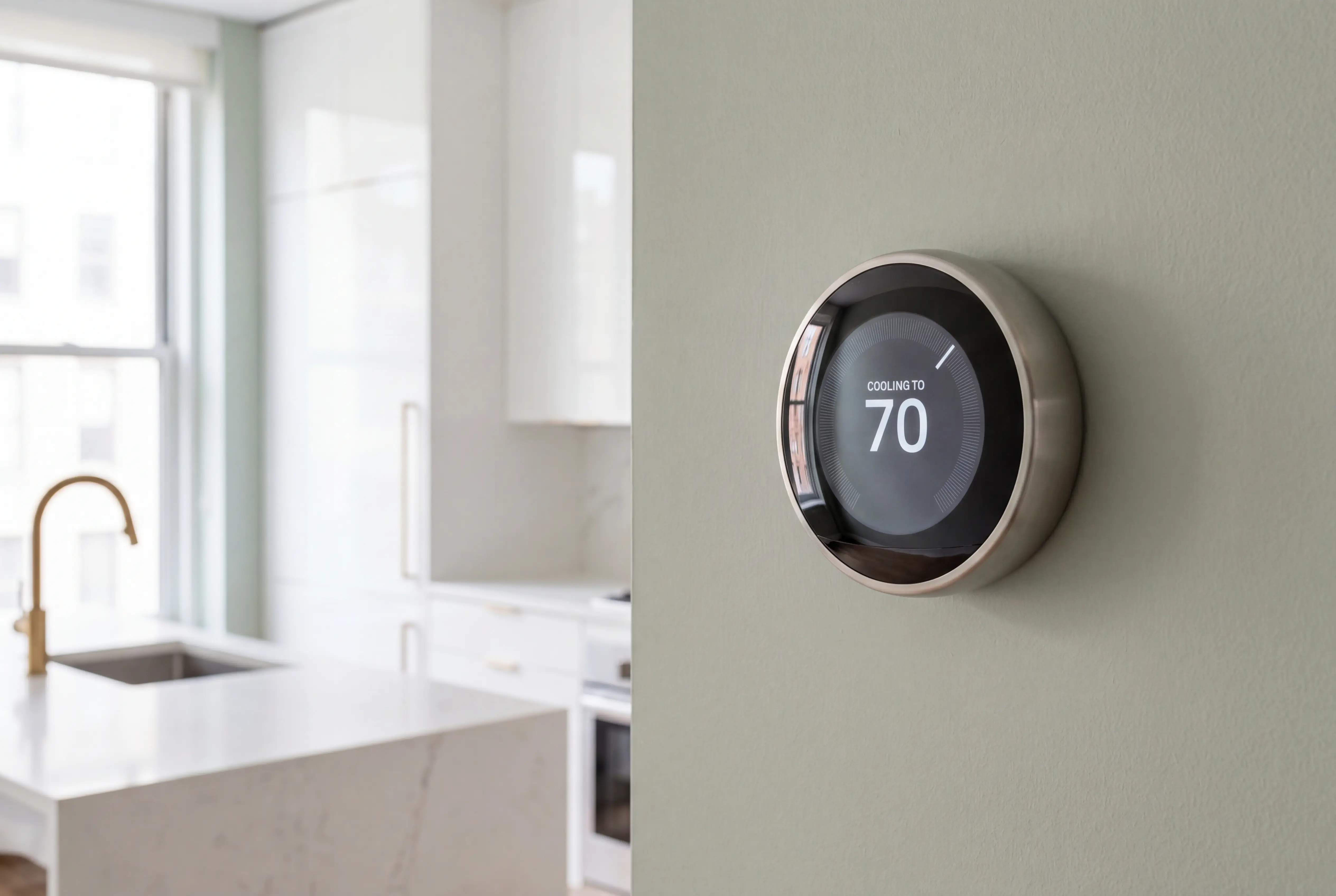
Learning Algorithm and Automatic Scheduling
The Nest’s signature feature is its learning algorithm. Over the first week of use, Nest observes when you adjust the temperature and builds a schedule around your patterns automatically. For Manhattan homeowners with consistent work schedules, this can be genuinely useful - the apartment is comfortable when you return and conserving energy when you are out, without manual programming.
The algorithm works best in single-person or dual-person households with predictable routines. If your household has variable schedules, or if the apartment is regularly used by different people - housekeepers, family members, guests - Nest’s learning can produce a schedule that does not always reflect actual needs. Manual override is always available, but the auto-learning feature is most powerful when routines are consistent.
Energy History and Con Edison Integration
Nest provides an Energy History feature in its app, showing how long heating and cooling ran each day and what factors - outdoor temperature, schedule changes, manual adjustments - affected consumption. For Con Edison customers, Nest integrates with the utility’s Rush Hour Rewards program, automatically adjusting your apartment’s temperature during peak demand events in exchange for bill credits.
This utility partnership is one of Nest’s most practical advantages for Manhattan homeowners. During a New York summer, participation in Con Edison’s demand response program can make a noticeable difference in monthly billing - and Nest handles enrollment and adjustments automatically.
Compatibility with NYC Apartment Systems
Nest is compatible with most forced-air systems and many fan coil unit configurations, but it requires a common wire (C-wire) for consistent power in many installations. Many older Manhattan apartments were not wired with a C-wire, which can complicate installation and may require additional wiring work.
Nest offers a Power Connector accessory designed to address C-wire limitations, but whether it works depends on your specific system. Having an experienced installer assess your wiring before purchase is the safest approach for pre-war and mid-century buildings.
Ecobee Smart Thermostat Premium: The Challenger
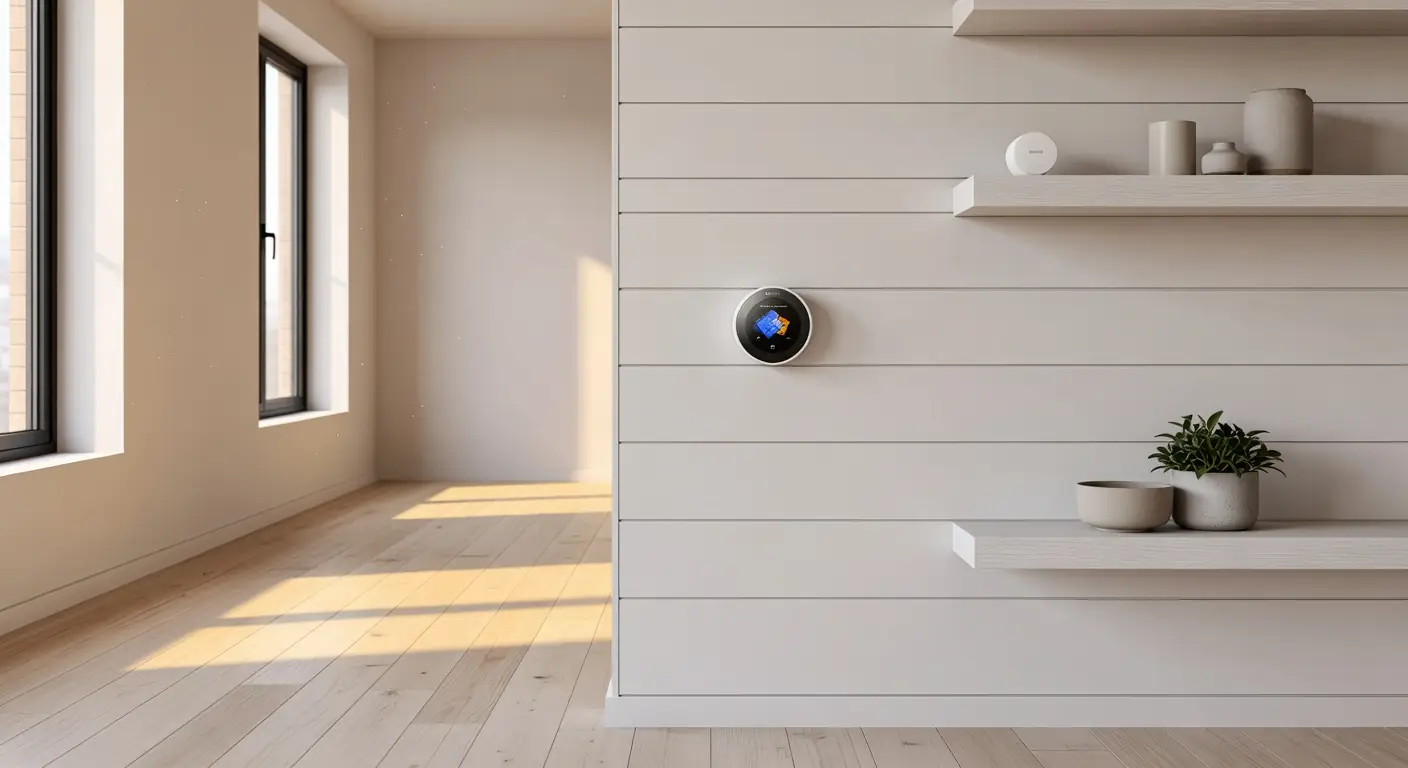
SmartSensors - The Game Changer for Larger Apartments
Ecobee’s most distinctive feature for Manhattan homeowners is its SmartSensor system. The Ecobee Smart Thermostat Premium includes one SmartSensor in the box, with additional sensors available separately. These sensors detect temperature and occupancy in individual rooms, allowing Ecobee to adjust comfort based on where people actually are - not just the temperature at the thermostat’s wall location.
In a Manhattan apartment, this matters considerably. If your thermostat is positioned in a hallway or central corridor, the reading there may not reflect conditions in bedrooms, a home office, or a south-facing living room that heats up in the afternoon. Ecobee’s ability to average temperatures across multiple sensors - and to prioritize rooms where occupancy is detected - addresses a genuine problem that single-point sensing cannot solve.
For larger apartments, lofts, or units where different rooms are used at different times of day, SmartSensor technology is a practical advantage worth the slight price premium.
Energy Reports and Utility Rebates
Ecobee provides detailed monthly energy reports and supports a range of utility demand response programs. Like Nest, Ecobee participates in Con Edison’s program and other NYC-area utility initiatives. Ecobee’s Home IQ report gives a more granular breakdown of system runtime, comparing your energy use against similar homes in your area - useful context for Manhattan homeowners trying to assess whether their HVAC is performing efficiently.
Ecobee devices carry Energy Star certification, which may qualify purchases for additional rebates beyond the standard smart thermostat program. Checking current Con Edison and Energy Star incentive stacking options before purchase can reduce your out-of-pocket cost significantly.
Installation Flexibility for Older Buildings
Ecobee is designed with installation flexibility as a priority. It includes a built-in Power Extender Kit (PEK) in the box, which replaces the need for a C-wire in most two-wire system configurations. This makes Ecobee consistently easier to install in older Manhattan apartments where C-wire access is limited or absent - a meaningful practical consideration in a city where a large percentage of the housing stock predates modern wiring standards.
For buildings with fan coil units, Ecobee offers compatibility with specific FCU configurations, and its installation documentation is more detailed than Nest’s for unconventional system types. Whether your system is supported requires confirming the wiring configuration, but Ecobee gives installers more to work with in edge cases.
Nest vs Ecobee Head-to-Head: The Manhattan Verdict
For Pre-War Apartments
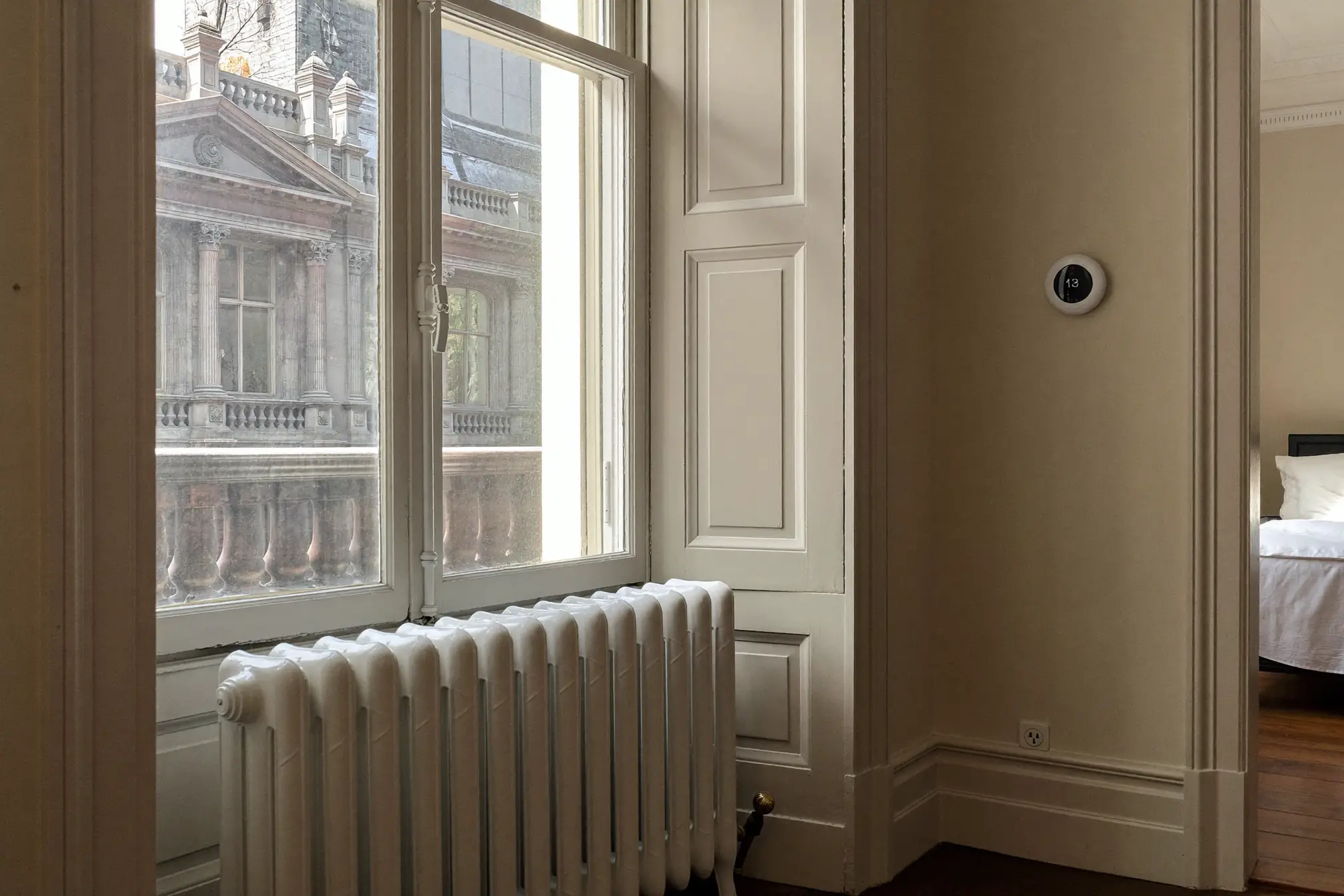
Pre-war buildings with steam heat are a special case. As noted, neither thermostat controls steam radiators. If your pre-war apartment also has a supplemental cooling system - through-wall units, a mini-split, or a building-provided FCU - the comparison applies to that system only.
In this scenario, Ecobee’s included PEK makes installation more reliable in older wiring configurations, and its SmartSensor capability is particularly useful in pre-war apartments where room layouts and radiator placement create uneven temperature distribution. For pre-war apartments with a secondary cooling system, Ecobee is the more practical choice.
For Modern Condos with Central Air
In newer Manhattan condos with standard forced-air or multi-zone central air systems and modern wiring, both devices install cleanly. Nest’s learning algorithm and Rush Hour Rewards integration make it a strong choice for households with consistent schedules. Ecobee’s SmartSensor advantage is less critical in well-zoned newer buildings where thermostats are already positioned in living areas.
For households with variable schedules or multiple family members moving through the apartment at different hours, Ecobee’s sensor-based approach produces more accurate comfort management than an algorithm built around patterns that may not hold.

For Smart Home Integration
Both devices work with Apple HomeKit, Amazon Alexa, and Google Home. Ecobee has historically offered broader third-party compatibility and is considered more flexible for complex smart home ecosystems. Nest integrates most seamlessly within the Google Home platform, and if your apartment already uses Google Nest cameras, doorbells, or speakers, the unified experience is a genuine benefit.
For Manhattan homeowners planning a comprehensive smart home installation as part of a renovation - incorporating lighting, security, audio, and climate control in a single coordinated system - the thermostat choice should be made within a larger design conversation. Contact KS Renovation Group to discuss your smart home renovation goals before committing to a specific platform. Getting device choices right from the start avoids the frustration of rebuilding an ecosystem mid-project.
Conclusion
Nest and Ecobee are both strong products, and either will outperform a basic thermostat in a Manhattan apartment. The right choice depends on your building type, HVAC system, household patterns, and smart home goals.
For pre-war and older buildings with limited wiring access, Ecobee’s installation flexibility and SmartSensor technology give it a clear edge. For modern condos with standard systems and predictable household routines, Nest’s learning algorithm and Con Edison utility integration make it a compelling choice. For complex smart home renovations, the decision belongs in a larger conversation about which platform you want your home built around.
Whatever direction you choose, a smart thermostat performs best when it is part of a thoughtfully designed home environment. If you are planning a renovation that includes smart home integration, HVAC upgrades, or a complete apartment transformation, KS Renovation Group brings the expertise to design a Manhattan apartment that works as intelligently as it looks. Schedule a consultation with our team to start the conversation.
Frequently Asked Questions
Can I install a Nest or Ecobee in a Manhattan co-op apartment?
In most cases, yes. Installing a smart thermostat is considered a minor interior change that typically does not require co-op board approval. However, if the installation involves wiring work or any modification to shared building systems, check with your management office first. KS Renovation Group can advise based on direct experience with Manhattan co-op alteration agreements.
Do smart thermostats work with steam heat systems in pre-war buildings?
No, neither Nest nor Ecobee controls steam radiators, which operate at building-wide pressure rather than at the individual apartment level. Smart thermostats are compatible with in-unit cooling systems and supplemental heating systems that use standard thermostat wiring. For pre-war apartments with steam heat and a separate cooling system, both devices can still deliver meaningful energy savings on the cooling side.
Does Con Edison offer rebates for Nest or Ecobee thermostats?
Con Edison has offered rebates for qualifying smart thermostats through its energy efficiency programs. Rebate amounts and eligibility change periodically, so check the Con Edison website directly for current offers before purchasing. Both Nest and Ecobee have qualified for rebates in previous program cycles, and Energy Star certification may open additional incentive stacking options.
What is a C-wire and do I need one for smart thermostat installation?
A C-wire (common wire) provides continuous low-voltage power to smart thermostats. Many older Manhattan apartments lack a C-wire at the thermostat location. Ecobee includes a Power Extender Kit in the box that eliminates the need for a C-wire in most two-wire configurations. Nest offers a separate Power Connector accessory for the same purpose, but compatibility is more system-dependent. An installer can confirm whether your system needs a C-wire solution before you purchase.
Should I choose Nest or Ecobee if I am planning a full apartment renovation?
If you are renovating, your thermostat choice should be part of a larger smart home design conversation. Renovations provide the opportunity to run new wiring, coordinate systems, and select devices that work together as a unified platform from day one. KS Renovation Group designs and installs smart home systems as part of complete Manhattan apartment renovations - reach out to our team before committing to a specific device or ecosystem.

You may also be interested





KS Renovation Blog
Get Inspired
Meaningful information about home remodeling for the true NYC homeowners.

OUr Clients Say

William Plotch
amy schorr
gberaka
NYC kitchen remodeling Projects and more


