
Natural Stone Comeback 2026: Marble & Granite Replace Quartz NYC
Walk through the luxury renovations happening right now in the Upper West Side, Tribeca, and the East 70s, and you’ll see a different material taking center stage. Marble slabs with bold veining. Soapstone islands with a silky matte finish. Honed granite with depth that no engineered stone can replicate. Natural stone is back and in Manhattan’s most discerning kitchens, it never really left.
The shift isn’t nostalgia. It’s a response to something real: the growing sense that engineered surfaces, for all their practicality, look the same everywhere. In a pre-war Manhattan apartment with original plaster moldings, herringbone oak floors, and custom millwork, a perfectly uniform quartz slab can feel like a contradiction. Natural stone doesn’t have that problem. Every slab is one of a kind.
If you’re planning a kitchen or bathroom renovation this spring or summer, the question of countertop material deserves more than a quick showroom visit. Understanding what’s driving the natural stone comeback - and what it actually means to live with marble or soapstone in a New York City apartment - will help you make a choice you’ll be proud of in twenty years.
Explore KS Renovation Group’s kitchen renovation portfolio and see how natural stone transforms Manhattan interiors.
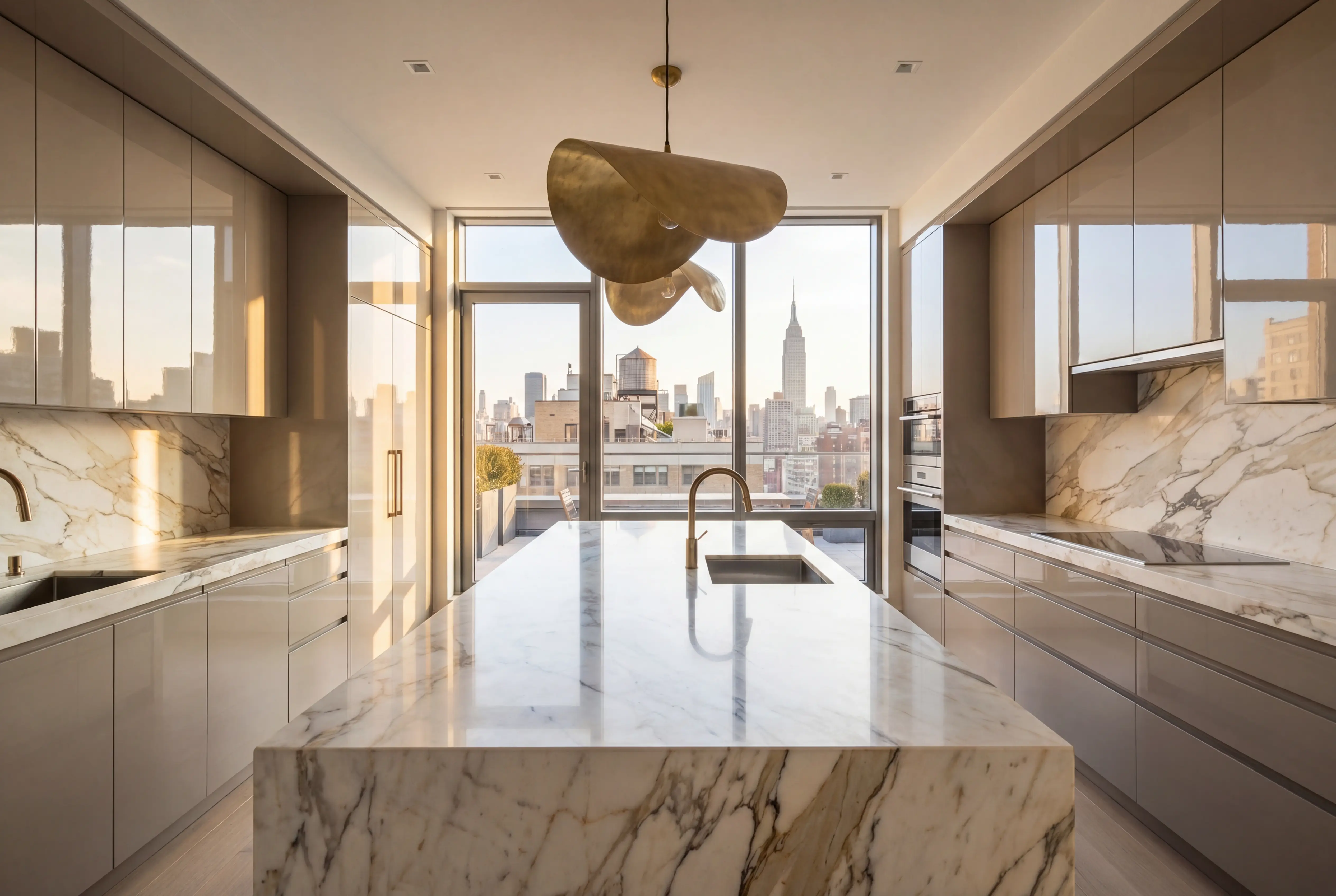
Why Manhattan Kitchens Are Moving Away from Quartz in 2026
The Uniformity Problem - and Why It Matters in NYC
Quartz countertops are manufactured to be consistent. That’s their selling point: the same pattern, the same coloring, the same finish from slab to slab. In a production home or a rental unit, consistency is a virtue. In a one-of-a-kind pre-war co-op on Central Park West, it reads differently.
Manhattan’s luxury apartment market has always rewarded individuality. The buyers and owners who invest in full renovations are not looking for a kitchen that could belong to anyone. They want a space that reflects a specific aesthetic - one that has been thought through, sourced carefully, and executed with real craft. Quartz’s greatest strength (predictability) is also why it’s losing ground in this particular market.
Industry trend data from 2026 points consistently in one direction: natural materials are dominating high-end residential interiors this year - stone, wood, and clay are all staging significant comebacks as homeowners move away from surfaces that feel manufactured.
The Craft Revival - Custom Millwork and Natural Stone Belong Together
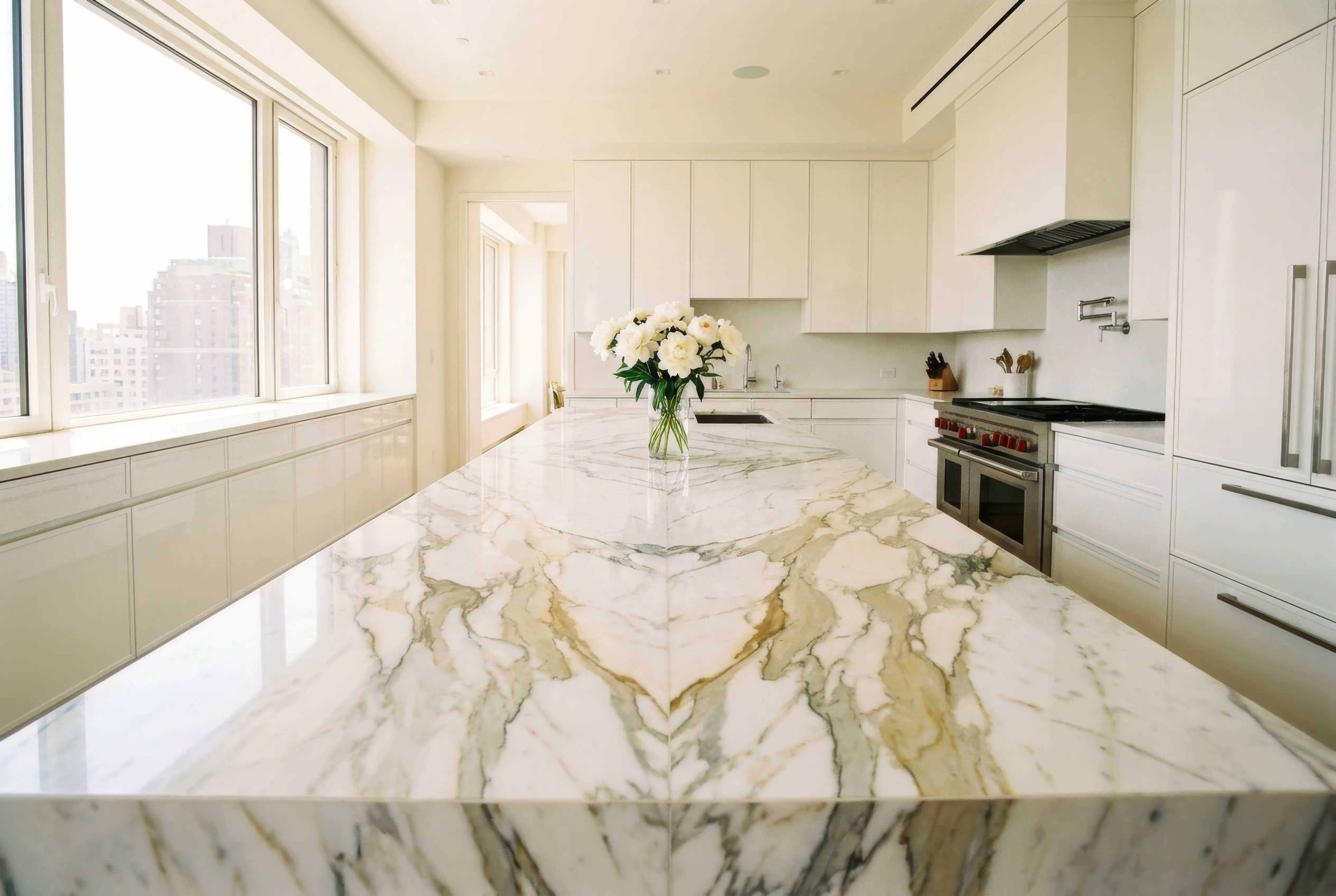
There’s another reason natural stone is resonating right now, and it has everything to do with the broader trend toward authentic craftsmanship in home design. As more Manhattan homeowners invest in custom millwork - bespoke cabinetry, handcrafted built-ins, hand-finished paneling - the countertop material needs to match that level of intention.
A book-matched Calacatta marble slab is, in its own way, a piece of handcraft. The veining is unique. The pattern will never exist in exactly that form again. When it sits alongside custom walnut cabinetry built in a dedicated millwork facility, the conversation between materials becomes something remarkable.
At KS Renovation Group, natural stone selections are always considered alongside the millwork package - because how a marble edge profile meets a custom cabinet door is one of the defining details of a truly finished kitchen. Contact our team to discuss how natural stone and custom millwork can work together in your renovation.
Sustainability and Longevity Are Driving the Conversation
Engineered quartz is a composite material - approximately 90–95% crushed quartz bound with polymer resins. Those resins are petroleum-derived, and the manufacturing process is energy-intensive. As sustainability becomes a more active part of purchasing decisions even at the luxury level, the origin of materials matters.
Natural stone, quarried and processed with significantly less chemical input, is increasingly positioned as the more sustainable choice. Organizations like the Natural Stone Institute have been vocal about the lifecycle advantages of natural stone - a properly sealed marble or granite countertop can last the entire life of a building. In Manhattan, where apartments change hands across generations, that kind of longevity is genuinely meaningful.
Marble in Manhattan Kitchens: What You Actually Need to Know
The Varieties Making Moves in NYC Right Now
Not all marble is created equal, and the varieties showing up in Manhattan kitchens in 2026 tell a story about where the trend is going. Calacatta marble - with its bright white background and dramatic, often gold-toned veining - remains the prestige choice for kitchens that want to make a statement. It’s quarried in a single region of the Apuan Alps in Tuscany, which makes it genuinely rare and correspondingly distinctive.
Statuario marble, with its softer grey veining on a warmer white ground, is having a particular moment in 2026. It reads as more restrained than Calacatta - sophisticated without announcing itself. For pre-war apartments where the architecture already makes a statement, Statuario is often the smarter call.
For kitchens where the homeowner wants the look of marble without the highest-end price tier, Bianco Sivec (from Greece) and Bardiglio (a grey-veined Italian marble) are showing up frequently in Manhattan showrooms like Walker Zanger and Ann Sacks.
Honed vs. Polished - The Finish Question in Real Life
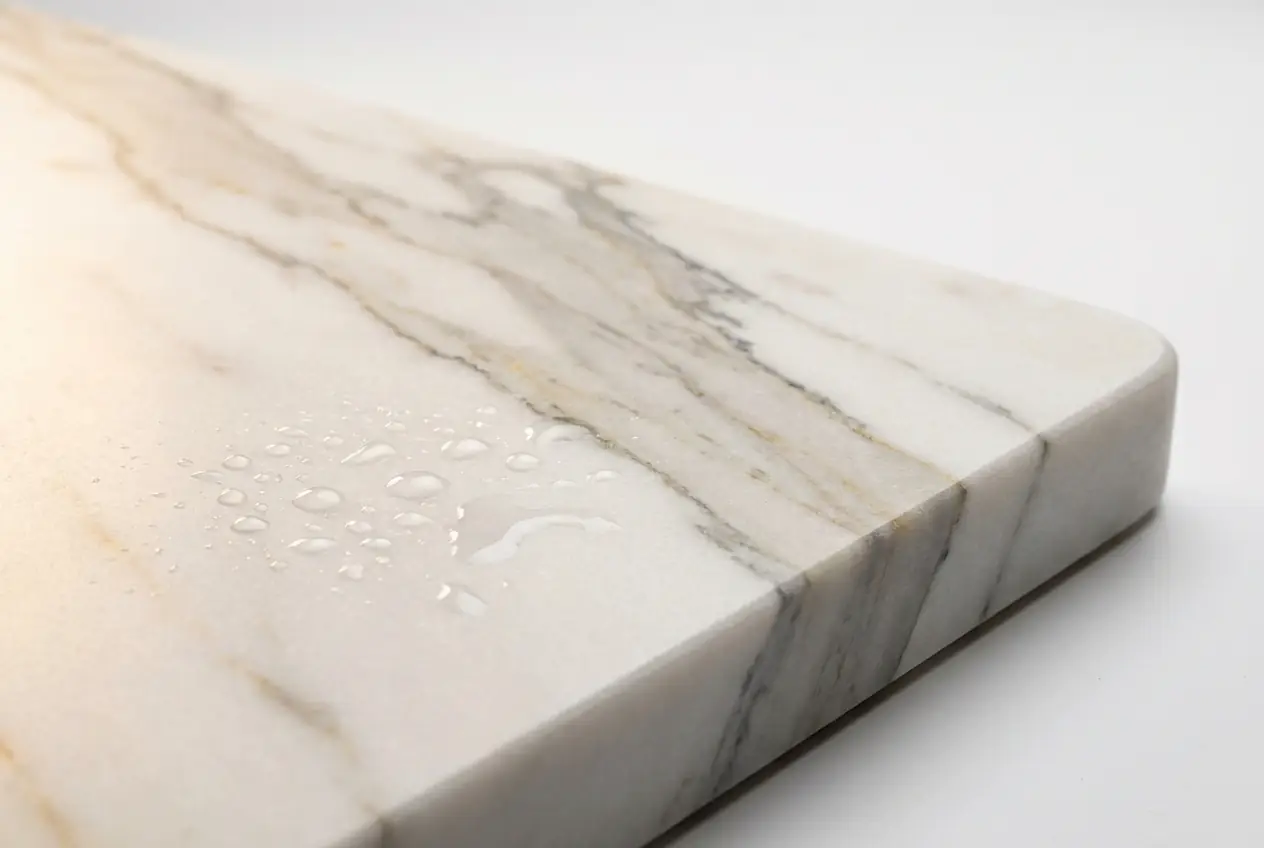
The finish on marble changes everything about how it looks and performs. Polished marble is what most people picture: the reflective, mirror-like surface that shows off veining dramatically. It’s beautiful in bathrooms and feature applications. In a heavily used kitchen, polished marble is somewhat more susceptible to showing etching - the dull marks left by acidic foods and liquids like lemon juice, tomato sauce, or wine.
Honed marble - a matte, velvety finish achieved by stopping the polishing process before the final sheen - has become increasingly popular in Manhattan kitchens precisely because it absorbs the reality of daily use more gracefully. Etching is less visible on a honed surface. The patina it develops over years of use is part of the aesthetic, not a flaw.
Many of KS Renovation Group’s kitchen clients who choose marble opt for honed finishes for the perimeter countertops and reserve polished stone for the island or bathroom application where it gets less daily contact with food prep.
Living with Marble in a New York City Apartment
The honest conversation about marble includes its care requirements. Natural stone is porous and benefits from regular sealing - typically once a year or every two years depending on use and the specific stone. Marble will etch if acidic liquids are left to sit. It will scratch with heavy impact. It will, over time, develop a patina.
That patina is exactly what many Manhattan homeowners are now choosing marble for. The worn, lived-in surface of a kitchen island that has been in a family for thirty years tells a story that no engineered surface can. In townhouses, pre-war co-ops, and classic Beaux-Arts apartments, that kind of material authenticity is priceless.
Granite and Soapstone: The Professionals’ Choices
Why Granite Is Reclaiming Its Position
Granite had a complicated decade. It was everywhere in the 2000s and early 2010s, then design culture turned against it - associated with outdated builder-grade kitchens, mostly because it was used badly and cheaply in that era. The granite of 2026 is a different conversation.
High-quality, book-matched granite slabs from quarries in Brazil, India, and Norway bear little resemblance to the beige-speckle granite of a 2005 tract home. Fantasy Brown from India, with its watercolor blend of ivory, grey, and burgundy. Taj Mahal quartzite (technically a quartzite, but often grouped with granite in the conversation) with its warm golden tones and soft movement. Black Absolute - the near-perfect matte black stone that has found a home in the dark-kitchen trend that continues to define Manhattan’s most sophisticated interiors.
Granite is also significantly more durable than marble when it comes to everyday kitchen use. It resists scratching, handles heat well, and is less prone to etching. For households with young children, frequent entertainers, or simply owners who want a natural stone with less maintenance anxiety, granite is often the recommendation from KS Renovation Group’s design team.
Soapstone: The Secret of Manhattan’s Most Serious Kitchens
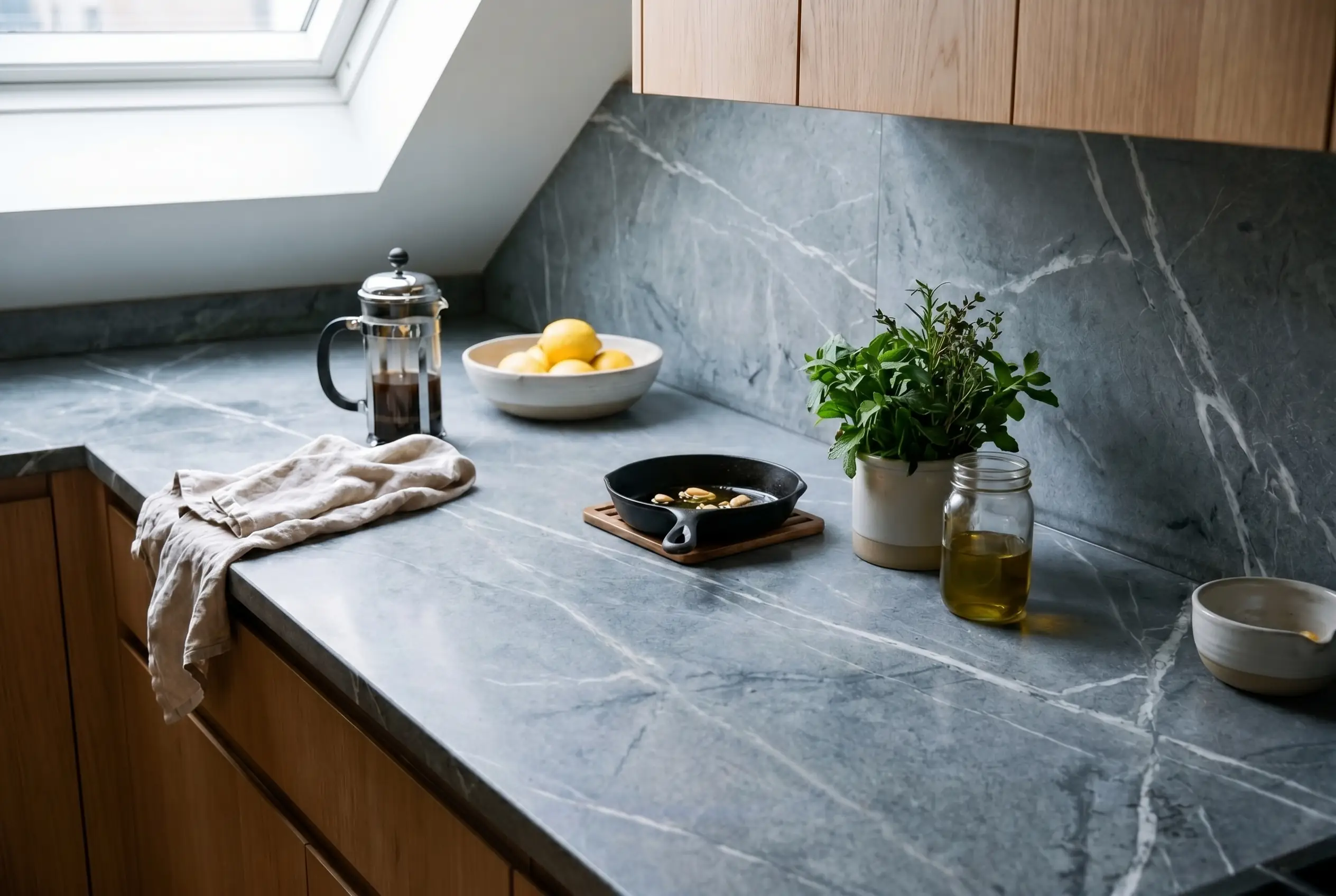
Of the natural stones making a comeback in 2026, soapstone is perhaps the one generating the most surprised responses from homeowners who discover it for the first time. It’s been used in high-end American kitchens for centuries - it was the countertop material in Manhattan’s finest pre-war kitchen designs before engineered surfaces existed - and it is coming back with a genuine following.
Soapstone (a talc-based stone quarried primarily in Brazil and some regions of the United States) has properties that set it apart from every other countertop material. It is naturally non-porous - unlike marble or granite, it does not require sealing. It is heat-resistant to a degree that makes it the only natural stone you can set a hot pot directly on without concern. It has a velvety, almost soft texture that homeowners describe as tactilely pleasurable in a way that polished stone simply isn’t.
The aesthetic is distinctive: soapstone ranges from medium grey to near-black, often with white or greenish veining. It develops a rich, dark patina over time, particularly when owners choose to treat it with food-grade mineral oil periodically - a simple maintenance step that deepens its color and character. Publications like Food & Wine and Remodelista have both featured soapstone prominently in their coverage of serious kitchen design, noting its particular appeal to homeowners who actually cook.
Stone Countertop Options for Every Manhattan Kitchen Scenario
The selection of the right natural stone for a Manhattan kitchen depends on several intersecting factors: the specific use patterns of the household, the rest of the material palette, the lighting conditions in the kitchen (natural stone reads very differently in north-facing and south-facing Manhattan kitchens), and the level of maintenance the homeowner is genuinely comfortable with.
KS Renovation Group’s approach is to work through these questions systematically with every client before making a material recommendation - because a soapstone island that’s perfect for one household might be wrong for another, and the same is true of any stone. Schedule a consultation with our Manhattan renovation specialists to find the right stone for your specific kitchen.
Installing Natural Stone in NYC Apartments: What the Process Actually Looks Like
Weight, Structural Considerations, and Pre-War Buildings
Natural stone is heavy. A slab of Calacatta marble at 3 cm thickness weighs approximately 18–20 pounds per square foot. A kitchen island measuring 4 by 8 feet will carry more than 500 pounds in stone alone. In Manhattan’s pre-war buildings - which make up a significant portion of the luxury residential stock on the Upper West Side, Upper East Side, and in classic neighborhoods like Carnegie Hill and Morningside Heights - this requires a conversation before installation begins.
Most pre-war buildings have robust structural floors (concrete and steel or heavy timber) that handle the load without modification. However, any renovation involving unusual material weight should be reviewed in the context of the building’s alteration agreement and, in some cases, by a structural engineer. KS Renovation Group coordinates directly with building management and, when required, with licensed structural engineers as part of the renovation planning process - a step that protects both the homeowner and the building.
NYC Department of Buildings (DOB) permits are typically not required for countertop replacement alone, but when a kitchen renovation involves layout changes, wall removals, or utility relocations alongside the stone installation, proper permitting is essential. NYC DOB’s guidelines are clear on what triggers a permit requirement, and KS Renovation Group navigates this process on behalf of every client.
Templating, Fabrication, and Installation in Manhattan
Natural stone countertops are not ordered off a shelf. The process begins with templating - a precise measurement of the countertop area that accounts for every angle, outlet, and appliance cutout. In Manhattan kitchens, where square footage is at a premium and layouts often involve unconventional angles and tight tolerances, accurate templating is critical.
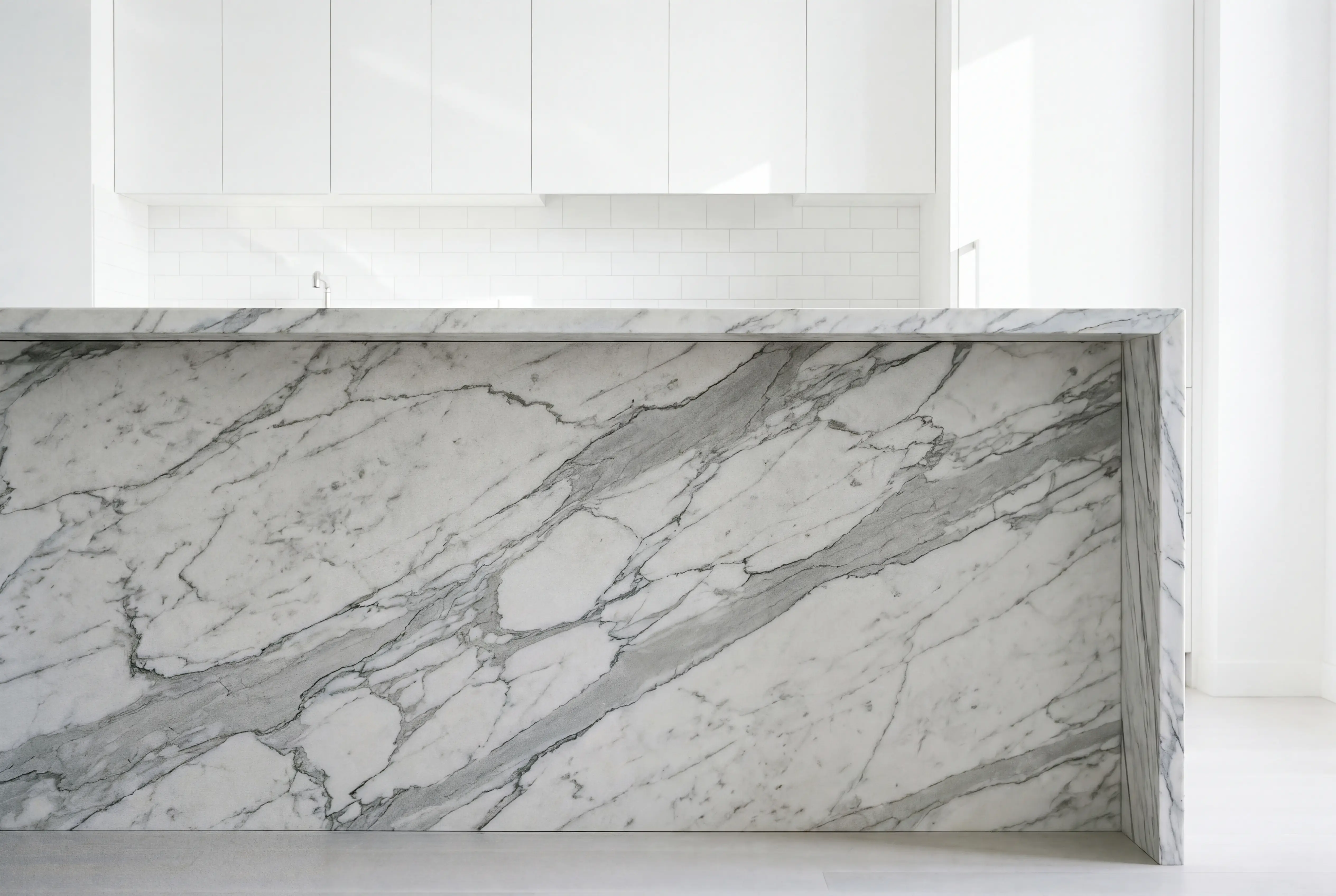
After templating, the stone is fabricated at a shop that specializes in natural stone - cutting, edging, and finishing the slabs to exact specification. Edge profiles are selected during this phase: a simple eased edge reads cleanly in a modern kitchen; an ogee or waterfall edge makes a more traditional or dramatic statement. Waterfall edges - where the stone continues vertically down the side of an island to the floor - are particularly in demand in 2026 Manhattan kitchens.
Installation in Manhattan requires coordination around building rules: freight elevator reservations, protection of building common areas, approved working hours (typically 8 AM to 5 PM Monday through Friday in most co-op buildings). KS Renovation Group manages all of this logistics as part of the project, ensuring that heavy stone slabs move through Manhattan buildings without incident and arrive in the kitchen in perfect condition.
The Sealing and Maintenance Conversation - Setting Real Expectations
One of the most important things KS Renovation Group does for clients choosing natural stone is set accurate expectations about long-term care. The internet is full of horror stories about marble kitchens etched beyond recovery and granite countertops that stained permanently - and almost all of these stories involve surfaces that were either improperly sealed, sealed with the wrong product, or subjected to conditions the owner was never prepared for.
Properly sealed natural stone, maintained correctly, performs beautifully for decades. The maintenance requirements are not onerous: annual sealing for marble and granite (a process that takes less than an hour and uses products available at any hardware store), immediate cleanup of spills, and avoiding harsh chemical cleaners. Soapstone requires no sealing at all. For the majority of Manhattan homeowners, natural stone maintenance is a minor part of a kitchen’s annual upkeep - not the ongoing ordeal that cautionary articles sometimes suggest.
Conclusion: Natural Stone Is a Choice That Ages With Your Home
The quartz era in Manhattan luxury kitchens is not ending - it is simply no longer the only answer. For homeowners who want a kitchen surface with genuine character, authentic material provenance, and an appearance that improves with time rather than simply aging, natural stone offers something engineered materials fundamentally cannot.
Marble, granite, and soapstone each bring a distinct set of properties to a kitchen - visually, tactilely, and practically. Choosing between them is not simply an aesthetic decision but a question of how the material will fit the specific life lived in the space. That’s a question worth taking seriously, and it’s the kind of question KS Renovation Group’s design team works through with every client.
The result, when done right, is a kitchen that doesn’t look like anyone else’s. In Manhattan, that might be the highest standard there is.
Contact KS Renovation Group to discuss natural stone options for your kitchen or bathroom renovation - and to see how we integrate stone selection with custom millwork and the full renovation design process.
Frequently Asked Questions
1. Is marble a practical choice for a kitchen countertop in a New York City apartment?
Marble can be an excellent kitchen countertop material if you understand its care requirements and choose the right finish. Honed marble is particularly practical because it shows etching less visibly than polished marble. With annual sealing and prompt cleanup of acidic spills, marble performs well in residential kitchens and develops a patina that many homeowners come to love. It is not the right choice for every household, but it is far more practical than its reputation suggests.
2. How does soapstone compare to marble and granite in terms of maintenance?
Soapstone is the lowest-maintenance natural stone countertop option available. Unlike marble and granite, it is naturally non-porous and requires no sealing. It resists heat better than any other natural stone countertop material. The primary maintenance is periodic application of food-grade mineral oil, which deepens its color and character over time. For homeowners who want a natural stone surface without annual sealing requirements, soapstone is the strongest option.
3. Do I need special permits to install natural stone countertops in my Manhattan co-op?
Countertop replacement alone typically does not require an NYC DOB permit. However, most co-op alteration agreements require that the managing agent or board be notified of renovation work, and some buildings require approval even for cosmetic changes. When the countertop installation is part of a larger kitchen renovation - one involving layout changes, plumbing moves, or structural work - permits are generally required. KS Renovation Group handles the permit and approval process as part of every full kitchen renovation project.
4. What is book-matching, and why does it matter for natural stone?
Book-matching is a technique in which consecutive slabs from the same block of stone are opened like the pages of a book and placed side by side, creating a mirrored pattern in the veining. The result is a dramatic, symmetrical design that turns the stone’s natural patterning into a deliberate visual statement. Book-matched marble is particularly striking on kitchen islands and bathroom feature walls. It is one of the hallmarks of high-end natural stone installation and requires precise fabrication and installation to execute correctly.
5. Is natural stone heavier than quartz, and does weight matter in a Manhattan apartment?
Natural stone slabs are comparable in weight to engineered quartz - both materials typically range from 15 to 22 pounds per square foot at standard 3 cm thickness. Manhattan’s pre-war buildings are structurally robust and generally handle both materials without modification. For any renovation involving unusual loads or structural changes, KS Renovation Group coordinates with building management and licensed structural engineers as part of the planning process to ensure everything is done correctly.

You may also be interested
KS Renovation Blog
Get Inspired
Meaningful information about home remodeling for the true NYC homeowners.

OUr Clients Say

William Plotch
amy schorr
gberaka
NYC kitchen remodeling Projects and more


