
European Kitchen Cabinets in Manhattan: Are They Better Than American Construction?
You're redesigning a luxury kitchen in Manhattan. You have a vision - clean lines, flawless finishes, every inch of space working hard. Then your designer asks: "Do you want European or American-style cabinetry?"
Most homeowners pause. Most make the wrong choice - not because one system is universally better, but because they didn't fully understand the construction differences before committing hundreds of thousands of dollars to a renovation they expect to last decades.
This is the question that separates educated Manhattan homeowners from the rest. European frameless cabinets and American face-frame cabinets are not just aesthetic preferences - they are fundamentally different construction philosophies, and in a luxury NYC kitchen, that difference shows in storage, durability, finish quality, and long-term value.
At KS Renovation Group, Manhattan's in-house design-build and custom millwork firm, we build both systems - and we know precisely when to recommend each one. Here is the definitive guide to help you decide.
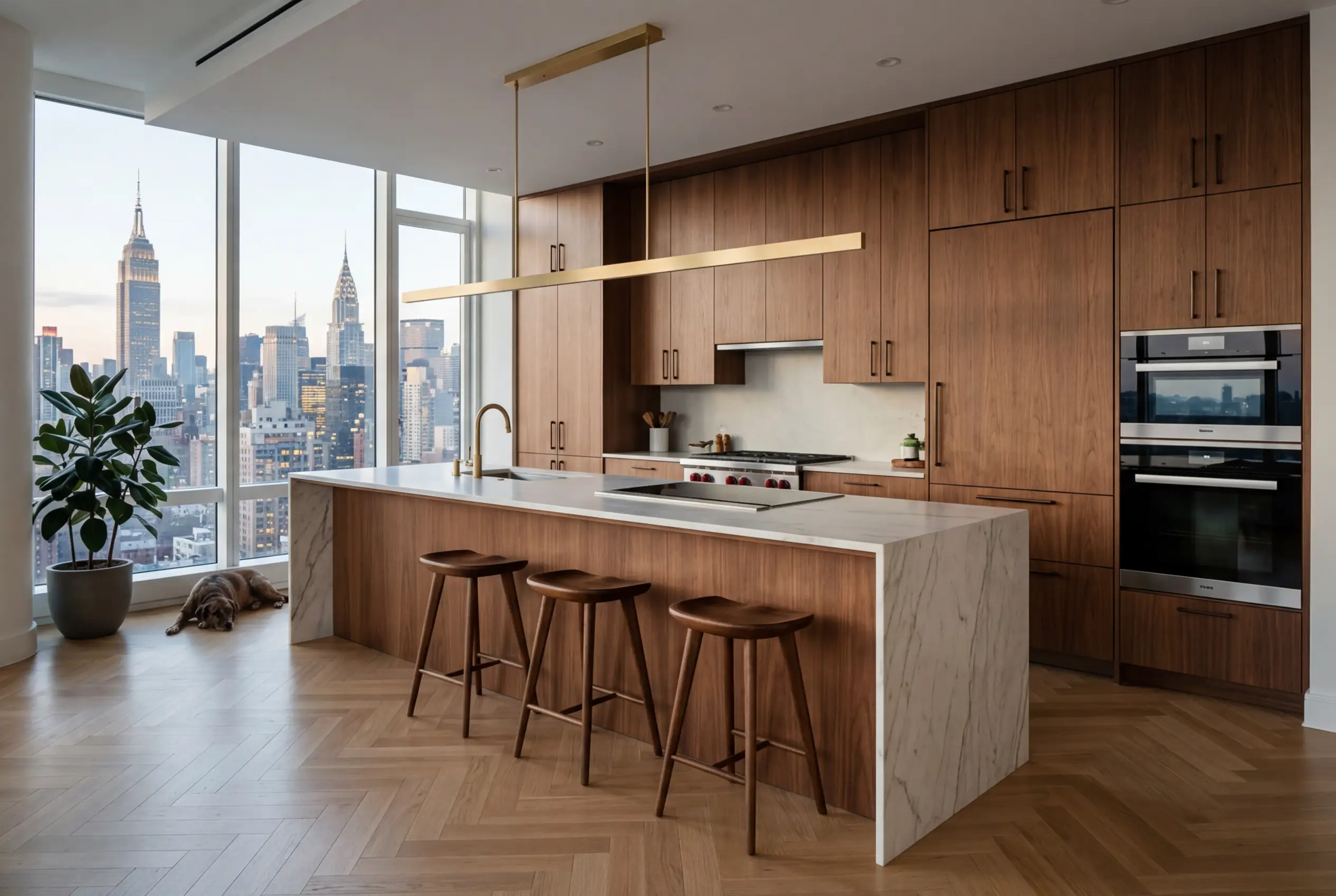
Understanding the Core Construction Difference
Before comparing outcomes, you need to understand what separates these two systems at the structural level.

What Is American (Face-Frame) Cabinet Construction?
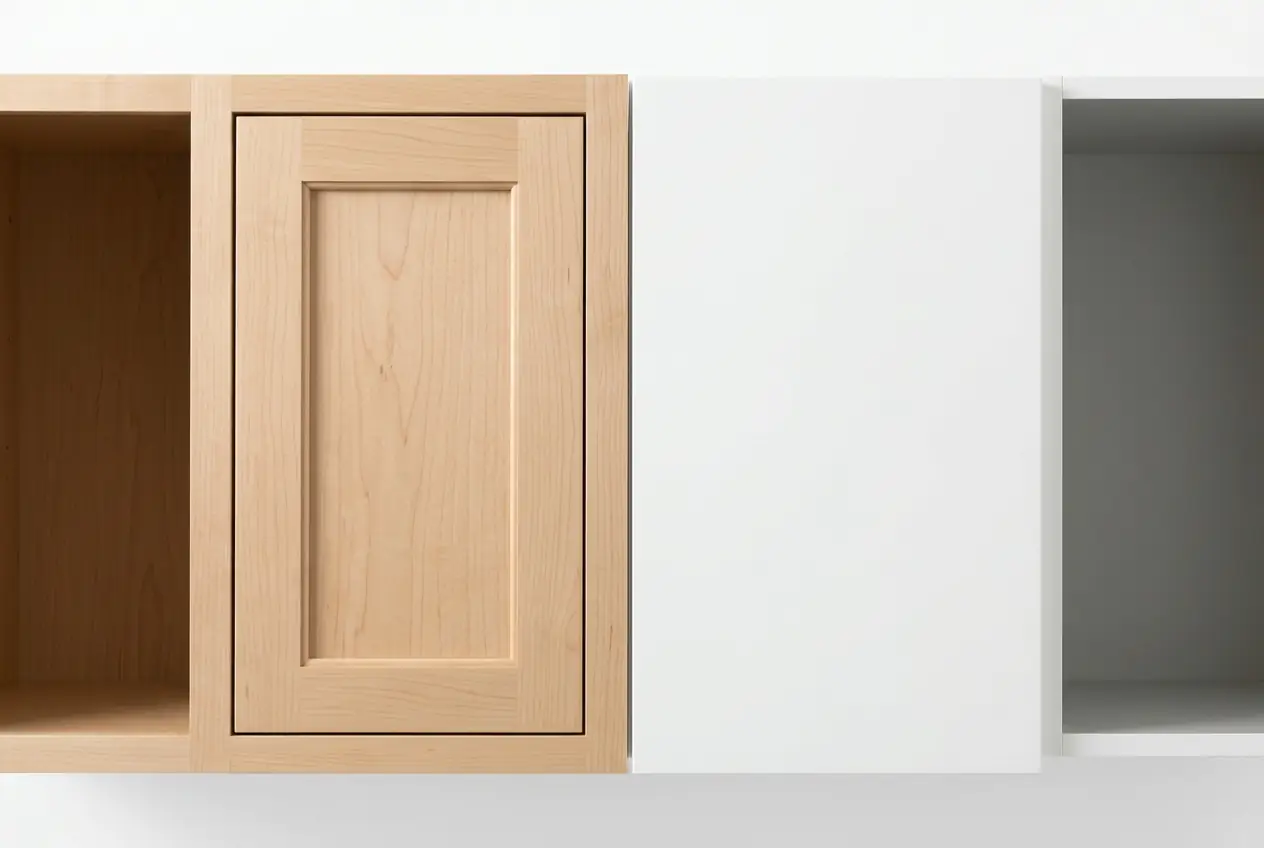
Traditional American cabinetry is built around a face frame - a solid wood border (typically 1½" wide) that is attached to the front of the cabinet box. Doors and drawers are then mounted onto this frame. The frame adds structural rigidity and is a hallmark of furniture-style cabinetry rooted in American craftsman tradition.
Face-frame construction excels in:
- Classical and transitional kitchen designs
- Inset door configurations where the door sits flush inside the frame
- Applications where visible wood grain framing is part of the design intent
The frame, however, partially obstructs access to the cabinet interior. Hinges are typically mounted to the frame, and full-extension drawer access is often limited by the frame's width.
What Is European (Frameless) Cabinet Construction?
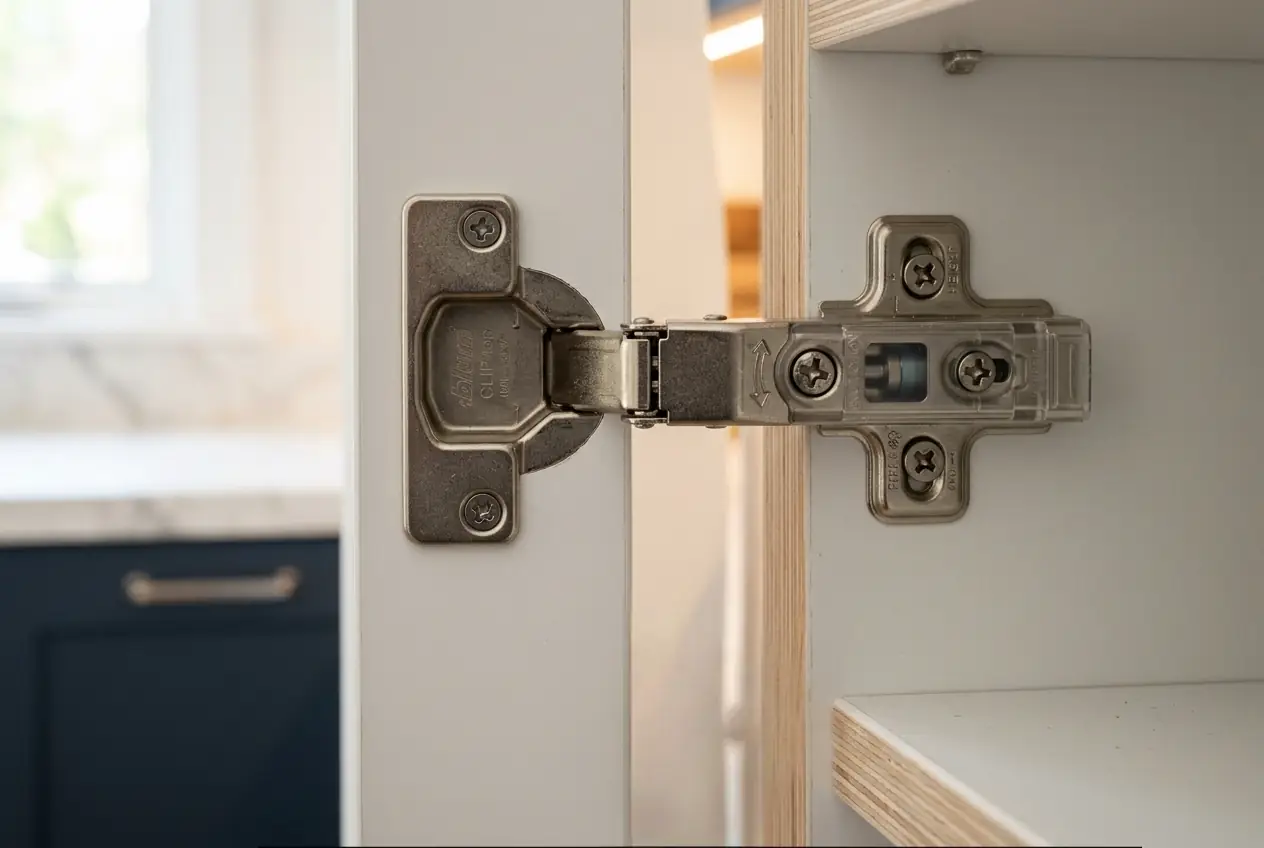
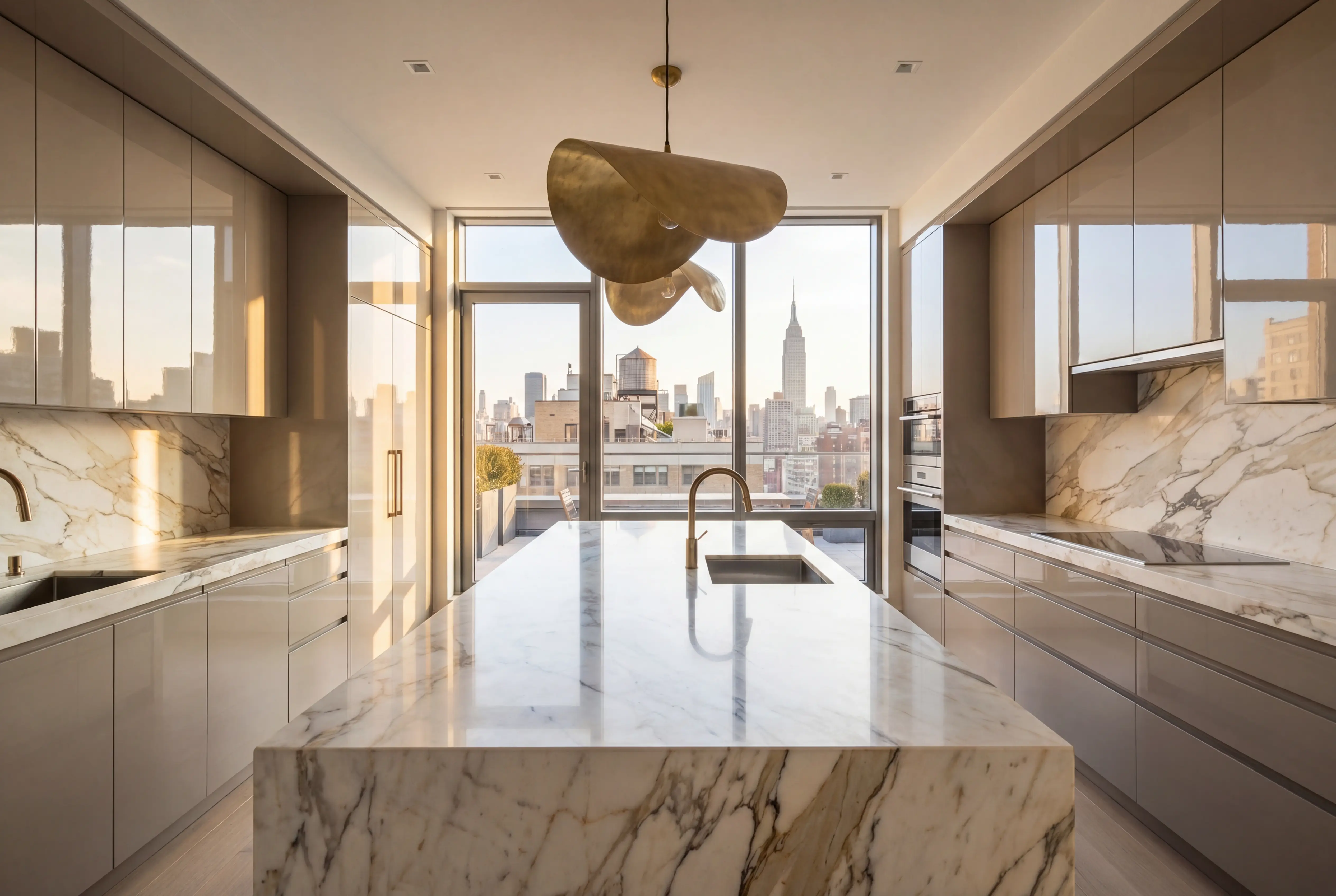
European-style cabinetry, also known as frameless or full-access construction, eliminates the face frame entirely. The cabinet box - built to tighter tolerances from engineered panels - provides all structural integrity. Doors mount directly to the interior sidewall using concealed European hinges (most commonly 35mm cup hinges), and drawers run the full width of the box.
This system emerged in post-war Germany as a manufacturing innovation and has become the global standard for contemporary and transitional luxury cabinetry. It is characterized by:
- Seamless, gap-free door alignment
- Full-width drawer and pull-out access
- Concealed hinges with multi-axis adjustability
- Sleek, hardware-forward aesthetics
Why the Construction Method Matters More Than You Think
In a Manhattan kitchen - where square footage is finite, resale value is paramount, and expectations are uncompromising - the construction method determines how every element performs over time: how doors align after years of use, how much storage you extract from each linear foot, and whether your kitchen still looks new a decade later.
Storage, Space, and the Manhattan Advantage
Space is the defining constraint of Manhattan luxury living. Every inch of cabinet interior counts.
The Full-Access Advantage of Frameless Systems
Because European frameless cabinets have no face frame obstructing the opening, you gain approximately 1 to 1½ inches of usable width per cabinet - and full-extension drawer slides can utilize 100% of the cabinet's interior depth. In a kitchen with 20 or more cabinets, this adds up to meaningful additional storage.
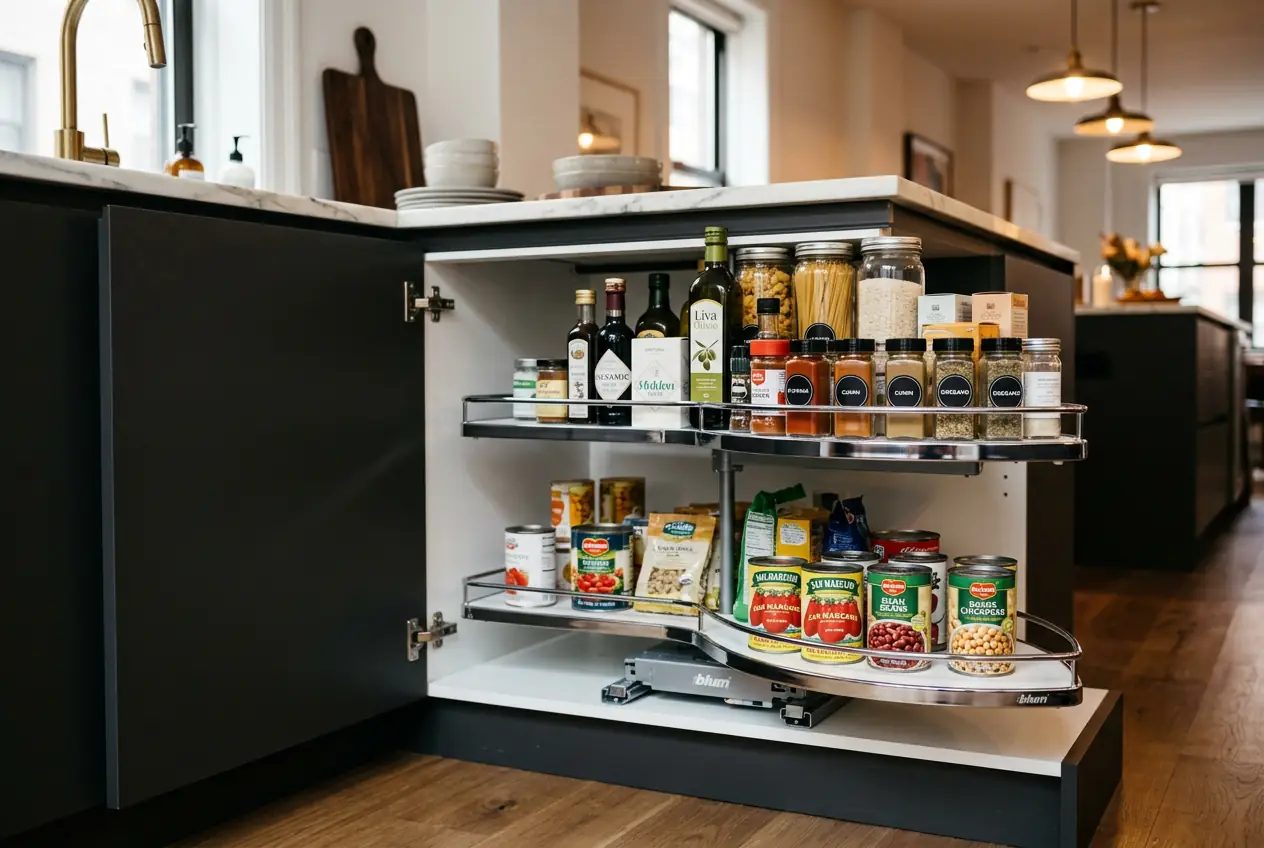
Pull-out organizers, deep drawer systems, and integrated interior fittings - the hallmark of German luxury cabinet hardware brands - are all designed around frameless construction. These systems simply function better, with smoother action and higher weight capacity, when there is no frame interrupting the geometry.
Corner Solutions and Tall Cabinets
European frameless systems also handle two of the most problematic areas in any kitchen - corners and tall pantry cabinets - with greater elegance. Blind corner pull-outs, Le Mans carousels, and full-extension corner drawers (engineered by hardware leaders like Blum) are designed to fit frameless boxes precisely. Tall frameless pantry columns offer uninterrupted interior height from floor to ceiling, maximizing every vertical inch in apartments where ceiling heights are generous by Manhattan standards.
When Face-Frame Construction Earns Its Place
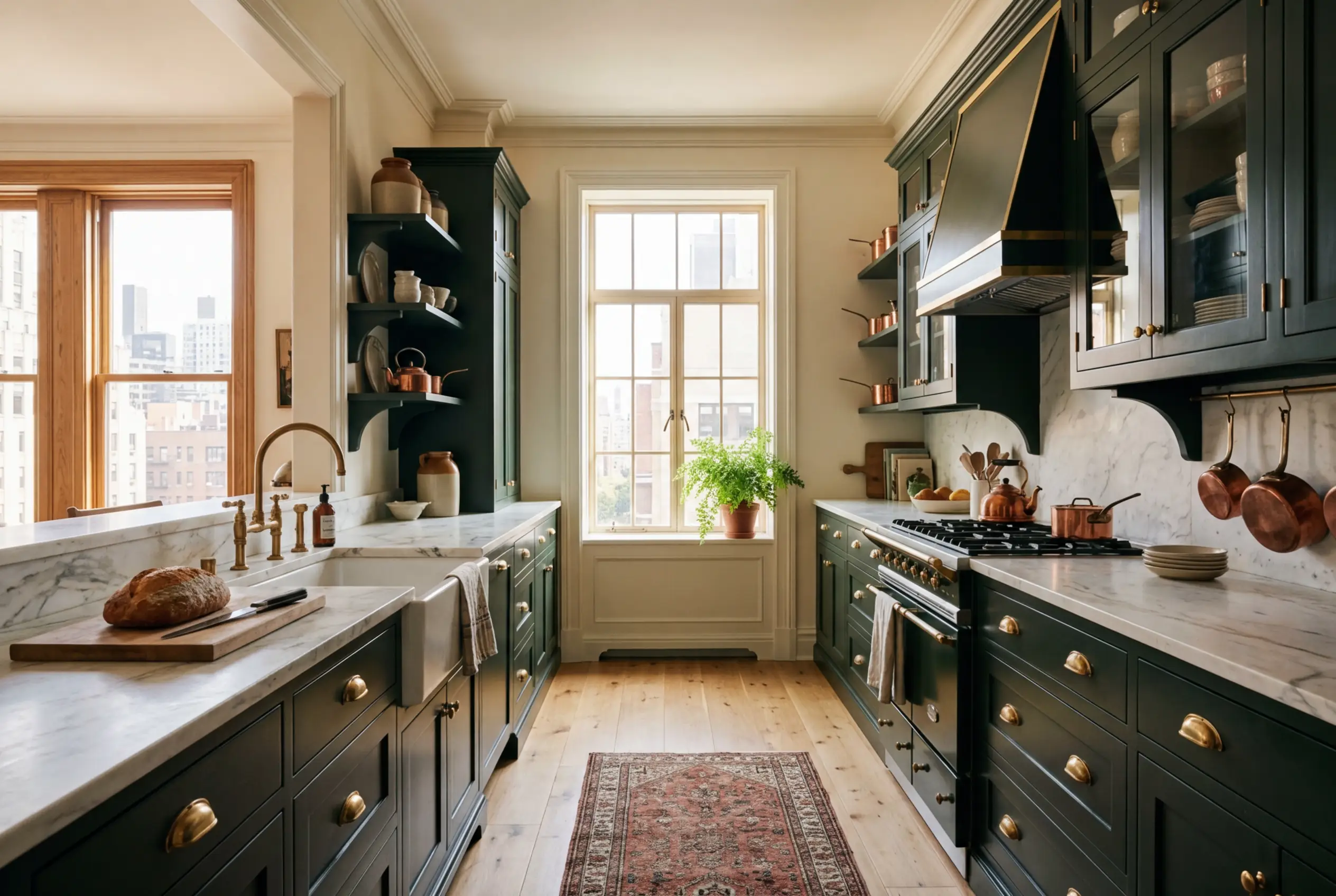
If your kitchen design calls for inset doors - a detail that is extremely popular in high-end traditional Manhattan kitchens - face-frame construction is often the correct choice. The frame provides the precise, furniture-quality reveal around inset doors that frameless boxes cannot replicate with the same visual authenticity. When the design is traditional or transitional with inset doors, a well-built American face-frame cabinet is the superior solution.
Ready to maximize every inch of your Manhattan kitchen? Explore KS Renovation Group's custom kitchen cabinetry and millwork services.
Aesthetics, Finish Options, and Luxury Appeal
Construction method and aesthetic vision are inseparable in a luxury kitchen.
The Clean-Line Dominance of European Cabinetry
Contemporary and transitional luxury kitchens in Manhattan - the dominant aesthetic in new developments, gut renovations, and high-end co-op remodels, as extensively documented by Houzz and Livingetc - favor the visual clarity that frameless cabinetry delivers. With no frame interrupting the door surface, large slab doors (whether lacquered, veneered, or in fluted wood) present an unbroken face from cabinet to cabinet. The result is a kitchen that reads as architecture first and furniture second.
High-gloss lacquer, matte lacquer, textured laminates, and book-matched veneers all perform at their visual best on frameless door panels, where the frame does not compete with the finish. Livingetc's annual kitchen roundup consistently highlights slab-door frameless cabinetry as the defining signature of contemporary luxury kitchen interiors.
The Furniture-Quality Appeal of Face-Frame Cabinetry
For clients with traditional, transitional, or classically inspired kitchens - particularly in pre-war buildings on the Upper West Side, Upper East Side, or Park Avenue - face-frame cabinetry with inset doors delivers a level of furniture-quality detail that is difficult to match. The shadow line of an inset door sitting within its frame, the hand-painted finish, the exposed hinge hardware - these are details that read as bespoke craftsmanship precisely because the construction method supports them.
Custom Millwork: Where the Two Systems Converge
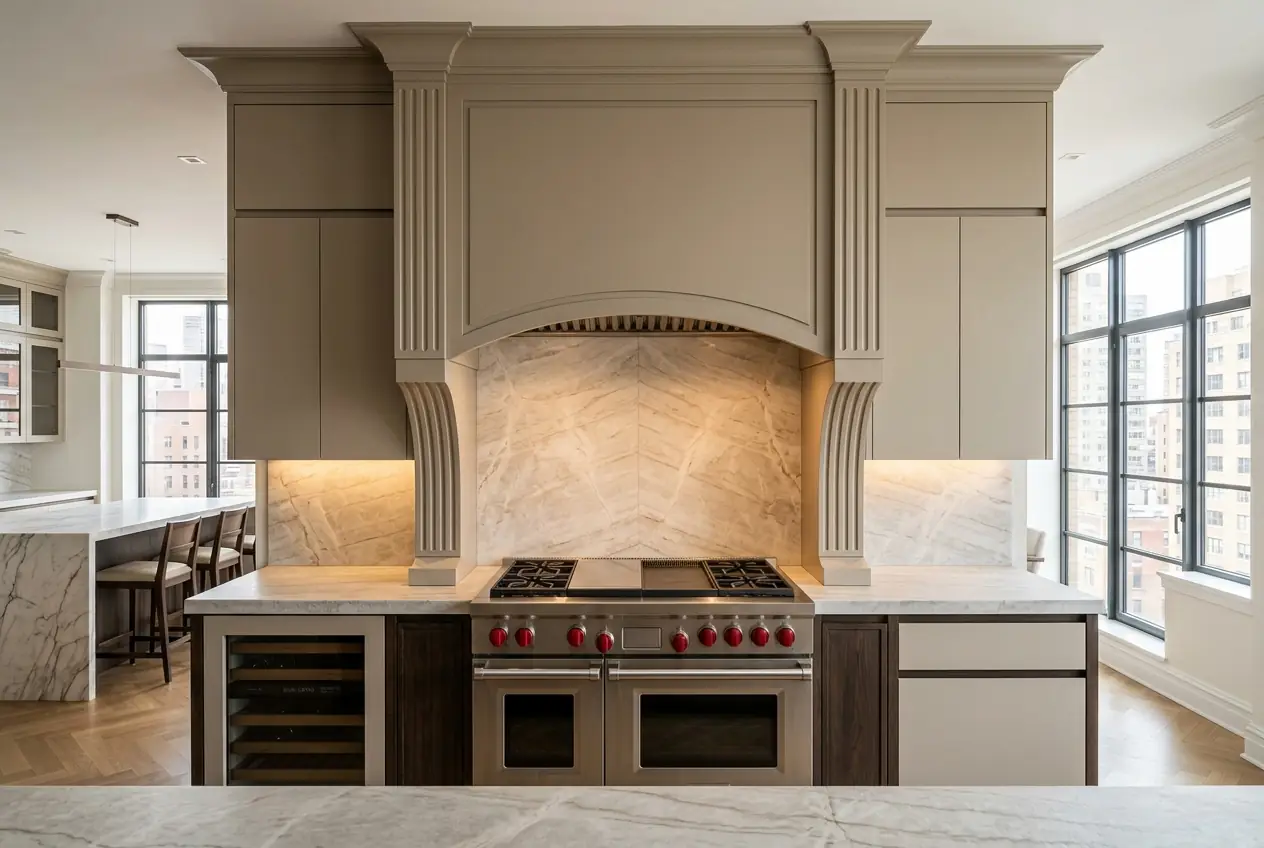
At the luxury level, the real differentiator is not which system you choose - it is the quality of execution. Custom millwork, built in-house to exact specifications for your kitchen, elevates either construction method far beyond what any imported cabinet line can offer. Hood surrounds, integrated paneling, fluted columns, furniture legs, and bespoke island construction are the details that distinguish a truly custom Manhattan kitchen from one that simply uses expensive components.
See what bespoke millwork looks like in a Manhattan luxury kitchen. Schedule your design consultation with KS Renovation Group.
Durability, Hardware, and Long-Term Performance
In a luxury kitchen built to last decades, construction quality and hardware selection determine whether the investment holds.
Box Construction and Material Standards
European frameless systems - when built to commercial or custom standards - typically use ¾-inch or thicker engineered panels (HDF or premium plywood) with hardwood edge-banding and PVC or solid wood edge treatment. The box itself carries all structural load, so material quality is non-negotiable. A well-built frameless box is exceptionally rigid and, because it relies on engineering rather than wood movement for stability, it resists humidity and temperature cycling better than solid wood face-frame construction in some conditions.
American face-frame cabinets built at the custom level use solid hardwood frames - typically maple, poplar, oak, or cherry - over plywood boxes. When built correctly, this system is equally durable. The frame adds a layer of structural redundancy that is visible and tactile. In semi-custom or production cabinetry, however, the face frame is often the first element to show wear at joints.
Hardware: The Hidden Differentiator
European cabinetry is designed around precision-engineered hardware - and the quality of that hardware determines daily performance for the life of the kitchen. Soft-close drawer systems from Blum, Hettich, or GRASS, rated for tens of thousands of open-close cycles, are standard in luxury European frameless cabinets. Concealed hinges offer six-way adjustment, meaning a cabinet installer - or a homeowner - can realign doors perfectly without removing them.
Face-frame cabinetry, particularly with inset doors, requires extremely tight tolerances at installation. When inset doors are built and fitted correctly, they are a testament to craftsmanship. When they are not, gaps, binding, and seasonal wood movement become chronic issues. The hardware choice - whether concealed European hinges or exposed period-appropriate hinges - must be matched carefully to the design intent.
The In-House Production Advantage
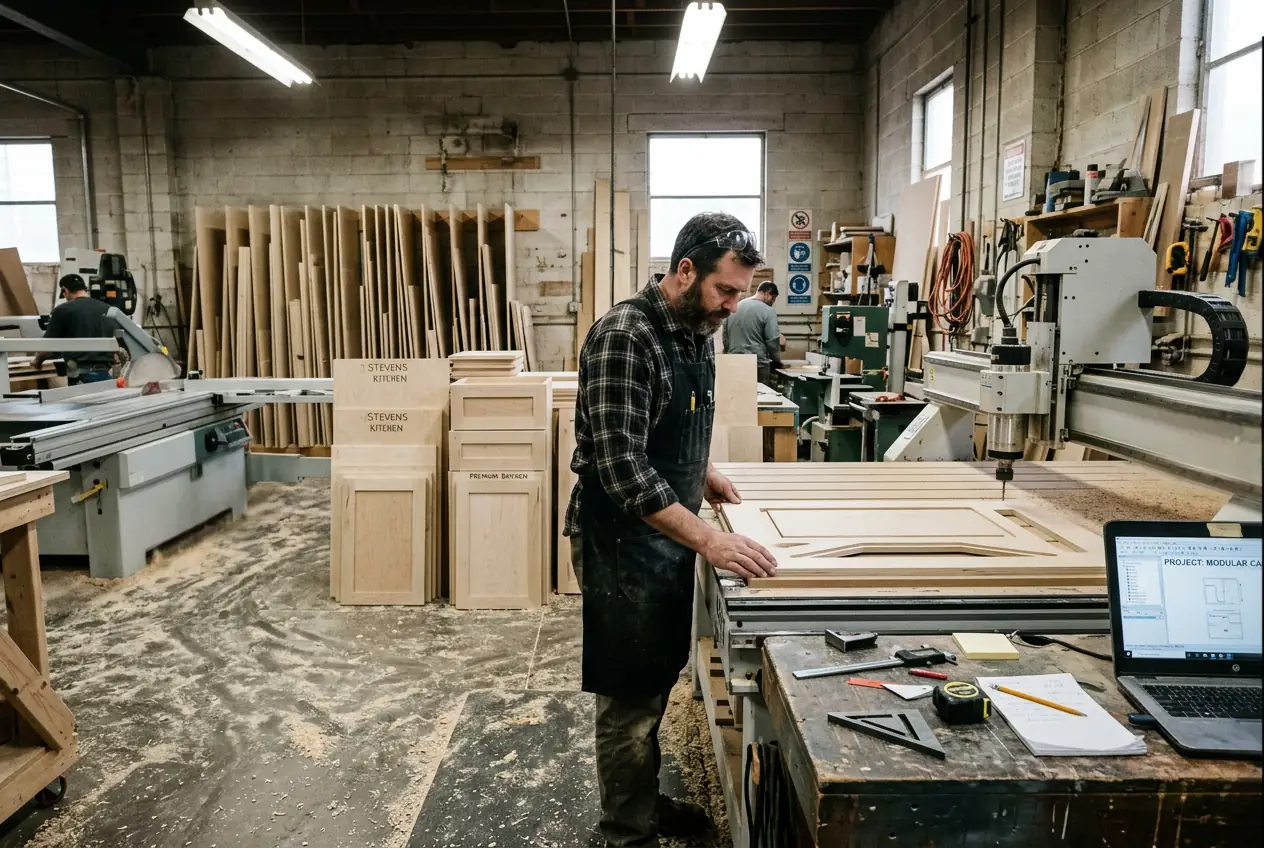
The single most important factor in long-term cabinet performance is not the construction system - it is where and how the cabinets are built. Imported cabinetry, even from reputable European manufacturers, arrives with fixed dimensions that must be accommodated by your space. In-house production means every cabinet is built to the exact dimensions of your kitchen, your wall conditions, and your design. There is no compromise between what the manufacturer offers and what your space requires.
KS Renovation Group builds every cabinet in-house at our NYC millwork facility - built for your exact space, not adapted to it. Learn more about our in-house custom millwork
Conclusion: Which System Is Right for Your Manhattan Kitchen?
The debate between European frameless and American face-frame cabinetry does not have a single winner - it has a correct answer for every kitchen, and that answer depends on your design vision, your space, and the quality of execution behind whichever system you choose.
Choose European frameless construction if your kitchen is contemporary or transitional, storage maximization is a priority, you want seamless slab-door aesthetics, or you are planning a full gut renovation where every inch matters.
Choose American face-frame construction if your kitchen is traditional or classically inspired, you want inset doors as a design feature, or your building's architecture calls for furniture-quality cabinetry that honors a pre-war aesthetic.
In both cases, the non-negotiable is this: the cabinets must be custom-built by craftspeople who understand Manhattan kitchens - the spatial constraints, the building requirements, the material standards, and the design expectations of one of the world's most demanding luxury residential markets.
That is exactly what KS Renovation Group delivers. As Manhattan's in-house design-build and custom millwork firm, we build both systems - frameless and face-frame - to uncompromising standards, in our own facility, for your exact kitchen. No imported compromises. No production-line cabinets adapted to fit. Just custom cabinetry built the right way, the first time.
Your Manhattan kitchen deserves nothing less. Schedule Your Free Luxury Kitchen Design Consultation with KS Renovation Group Today.
Frequently Asked Questions
Q1: Are European frameless cabinets always better for modern Manhattan kitchens?
Not always - "better" depends entirely on your design direction and construction quality. Frameless cabinets are the superior choice for contemporary and transitional kitchens prioritizing storage access and clean aesthetics. However, a high-quality face-frame cabinet with inset doors is the correct choice for traditional or transitional luxury kitchens where furniture-quality detailing is the design goal. At KS Renovation Group, we assess your specific kitchen, building, and vision before recommending either system. Talk to our design team.
Q2: What does "full-access" mean in European frameless cabinetry, and why does it matter in NYC apartments?
Full-access means that without a face frame blocking the cabinet opening, you can access the entire interior width - including drawers and pull-outs that extend the full depth of the box. In Manhattan, where kitchen square footage is limited and storage is always at a premium, this translates directly into more usable space per linear foot of cabinetry. It is one of the primary reasons European frameless systems are the dominant choice in high-end NYC kitchen renovations.
Q3: Can you combine European and American cabinet construction in the same kitchen?
Yes - and it is done frequently in luxury Manhattan kitchens. A common approach is to use frameless frameless upper and lower run cabinets for maximum storage efficiency, while using a face-frame island with furniture-style legs and details for visual contrast. At KS Renovation Group, our in-house millwork facility allows us to build both systems to identical finish standards, so the combination is seamless rather than jarring. Ask us how.
Q4: How does in-house millwork production affect the quality of my cabinets compared to imported European brands?
Imported cabinetry - even from premium European manufacturers - is built to standard dimensions and must be adapted to your kitchen's actual conditions. In-house production means every cabinet box, door, and panel is built specifically for your space: your exact ceiling height, your exact wall angles, your specific appliance depths. This eliminates filler strips, awkward gaps, and the visual compromises that are unavoidable with any imported line. It also means your millwork team can integrate custom details - fluted panels, bespoke island construction, integrated hood surrounds - that no catalog product offers. Explore KS Renovation Group's in-house millwork.
Q5: How long does a custom kitchen cabinet project take with KS Renovation Group?
KS Renovation Group is built for the pace Manhattan clients expect. With in-house design and production, we can bring a custom kitchen vision to life in as little as 40 days - from design sign-off through installation completion. Timeline depends on kitchen complexity, material selection, and building access requirements, and our team provides a detailed schedule at the outset of every project. Start your timeline today - book a consultation.

You may also be interested



KS Renovation Blog
Get Inspired
Meaningful information about home remodeling for the true NYC homeowners.

OUr Clients Say

William Plotch
amy schorr
gberaka
NYC kitchen remodeling Projects and more


