
Window Seat Storage Solutions for Manhattan Apartments
If you've ever stood in your Manhattan apartment and mentally cataloged every inch of wasted space, you already know the feeling: that wide bay window ledge sitting empty, a deep window alcove collecting dust, or a radiator cover that does absolutely nothing except take up square footage. In a city where every square foot carries enormous value, overlooked architectural details like these represent a genuine opportunity - not just for storage, but for a design transformation that changes how you experience your home.
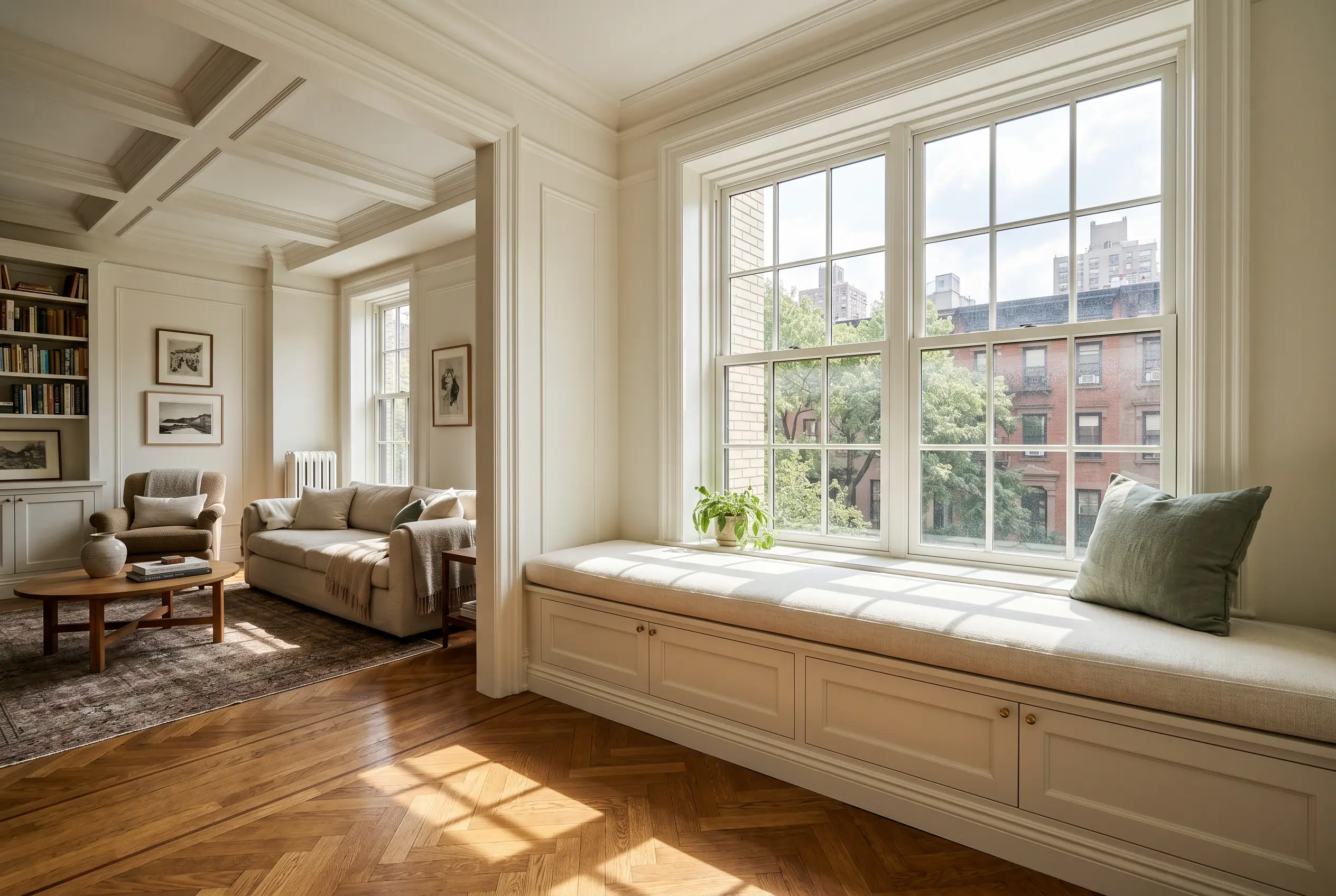
Custom built-in window seats with integrated storage are one of the most requested millwork features among Manhattan homeowners right now, and for good reason. They solve two problems at once: the chronic shortage of storage space that plagues even generous Manhattan apartments, and the desire for interiors that feel designed, intentional, and truly custom. As warm weather arrives and residents shift into spring renovation mode - before the busy summer travel season interrupts everything - it's the ideal moment to plan a project that will redefine a neglected corner of your home.
At KS Renovation Group, custom millwork is the foundation of our practice. We design and fabricate window seat storage solutions in our own workshop, tailored to your apartment's exact dimensions, your building's requirements, and your personal aesthetic. Ready to see what's possible? Schedule a consultation with our Manhattan millwork specialists to get started.
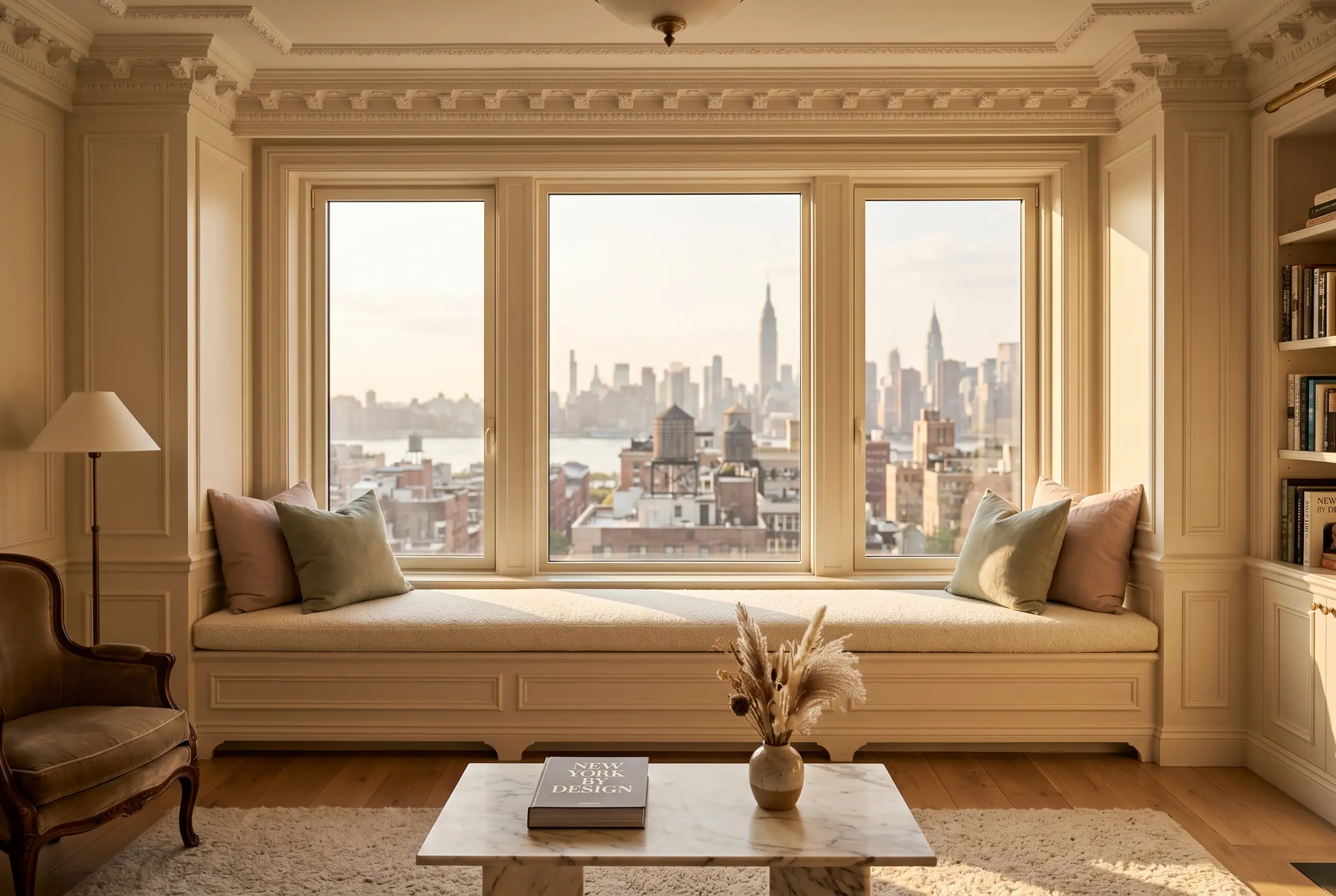
Why Window Seats Are Manhattan's Most Overlooked Storage Opportunity
Manhattan apartments are defined by their peculiarities: bay windows in pre-war co-ops, deep window reveals in postwar buildings, awkward radiator placements along exterior walls, and window alcoves that don't quite fit standard furniture. What looks like an architectural obstacle is, in the hands of a skilled millwork team, the raw material for something exceptional.
The Hidden Square Footage Problem in NYC Apartments
The average Manhattan apartment offers far less storage than comparable homes in other parts of the country - and the problem compounds as residents accumulate belongings over the years. Closets fill up. Under-bed storage runs out. Built-in bookshelves overflow. The spaces that remain - window ledges, unused corners beneath windows, awkward radiator runs along exterior walls - tend to get ignored because they don't obviously suggest a solution.
But consider the math: a typical bay window seat runs four to six feet wide and sixteen to twenty-four inches deep. Built out with lift-top storage or drawers beneath a cushioned bench, that single feature can add meaningful cubic feet of concealed storage - enough to house seasonal bedding, extra pillows, children's toys, board games, or the accumulation of items that currently live in the back of your coat closet. In a pre-war Manhattan apartment, you might have two or three such window opportunities. Custom millwork turns all of them into assets.
From Dead Space to Design Feature
Beyond storage, there's the design dimension. A well-crafted window seat changes the character of a room entirely. Interior designers at publications like Remodelista and Dezeen consistently cite built-in window seats as among the most effective ways to add architectural interest and perceived value to an apartment interior - they signal intentional design, craftsmanship, and a level of custom attention that purchasers and renters immediately notice.
For Manhattan co-op owners who are renovating with resale in mind, custom millwork - including window seat built-ins - consistently ranks among the improvements that translate into measurable value at sale. It reads as a permanent enhancement to the property, not a decorative choice that a future buyer will rip out.
How Pre-War Architecture Creates Natural Window Seat Opportunities
Pre-war Manhattan apartments - those built before World War II, predominantly on the Upper West Side, Upper East Side, West Village, and throughout Harlem - were designed in an era that valued architectural detail. Bay windows, wide window sills, deep window reveals, and radiator alcoves are common features. Many of these spaces were intentionally sized for built-in furniture: window seats, reading benches, and storage units were standard furnishings in the apartments of that era.
When KS Renovation Group works in pre-war buildings, we often find that the architecture itself seems to be waiting for custom millwork. The proportions are right, the depth is there, and the result of building in a window seat looks original to the space - as if it was always there.
Custom Millwork Design Principles for Window Seat Storage
A window seat project begins long before a single piece of wood is cut. The design phase is where the real craft happens: understanding the space, planning the storage configuration, selecting materials, and making decisions that will shape how the piece functions and feels for years to come.
Measuring, Planning, and Structural Considerations
Custom millwork starts with precise measurement. Unlike furniture purchased from a showroom, a built-in window seat is fabricated to fit your apartment's exact dimensions - accounting for window casings, baseboard moldings, radiator covers, ceiling height variations, and the specific depth of your window reveal. This precision is what allows the finished piece to look truly integrated with the architecture rather than simply placed against the wall.
Before design begins, we assess the structural context: the condition of the subfloor beneath the window area, the presence of steam or hot water radiators (which require ventilation clearances), and any building-specific requirements about how millwork can be attached to walls. In many Manhattan co-ops, the New York City Department of Buildings and building alteration agreements have specific rules about what constitutes an alteration requiring board approval versus cosmetic work - our team navigates these requirements as a standard part of every project.
Choosing Wood Species, Finish, and Hardware
The material choices for a window seat built-in are consequential. The wrong wood species or finish can make an otherwise well-designed piece feel generic; the right combination elevates it into something that looks like it belongs in a design publication.
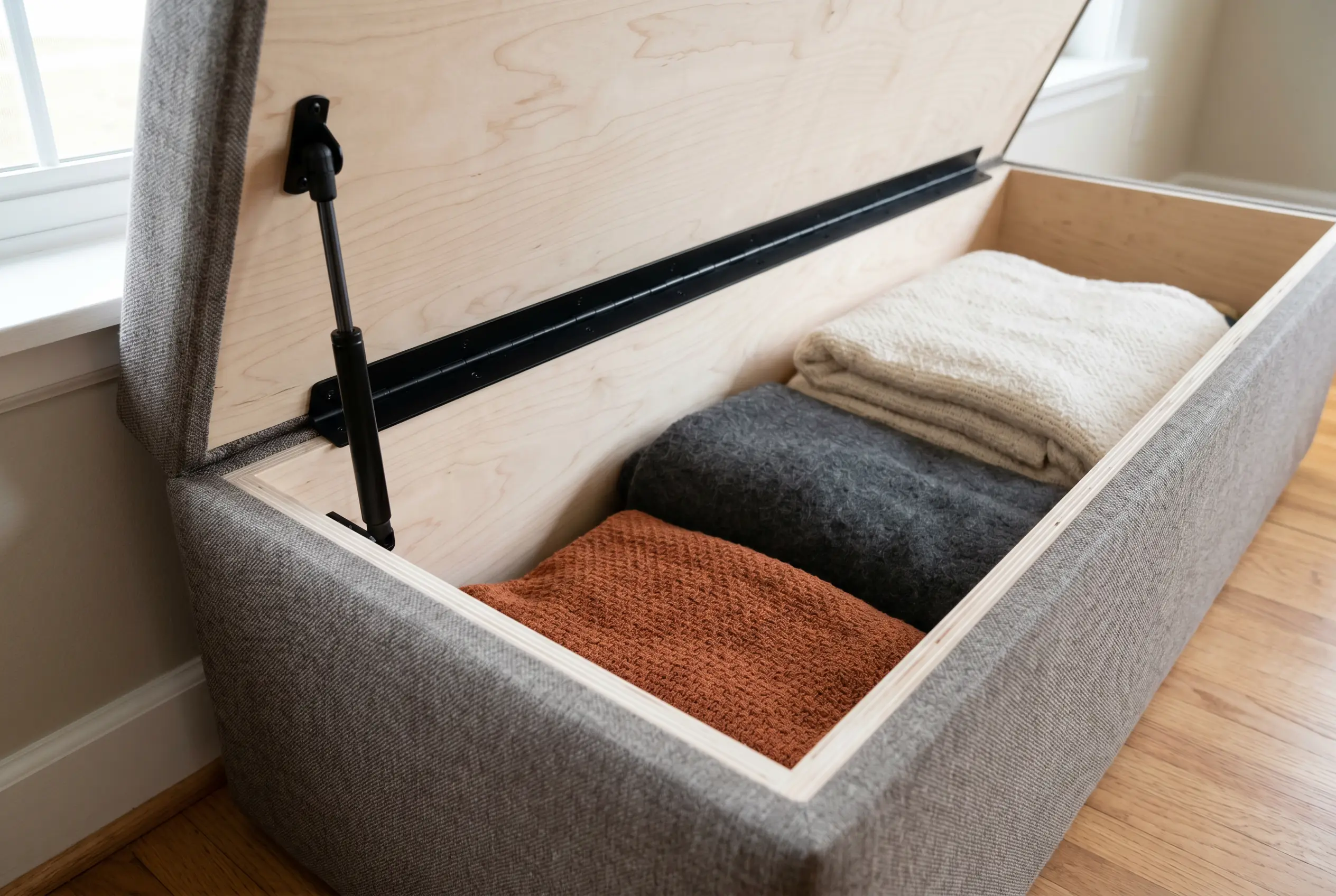
For Manhattan apartments with traditional or transitional interiors, we frequently work with white oak, walnut, and hard maple - species that machine cleanly, accept stains and paints beautifully, and hold up over decades of use. For painted millwork, MDF panels combined with solid wood frames deliver a smooth, flawless finish that paint-grade work demands. Hardware choices - drawer pulls, lift-top hinges, piano hinges for access panels - are selected for both aesthetic compatibility and durability, since a window seat that gets daily use needs hardware that can handle it.
Storage Configuration Options: Drawers, Lift-Top, and Cabinet Doors
The storage configuration beneath a window seat determines how the piece actually functions day to day, and there's no single right answer - it depends on what you need to store and how you prefer to access it.
Lift-top storage is the most common configuration: the upholstered seat lifts on piano hinges or gas-piston supports to reveal a single deep cavity. It's ideal for bulky items - extra bedding, seasonal throws, large pillows - that you access infrequently. The uninterrupted seat surface is clean and visually simple.
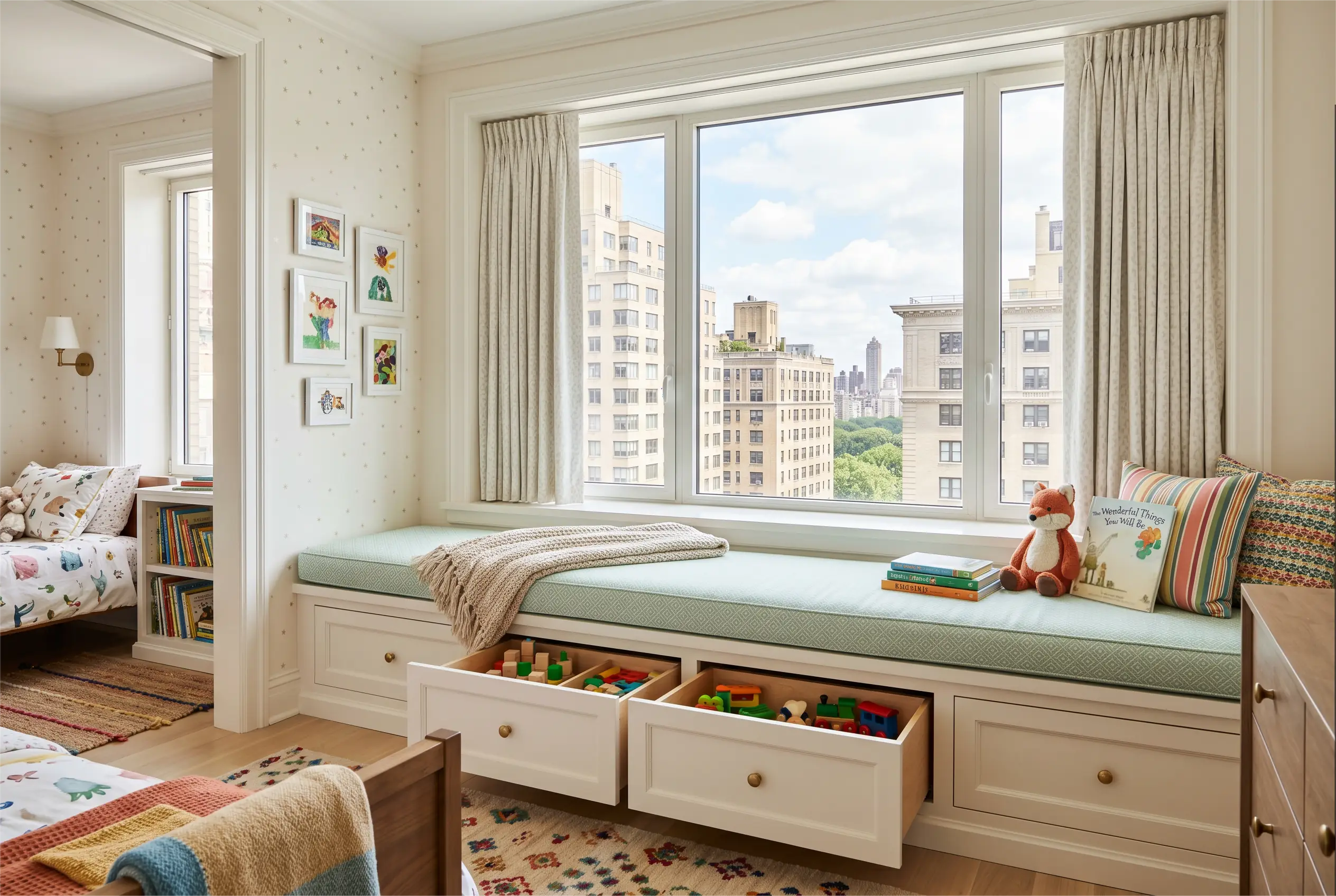
Drawer configurations work best when you want regular, easy access to stored items. Drawers can run the full depth of the seat or be designed as shallower units for specific categories of items. For children's bedrooms, pull-out drawers accessible from the seat front make toy storage intuitive and effortless.
Cabinet door configurations with concealed shelving are common when the window seat runs at full floor height - essentially a built-in bench with enclosed shelving below, doors that match surrounding cabinetry, and a cushioned top. In living rooms and dining areas, this approach allows the window seat to read as part of a larger built-in storage system.
Many of our clients opt for a combination: lift-top storage in the center section with drawers on either side, or a bank of drawers flanked by cabinet doors. The flexibility of custom millwork means the configuration is entirely determined by your needs.
Contact KS Renovation Group to discuss which storage configuration makes the most sense for your space.
Beyond Storage: Designing a Multi-Functional Window Seat
The most successful window seat projects do more than solve a storage problem. They create a destination - a place in the apartment that has a distinct purpose and character, that draws people to it and makes the room feel more considered and complete.
Reading Nooks and Study Alcoves
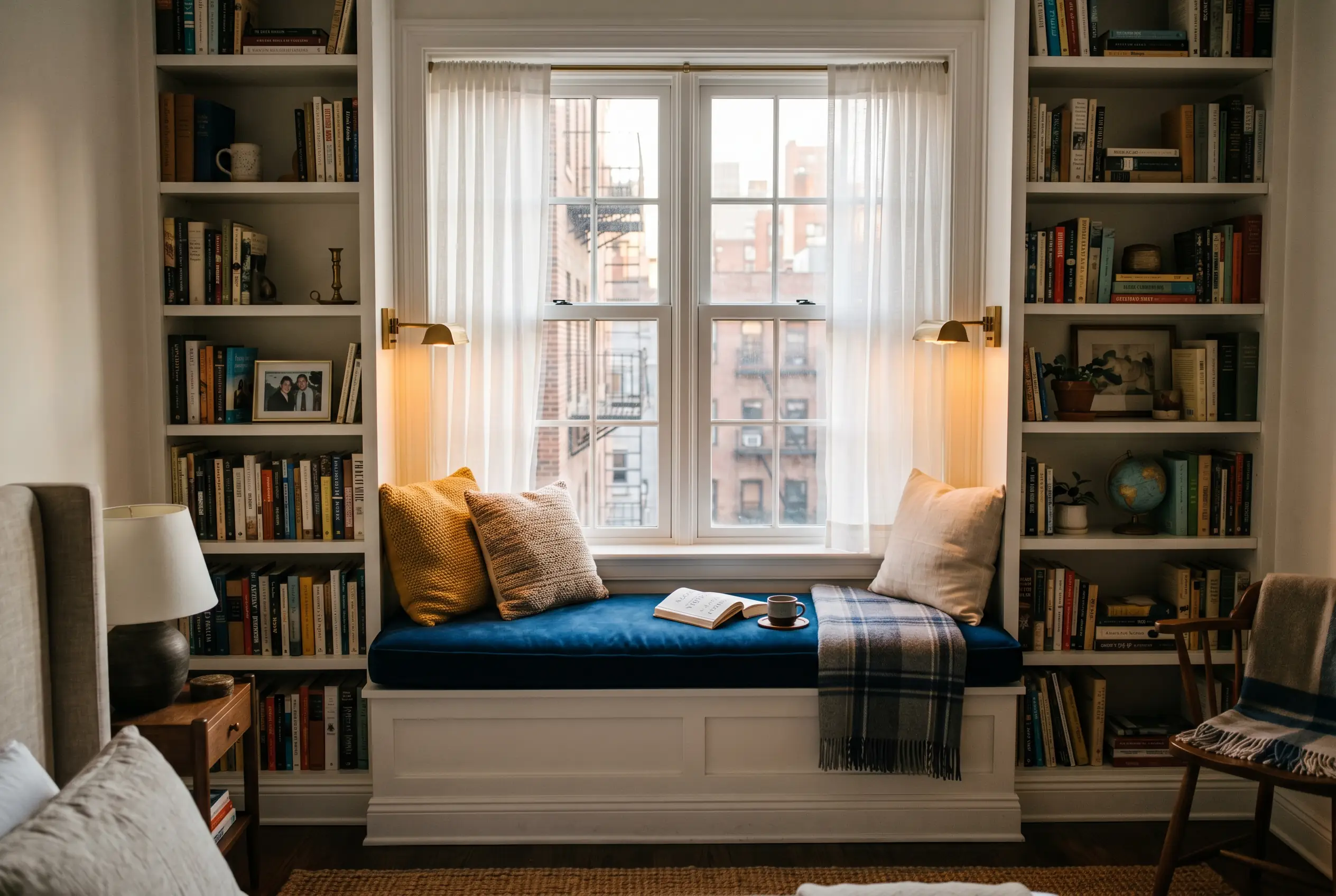
The reading nook is the window seat's most natural identity. Positioned beside a window with good natural light, fitted with a cushioned seat and back cushions, and surrounded by built-in shelving or bookshelves on adjacent walls, a window seat becomes the kind of domestic retreat that Manhattan apartments rarely have room for any other way.
In bedrooms, a window seat reading nook works beautifully in the corner near a window, often with a low built-in bookshelf or cabinet running alongside. In apartments with children, it becomes a homework station and quiet corner. In primary bedrooms, it's a morning coffee spot that keeps bedroom traffic away from the main sleeping area - a luxury that apartment living rarely allows otherwise.
For the shelving that often flanks a window seat reading nook, we integrate lighting - recessed puck lights within the shelving units, LED strip lighting along the underside of upper shelves, or picture lighting positioned to illuminate art hung above the seat. Lighting elevates the function and the atmosphere simultaneously.
Window Seat Benches in Living Rooms and Entryways
In Manhattan living rooms, a window seat can replace a sofa or supplement existing seating - expanding usable seating without adding freestanding furniture that consumes floor space. This is especially valuable in living rooms with large bay windows or floor-to-ceiling windows where the window wall doesn't accommodate a sofa placement naturally.
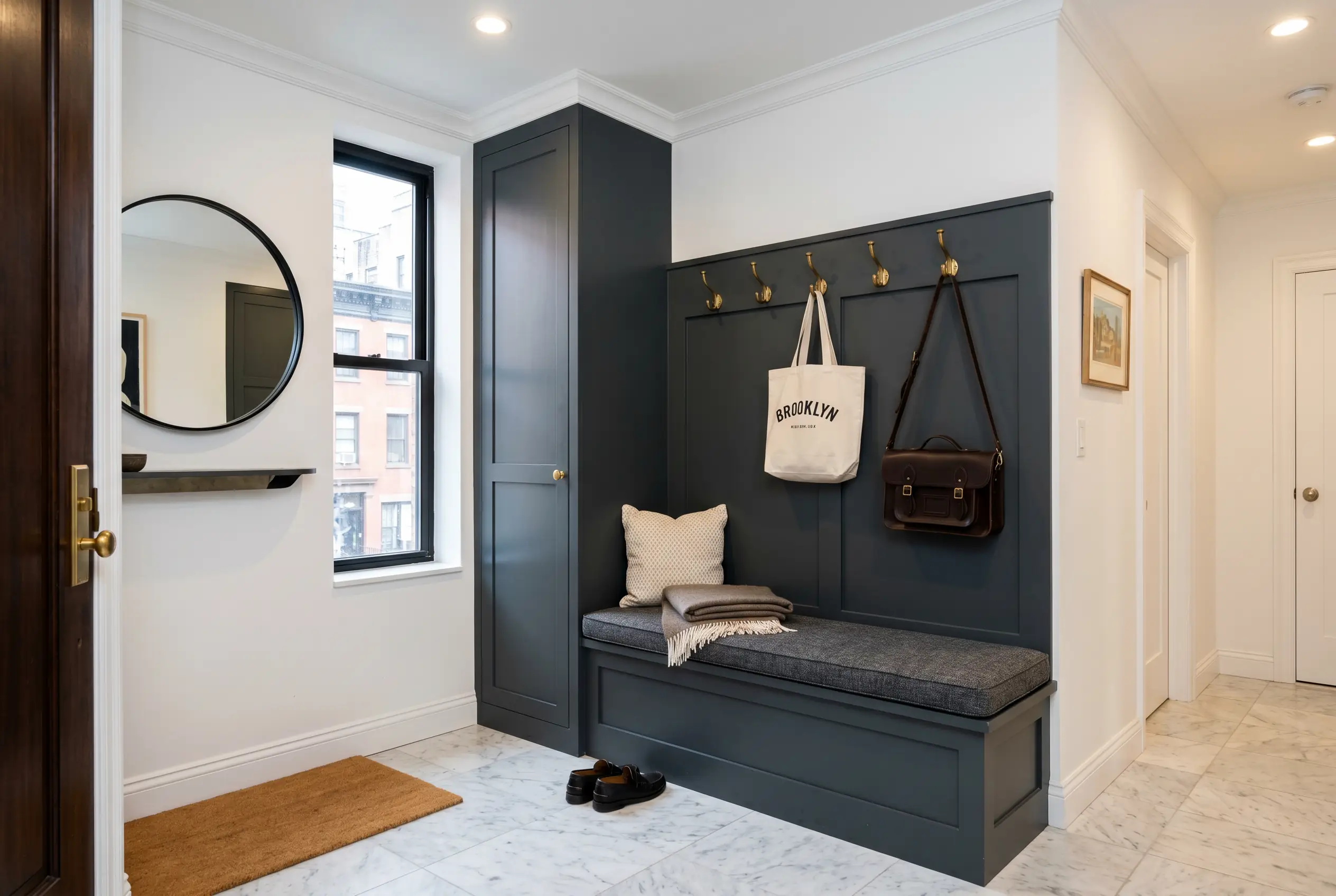
Entryway window seats are another high-value application. A built-in bench near the entry with lift-top storage for shoes, with hooks above for coats and bags, and a cushioned surface for putting on shoes - this is the kind of functional luxury that Manhattan apartments sacrifice to the front hall closet. When designed with quality millwork and upholstery, an entryway window seat becomes the first design impression guests receive.
Integrating Electrical, USB Charging, and Lighting
Modern window seat design anticipates technology. Within the built-in structure, we can integrate:
- Recessed USB and electrical outlets within the seat frame or along the back wall, positioned for phone charging or laptop use
- Under-seat LED lighting for visual accent and practical illumination
- Integrated reading lights mounted within adjacent built-in shelving
- Smart switch connectivity that ties the window seat lighting into your home automation system
These integrations require coordination with a licensed electrician - work that our team manages as part of the overall millwork project. In NYC co-ops where electrical work requires permits and board notification, we handle the compliance process so you don't have to.
The KS Renovation Group Approach to Custom Window Seat Millwork
What distinguishes a custom millwork project from a carpenter installing a prefabricated bench is the depth of the process - the design thinking, the material quality, the in-house fabrication, and the installation precision that determines how the finished piece looks and functions in your specific apartment.
In-House Fabrication: Why It Matters
KS Renovation Group designs and builds custom millwork in our own workshop. This is not the industry standard - many renovation companies that offer “custom” millwork are actually coordinating with third-party cabinet shops and absorbing the lead time, quality variability, and communication gaps that come with that arrangement.
When we fabricate in-house, we control every step: the wood selection, the joinery, the finishing, the hardware installation, and the quality inspection before a piece leaves our shop. If something isn't right, we catch it before it arrives in your apartment - not after installation is complete. The result is millwork that fits precisely, finishes consistently, and holds up over decades of use in the way that Manhattan apartments demand.
Working Within Co-Op and Condo Building Requirements
Manhattan co-op boards and condo associations have varying requirements for renovation work, and built-in millwork occupies an interesting middle ground. Most boards consider fixed built-ins - window seats attached to the wall or floor - to be alterations that require disclosure and often approval. The specific requirements vary by building, and navigating them incorrectly can lead to work stoppages, fines, or required removal.
Our team works in Manhattan buildings constantly. We know the documentation that boards typically request - drawings, contractor insurance certificates, noise restriction compliance, elevator scheduling - and we prepare everything correctly from the start. Your co-op board doesn't need to be an obstacle; with proper preparation, it's simply a step in the process.
Timeline, Process, and What to Expect
A custom window seat project - from initial consultation through completed installation - typically unfolds over eight to twelve weeks, though the timeline varies based on design complexity, material lead times, and building access requirements.
The process begins with a site visit and design consultation where we assess the space, discuss your storage needs and design preferences, and take precise measurements. From there, our design team produces detailed drawings for your review and approval. Once design is finalized, fabrication begins in our workshop while we coordinate any necessary building approvals. Installation is typically completed in one to three days depending on scope.
The result is a permanent addition to your apartment that looks as if it was always there - because with custom millwork, that's exactly the point. Schedule a consultation with KS Renovation Group to begin planning your window seat project.
Conclusion
Manhattan apartment living demands creativity with space - and window seats represent one of the most elegant solutions available. They convert architectural features that most residents ignore into functional, beautiful storage that genuinely improves daily life. Approached with custom millwork and thoughtful design, a window seat built-in becomes one of the most distinctive elements of your apartment: something visitors notice, something you use every day, and something that adds real, lasting value to your property.
The difference between a good window seat project and a great one lies in the craftsmanship: the precision of the fit, the quality of the materials, the intelligence of the storage configuration, and the attention to the details that you'll interact with for years to come. That's what custom millwork from KS Renovation Group delivers - not a product selected from a catalog, but a piece designed and built specifically for your home.
Spring is the right moment to plan a fall installation, before summer schedules complicate coordination. Contact KS Renovation Group today to discuss your window seat vision with Manhattan's custom millwork specialists.
Frequently Asked Questions
1. Does a built-in window seat require co-op board approval in Manhattan?
It depends on your building's alteration agreement and board policies. Most Manhattan co-op boards consider fixed built-ins - window seats that are attached to walls or floors - to be alterations requiring disclosure and, in many cases, formal approval. The process typically involves submitting renovation plans, contractor documentation, and an alteration agreement deposit. KS Renovation Group handles this documentation process as part of every project, ensuring your renovation proceeds correctly from the start.
2. How much storage does a window seat actually provide?
This depends on the dimensions of your window seat and the storage configuration. A typical window seat measuring five feet wide by twenty inches deep by sixteen inches high provides roughly eight to ten cubic feet of storage - enough to hold a set of queen-sized bedding, a dozen throw pillows, or a significant collection of board games and children's toys. With drawer configurations, you get divided, easily accessible storage categories rather than a single deep cavity. Our design team will help you choose the configuration that best matches what you actually need to store.
3. What's the difference between custom millwork and prefabricated window seat kits?
Prefabricated window seat kits are designed to approximate common window dimensions, but Manhattan apartments rarely conform to standard measurements. The result with off-the-shelf products is typically visible gaps, awkward transitions with existing baseboards and moldings, and a finished look that reads as installed rather than built-in. Custom millwork is fabricated to your apartment's exact measurements and designed to integrate seamlessly with your existing architecture - so the finished piece looks as if it was original to the building.
4. Can a window seat be installed in an apartment with steam radiators?
Yes, but it requires careful planning. Steam and hot water radiators need adequate clearance for heat to dissipate, and enclosing a radiator without proper ventilation can create heat buildup and efficiency problems. When we design window seat millwork around radiators, we incorporate ventilation grilles or open base sections that allow heat to circulate properly while still delivering the built-in aesthetic. We assess radiator placement and heat output as part of the design process for every window seat project.
5. How do I choose the right upholstery for a Manhattan apartment window seat?
The right upholstery depends on the room's use, the presence of children or pets, and your design preferences. For high-traffic areas, performance fabrics - those rated for heavy use and treated for stain resistance - are strongly recommended; brands like Sunbrella and Crypton offer designer-quality options engineered for durability. For bedrooms or low-traffic sitting areas, natural fabrics like linen, cotton velvet, or wool blends work beautifully and offer a softer, more luxurious feel. Cushion thickness and firmness affect comfort significantly - we recommend a minimum of three to four inches for seated use. Our team can coordinate with upholsterers to ensure your cushion is made to the exact seat dimensions.

You may also be interested

KS Renovation Blog
Get Inspired
Meaningful information about home remodeling for the true NYC homeowners.

OUr Clients Say

William Plotch
amy schorr
gberaka
NYC kitchen remodeling Projects and more


