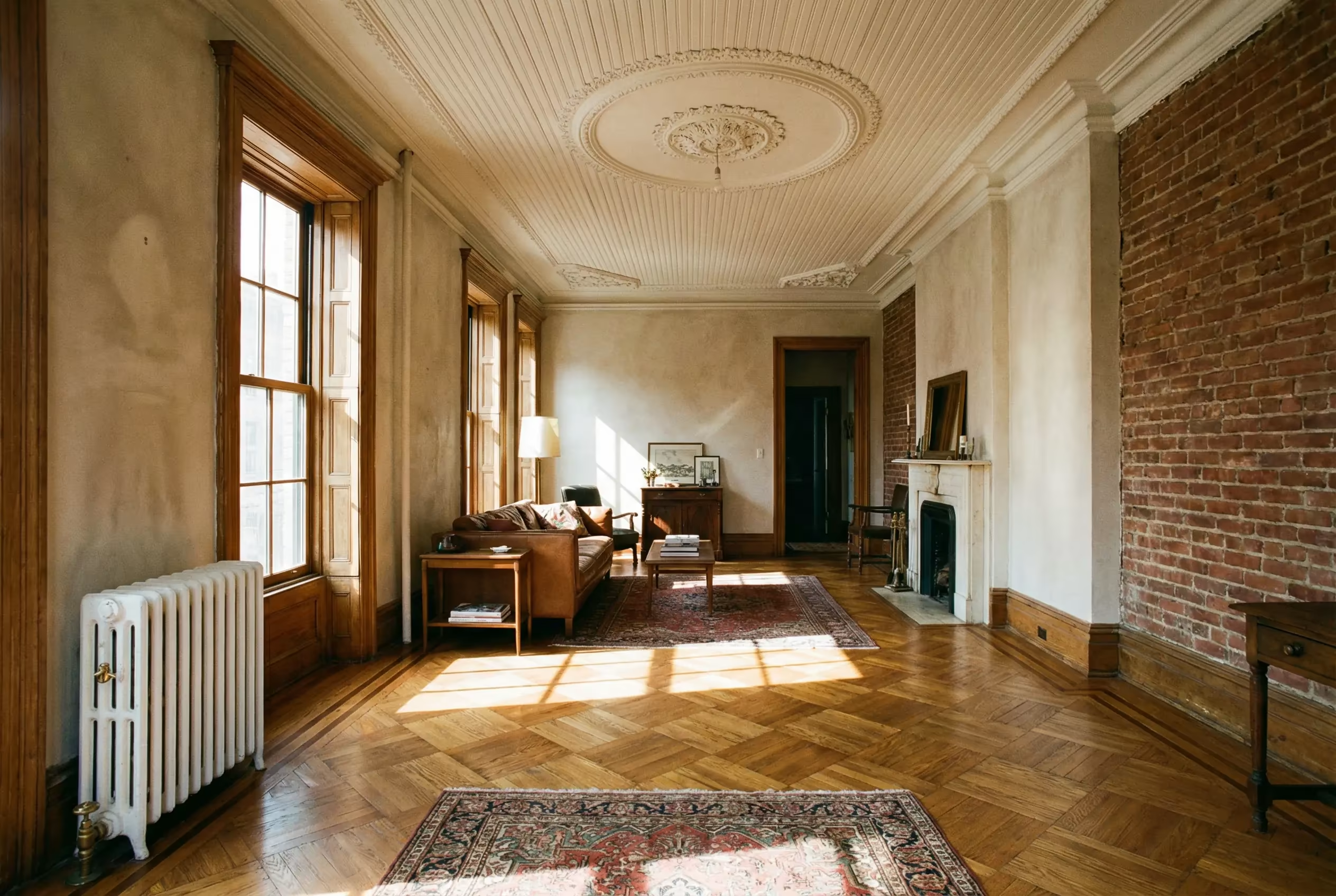
The radiator hisses, the windows rattle, and your 1920s Upper West Side apartment swings between sweltering and freezing – sometimes in the same day. If you’re living in one of Manhattan’s magnificent pre-war buildings, you already know that climate control is less about comfort and more about strategy. These architectural treasures, with their soaring ceilings, thick masonry walls, and zero ductwork, weren’t designed for modern HVAC systems. Yet here you are, trying to make it work.
Here’s the truth: standard HVAC solutions fail spectacularly in pre-war buildings. The very features that make these apartments so desirable – plaster walls, ornate moldings, solid construction – become obstacles when you’re trying to install modern climate control. But here’s the better truth: custom HVAC solutions designed specifically for historic buildings can give you the comfort of new construction while preserving everything you love about pre-war architecture.
At KS Renovation Group, we’ve spent years solving the exact climate control challenges that plague Manhattan’s historic buildings. This isn’t about forcing square pegs into round holes – it’s about understanding how these buildings work and designing systems that complement their unique architecture.
Why Standard HVAC Systems Fail in Pre-War Manhattan Apartments
The Ductwork Dilemma
Pre-war buildings were constructed before central air conditioning existed. That means there’s absolutely no space for ductwork – no ceiling cavities, no utility chases, no infrastructure whatsoever. Traditional HVAC systems require extensive ductwork that would need to run through solid plaster walls, carved ceilings, and across rooms with 10+ foot heights. Installing conventional central air would require demolishing architectural details that took craftsmen months to create.
The math simply doesn’t work. A standard HVAC installation assumes drywall construction with drop ceilings – neither of which exist in authentic pre-war apartments. You’d need to sacrifice closet space, build bulkheads that destroy your ceiling height, or run exposed ducts that would be both ugly and inefficient.
Architectural Obstacles That Block Traditional Solutions
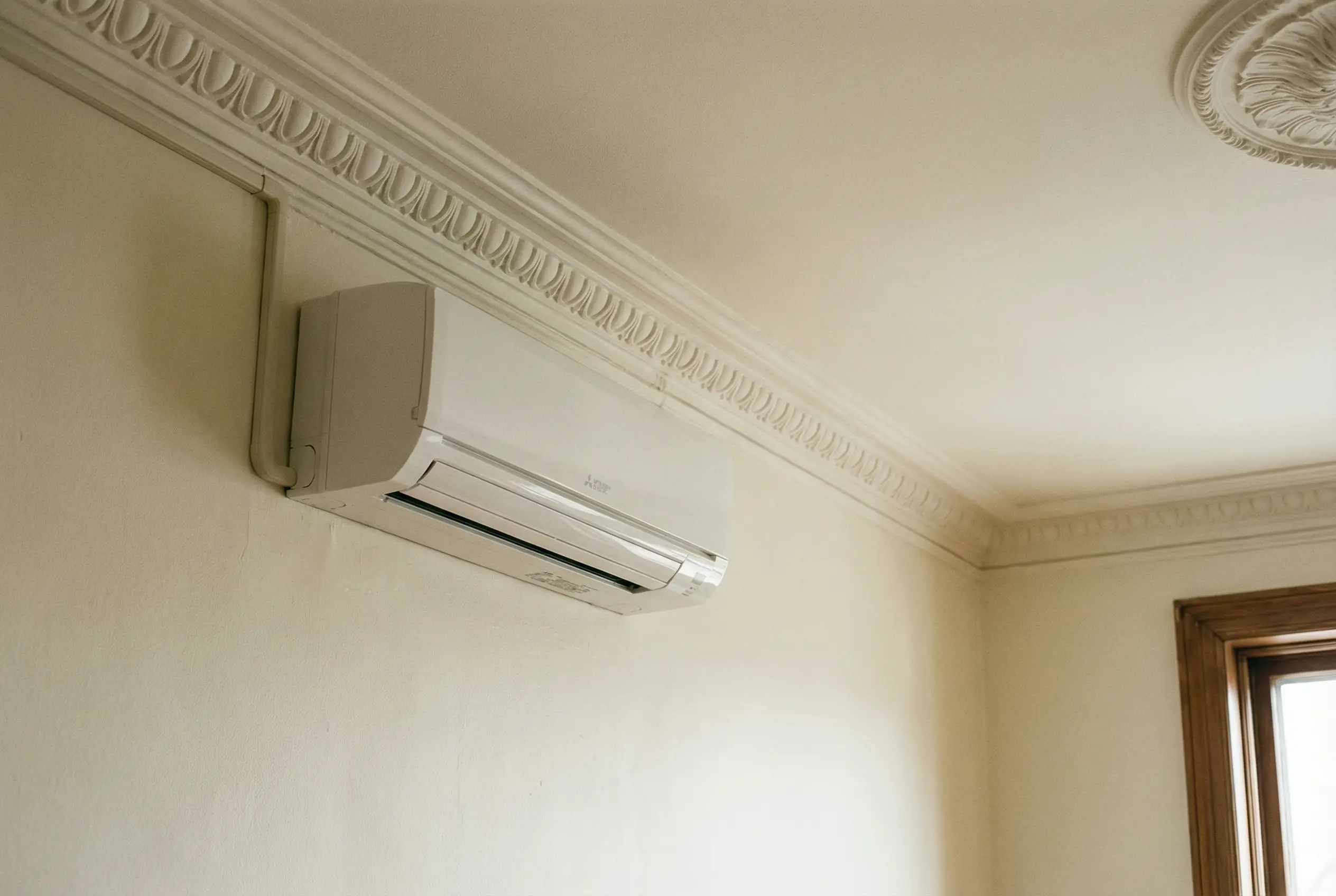
Those beautiful thick walls that keep street noise at bay? They’re 12-18 inches of solid masonry that you can’t just drill through. The ornamental plasterwork, crown molding, and medallions aren’t cosmetic – they’re part of the building’s character and often protected by landmark regulations. Your stunning hardwood floors laid in intricate patterns can’t be torn up to run utilities.
Every pre-war apartment presents unique challenges: unusual room layouts, windows that don’t accommodate standard units, limited electrical capacity from outdated panels, and building management restrictions that would make your contractor weep. Standard HVAC companies take one look and either quote you an astronomical price or suggest compromises that would gut your apartment’s character.
The Window Unit Trap
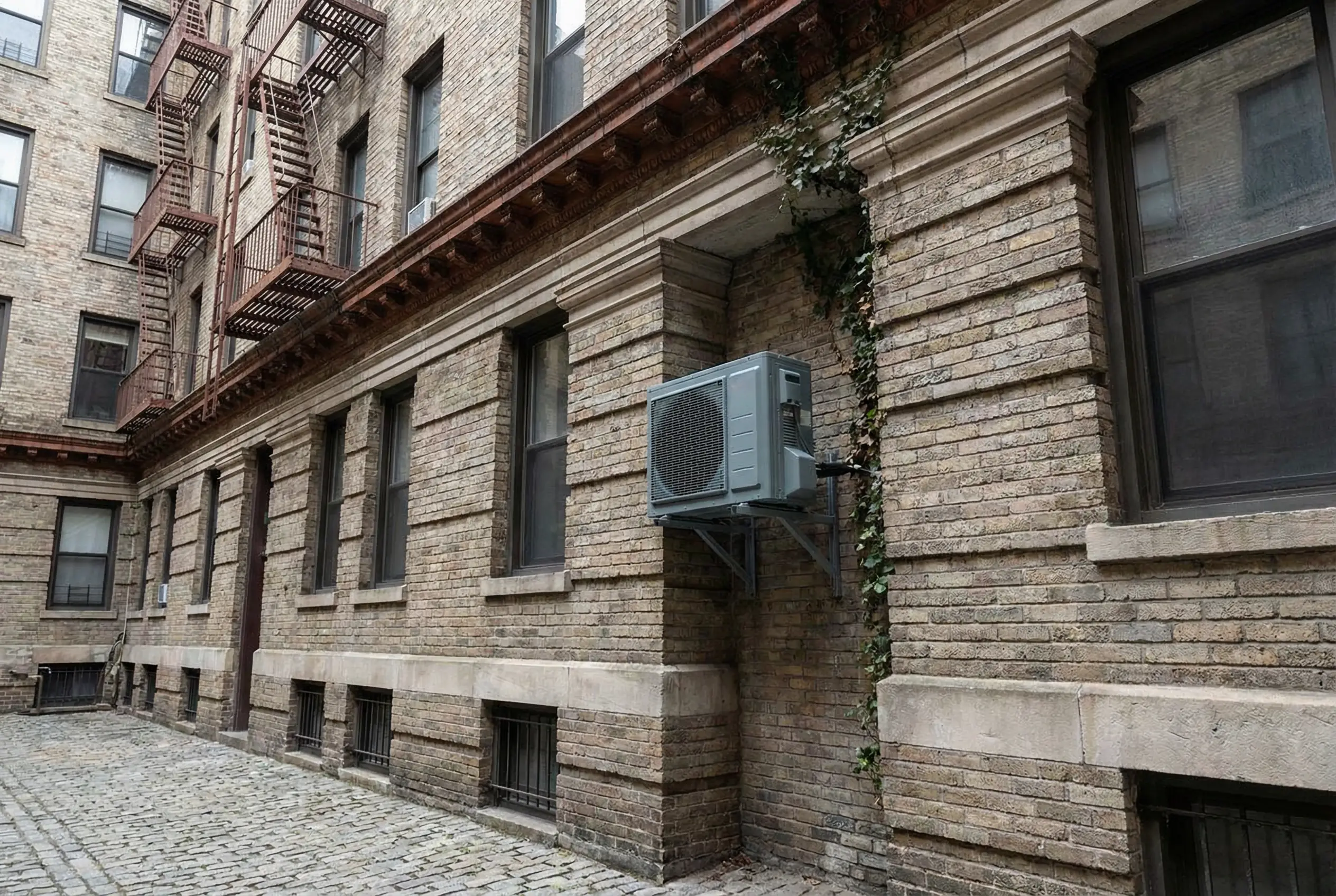
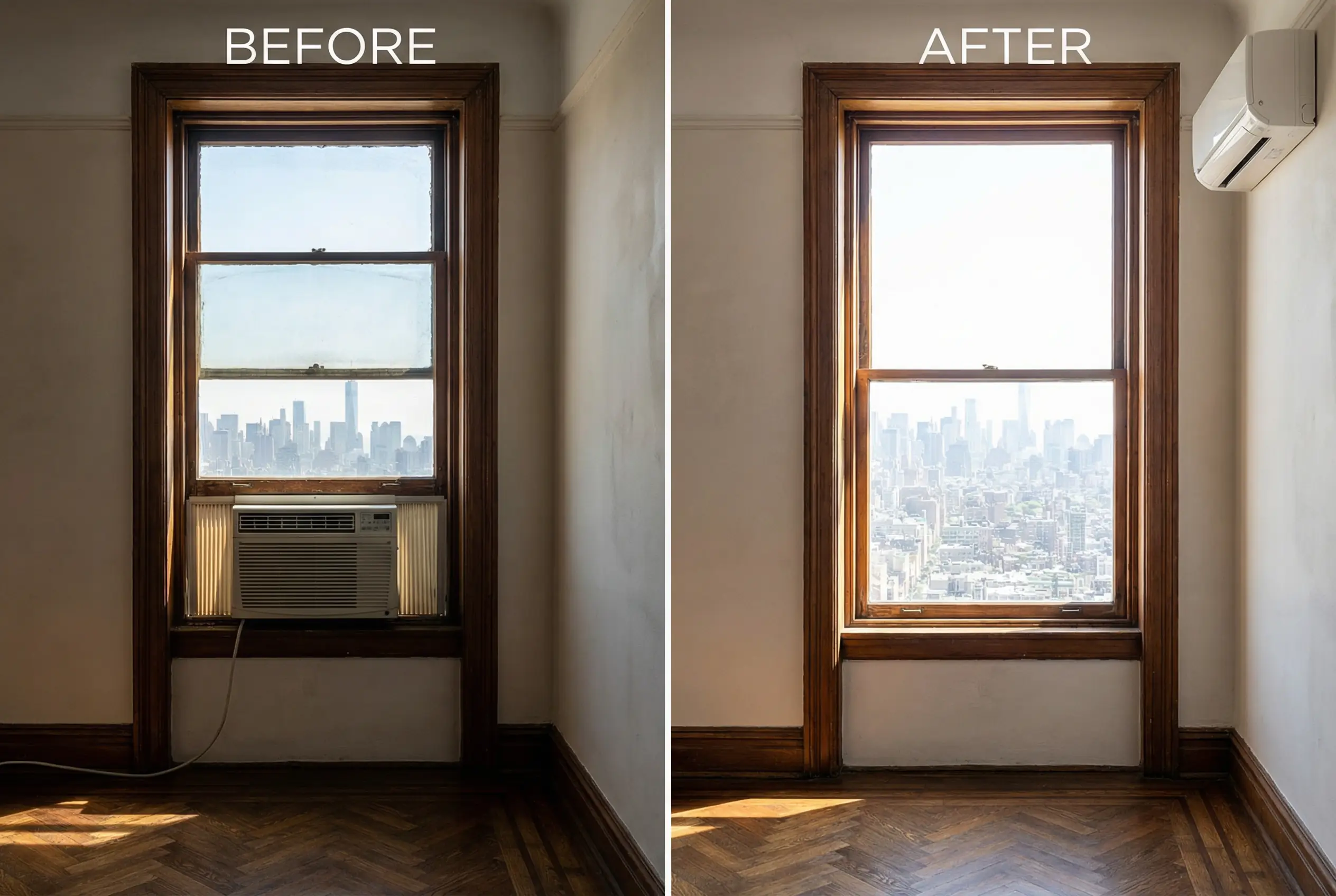
Many residents resort to window air conditioners – the path of least resistance. But anyone who’s lived with them knows the reality: they’re loud, inefficient, block your gorgeous windows and views, create security vulnerabilities, and provide uneven cooling that leaves some rooms arctic while others remain stuffy. Plus, most pre-war buildings have strict rules about exterior appearance, and a dozen window units protruding from a landmark building isn’t going to pass co-op board approval.
Window units also can’t provide heat, leaving you dependent on radiator steam heat that you can’t control. You’re at the mercy of your building’s boiler schedule, overheating in mild weather and freezing during cold snaps.
Custom Ductless Mini-Split Systems: The Pre-War Solution
How Ductless Technology Works in Historic Buildings
Ductless mini-split systems were practically invented for buildings like yours. Instead of forcing air through miles of ductwork, these systems use small refrigerant lines – about the diameter of a garden hose – that can be routed through existing chases, closets, or small penetrations in walls. An outdoor compressor connects to one or more indoor units, providing both heating and cooling without touching your architectural details.
The installation requires minimal disruption. Refrigerant lines can be concealed behind crown molding, run through closet spaces, or tucked into architectural features. Indoor units mount on walls or can be recessed into ceilings where appropriate, providing powerful climate control without the infrastructure nightmares of traditional systems.
What makes mini-splits revolutionary for pre-war apartments is their flexibility. Each indoor unit operates independently, meaning you can cool your bedroom while leaving your living room comfortable, or heat your home office without warming the entire apartment. This zone control mirrors how you actually live, rather than treating your entire apartment as a single space.
Strategic Placement for Maximum Efficiency
In pre-war apartments, proper placement isn’t just about comfort – it’s about working with your building’s unique architecture. We analyze air flow patterns around your high ceilings, identify thermal bridges in your masonry walls, and position units where they’ll distribute air most effectively without compromising aesthetics.
Your pre-war apartment likely has rooms with multiple exposures, corner units with thermal challenges, or interior rooms that standard systems can’t reach. Custom mini-split design addresses each space individually. A north-facing bedroom needs different treatment than a south-facing living room with full afternoon sun. Interior bathrooms and kitchens require solutions that window units could never provide.
The beauty of strategic placement is that it preserves your apartment’s flow. Units can be positioned to remain discreet, maintaining sight lines and architectural integrity. Our design team at KS Renovation Group specializes in creating HVAC solutions that visitors won’t even notice – until they realize how comfortable your apartment is year-round.
Aesthetic Integration with Historic Architecture
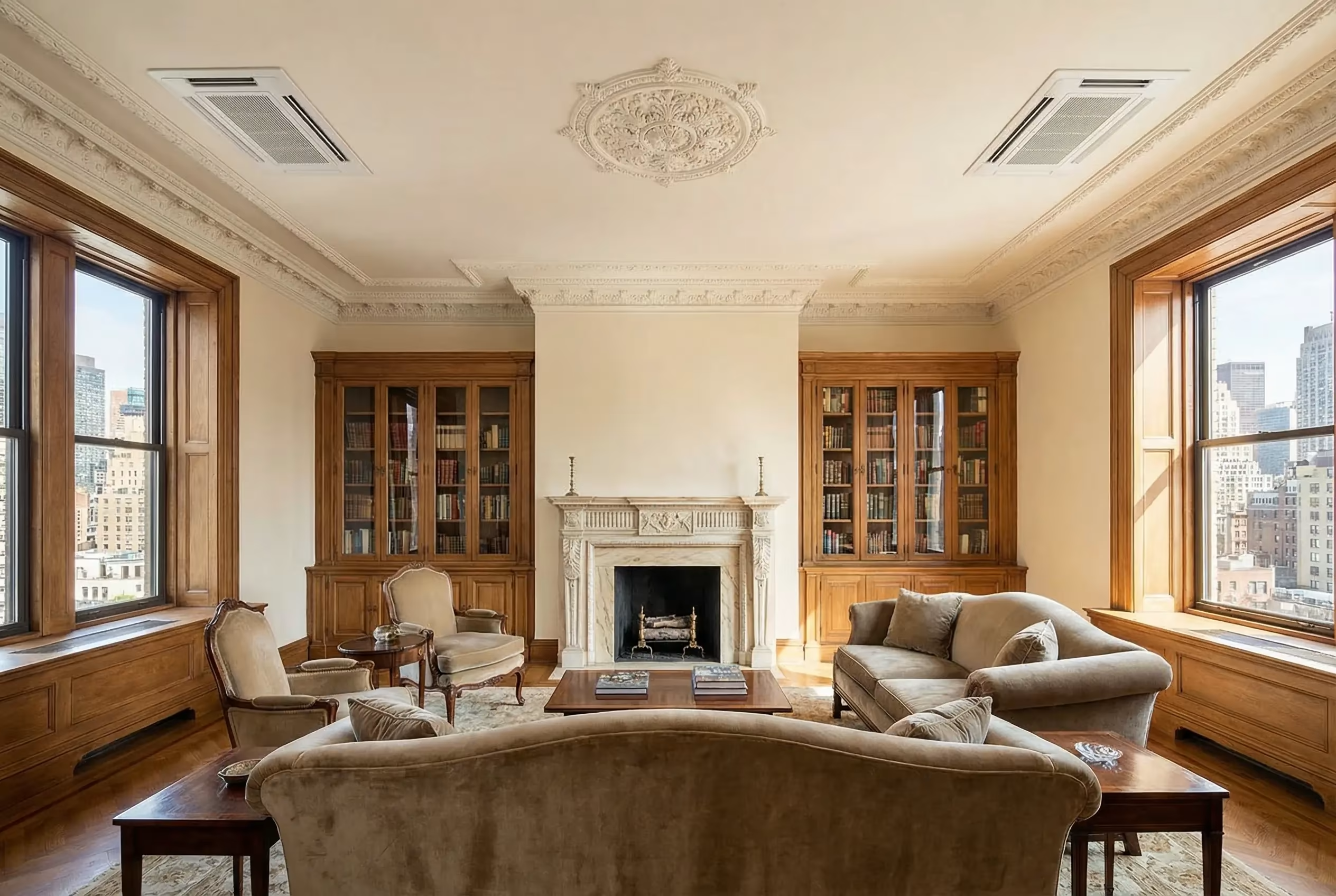
Modern ductless units are sleek, compact, and available in styles that complement pre-war design. Wall-mounted units can be positioned above doorways or in corners where they blend with your architecture. Ceiling cassette units sit flush with plaster ceilings, providing invisible climate control. We can even paint units to match your walls or coordinate with your interior design.
The outdoor compressor placement requires equal attention in landmark buildings. We work within co-op and condo regulations to position units where they’re functional but not visible from the street, maintaining your building’s historic appearance while giving you modern comfort.
VRF Systems: Enterprise-Level Climate Control for Luxury Pre-War Residences
When Mini-Splits Aren’t Enough
For larger pre-war apartments – we’re talking 2,500+ square feet with multiple bedrooms, formal dining rooms, libraries, and staff quarters – Variable Refrigerant Flow (VRF) systems offer institutional-grade climate control with residential elegance. If your apartment was once two units combined, or if you occupy an entire floor, VRF technology provides the sophisticated zoning and capacity that your space demands.
VRF systems use advanced heat pump technology to simultaneously heat and cool different zones. Your sunny living room can receive cooling while your shaded bedroom gets heat—all from the same system, all at the same time. This heat recovery capability makes VRF systems remarkably efficient, especially in spring and fall when different areas of your apartment have competing needs.
Customization for Complex Layouts
Pre-war apartments often feature layouts that would baffle modern architects: long corridors, divided spaces, rooms within rooms, and flow patterns designed for a different era of living. VRF systems excel in these environments because they can support numerous indoor units from a single outdoor compressor, each controlled independently.
Your formal entry foyer, gallery-style hallway, master suite, staff quarters, kitchen, and entertaining spaces can each maintain ideal conditions without compromise. The system adapts to how you actually use your space, not how a standard floor plan assumes you live.
KS Renovation Group’s expertise in complex residential installations means we design VRF systems that respect your apartment’s original architecture while delivering climate control that rivals new construction. We map refrigerant line routing that avoids historic details, coordinate with landmark requirements, and ensure every installation meets both mechanical and aesthetic standards.
Smart Controls for Historic Spaces
Modern VRF systems integrate with smart home technology, giving you smartphone control over every zone in your apartment. You can adjust temperatures remotely, set schedules that match your routine, and monitor system performance – all while the physical equipment remains discreetly hidden behind your pre-war architecture.
These systems learn your preferences over time, automatically adjusting for seasonal changes and usage patterns. You’re not constantly fiddling with thermostats; the system maintains your ideal comfort level intelligently.
Installation Considerations for Landmark and Co-op Buildings
Navigating Landmark Regulations and Board Approvals
If your building is designated as a landmark – and many pre-war Manhattan buildings are – you’re working within strict preservation guidelines. Exterior alterations require Landmarks Preservation Commission approval. Interior work may need review if it affects historic features. This isn’t something to navigate alone.
We’ve guided dozens of installations through landmark review, co-op board approval processes, and building management requirements. We understand what documentation landmark applications require, how to present installations in ways that emphasize preservation, and how to design systems that meet modern comfort standards while respecting historic integrity.
Co-op boards have their own concerns: noise, aesthetics, structural impact, and whether your installation might affect neighbors. We prepare detailed proposals that address these concerns proactively, including acoustical studies, structural engineering reports when needed, and visual mockups that show exactly how your system will look.
Structural Considerations in Thick-Wall Construction
Pre-war construction is built like a fortress – which creates both challenges and advantages for HVAC installation. Those thick masonry walls provide excellent thermal mass, helping stabilize indoor temperatures. But they also require specialized equipment and expertise to penetrate safely.
We coordinate with structural engineers when necessary to ensure that any wall penetrations maintain your building’s integrity. Refrigerant line routes are planned to use existing chases where possible, minimizing invasive work. When new penetrations are required, they’re positioned, sized, and sealed to preserve both structural soundness and weather protection.
Your building’s existing electrical infrastructure may also need upgrading to support modern HVAC equipment. Many pre-war buildings have electrical panels that predate modern code requirements. Our team handles electrical coordination, working with licensed electricians to ensure your HVAC installation has proper, safe power.
Timeline and Project Coordination
HVAC installation in a pre-war building isn’t a weekend project. Between board approvals, landmark reviews (if applicable), coordinating with building management for outdoor work, and the careful installation that historic buildings require, you’re looking at a multi-phase process that can take several months from initial consultation to final commissioning.
However, this timeline protects your investment. Rushed installations in historic buildings inevitably create problems – damaged architectural details, improper refrigerant line routing, inadequate sealing, or installations that fail board inspection. We approach every project with the patience and precision that pre-war buildings deserve, ensuring your climate control system will serve you reliably for decades.

Energy Efficiency and Long-Term Performance in Historic Buildings
How Modern Systems Reduce Energy Waste
Pre-war buildings are notoriously energy-inefficient by modern standards. Single-pane windows, minimal insulation, and leaky construction mean you’re heating and cooling the outdoors as much as your apartment. But modern ductless and VRF systems are so efficient that they overcome many of these disadvantages.
Inverter technology allows these systems to run continuously at low capacity rather than cycling on and off like traditional HVAC. This provides more consistent comfort while using less energy. The ability to zone your apartment means you’re not climate-controlling spaces you’re not using – a huge advantage in large pre-war layouts.
Many of our clients see dramatic reductions in their utility bills even compared to window units, despite having far more comprehensive climate control. The combination of efficient equipment and smart zoning simply uses less energy than older technology.
Maintenance and Longevity in Older Buildings
One of the biggest advantages of ductless and VRF systems in pre-war buildings is their minimal maintenance requirements. No ductwork means no dust accumulation, no duct cleaning, and better indoor air quality. The systems are designed for long service lives with straightforward annual maintenance.
Your building’s thick walls and solid construction actually protect HVAC equipment from some of the stresses that affect systems in modern buildings. There’s less vibration, more stable mounting surfaces, and better protection from external temperature extremes.
We recommend annual professional maintenance to keep your system running optimally, but the day-to-day reliability of properly installed ductless systems is exceptional. Many systems run for 15-20 years with nothing more than filter cleaning and routine check-ups.

Future-Proofing Your Historic Apartment
Installing a custom HVAC system isn’t just about solving today’s comfort problems – it’s about protecting your investment for decades to come. Climate-controlled apartments command premium prices in Manhattan’s competitive real estate market. Buyers increasingly expect modern comfort even in historic buildings, and a professionally installed ductless or VRF system significantly enhances your apartment’s value.
Moreover, as building codes evolve and environmental regulations tighten, having an efficient, modern climate control system positions you ahead of future requirements. You’re not scrambling to comply with new mandates; you’re already there.
KS Renovation Group designs systems with expansion in mind. If you renovate additional rooms or combine apartments in the future, we can often extend your existing system rather than starting from scratch.
Conclusion: Comfort Meets Preservation
Living in a pre-war Manhattan apartment means enjoying architectural beauty, solid construction, and the character that modern buildings simply can’t replicate. You shouldn’t have to sacrifice climate comfort for historic charm. Custom ductless mini-split and VRF systems deliver both – modern temperature control that respects and preserves the architectural features that make your apartment special.
The key is working with specialists who understand both HVAC technology and historic building construction. KS Renovation Group has solved climate control challenges in hundreds of pre-war Manhattan apartments across all five boroughs. We know how to navigate landmark regulations, satisfy demanding co-op boards, and design installations that maintain your building’s integrity while delivering the comfort you deserve.
Winter in Manhattan is unforgiving. If you’re still fighting with radiators, juggling window units, or simply accepting that parts of your apartment will always be uncomfortable, it’s time to explore what modern HVAC technology can do for your pre-war space. Contact KS Renovation Group today for a consultation. We’ll assess your apartment’s unique requirements, discuss your comfort goals, and design a climate control solution that works as beautifully as your building’s architecture.
Don’t let another season pass in discomfort. Reach out now to discover how custom HVAC solutions can transform your pre-war apartment into a year-round sanctuary.
Frequently Asked Questions
Q: Will installing a ductless mini-split system damage my apartment’s historic features like crown molding or plaster walls?
A: Properly designed and installed ductless systems require minimal penetration and can be routed to avoid historic details entirely. Refrigerant lines are small enough to hide behind existing molding, run through closets, or route along architectural features where they’re invisible. Experienced installers who specialize in pre-war buildings know how to preserve plaster integrity, work around ornamental details, and complete installations without damaging the features that make your apartment special.
Q: How long does it take to get co-op board approval for HVAC installation in a pre-war building?
A: Board approval timelines vary significantly depending on your building’s specific requirements and review schedule. Most boards meet monthly, and HVAC proposals typically need detailed documentation including equipment specifications, installation plans, and sometimes engineer letters. The process generally takes 4-8 weeks, though landmark buildings may require additional time for Landmarks Preservation Commission review. Working with an experienced contractor who prepares comprehensive applications substantially speeds the process.
Q: Can ductless systems provide enough heating for a pre-war apartment during harsh Manhattan winters?
A: Yes, modern cold-climate ductless heat pumps are engineered to perform efficiently even when outdoor temperatures drop well below freezing. These systems provide reliable heat throughout Manhattan’s winter, often more effectively than radiator steam heat because you control the temperature precisely. Many buildings maintain steam heat as backup, but residents find they rarely need it once ductless heating is installed. The combination of efficient equipment and your building’s thick walls actually helps maintain warmth better than many modern constructions.
Q: What happens to my window views and natural light with a ductless system versus traditional window units?
A: This is one of the greatest advantages of ductless systems – you reclaim your windows completely. Wall-mounted or ceiling-recessed indoor units don’t block any windows, preserving your views and natural light. You eliminate the visual clutter, noise, and security concerns of window units while gaining far superior climate control. For many pre-war residents, being able to actually use and enjoy their beautiful historic windows again is as valuable as the improved comfort.
Q: Are ductless systems noticeably loud in pre-war apartments with their excellent acoustics?
A: Quality ductless systems operate remarkably quietly – typically around 19-23 decibels for the indoor unit, which is quieter than a whisper. This is dramatically quieter than window air conditioners or radiator steam heat. In fact, the solid construction of pre-war buildings provides excellent sound isolation for the outdoor compressor, and indoor units are so quiet that most residents forget they’re running. The improved acoustic environment is one of the most appreciated benefits that residents mention after installation.