
New Deco Revolution: Art Deco Returns to Manhattan Apartments 2026
The gleaming brass fixtures of the Chrysler Building. The geometric patterns of Radio City Music Hall. The bold, linear elegance that once defined Manhattan's golden age is experiencing a stunning renaissance. As Houzz names New Deco the top interior design trend of 2026, Manhattan luxury apartments are witnessing a transformation that honors the city's architectural heritage while embracing contemporary sophistication.
This isn't your grandmother's Art Deco. The New Deco movement reinterprets the glamorous design language of the 1920s and 30s through a modern lens, combining chevron patterns, fluted details, and brass accents with today's open floor plans and smart home technology. For Manhattan apartment owners seeking to elevate their living spaces, New Deco offers the perfect marriage of timeless elegance and cutting-edge design.
Ready to bring the glamour of New Deco to your Manhattan apartment? KS Renovation Group specializes in luxury Art Deco Manhattan renovations that honor architectural heritage while delivering modern functionality. Contact us today for a consultation.
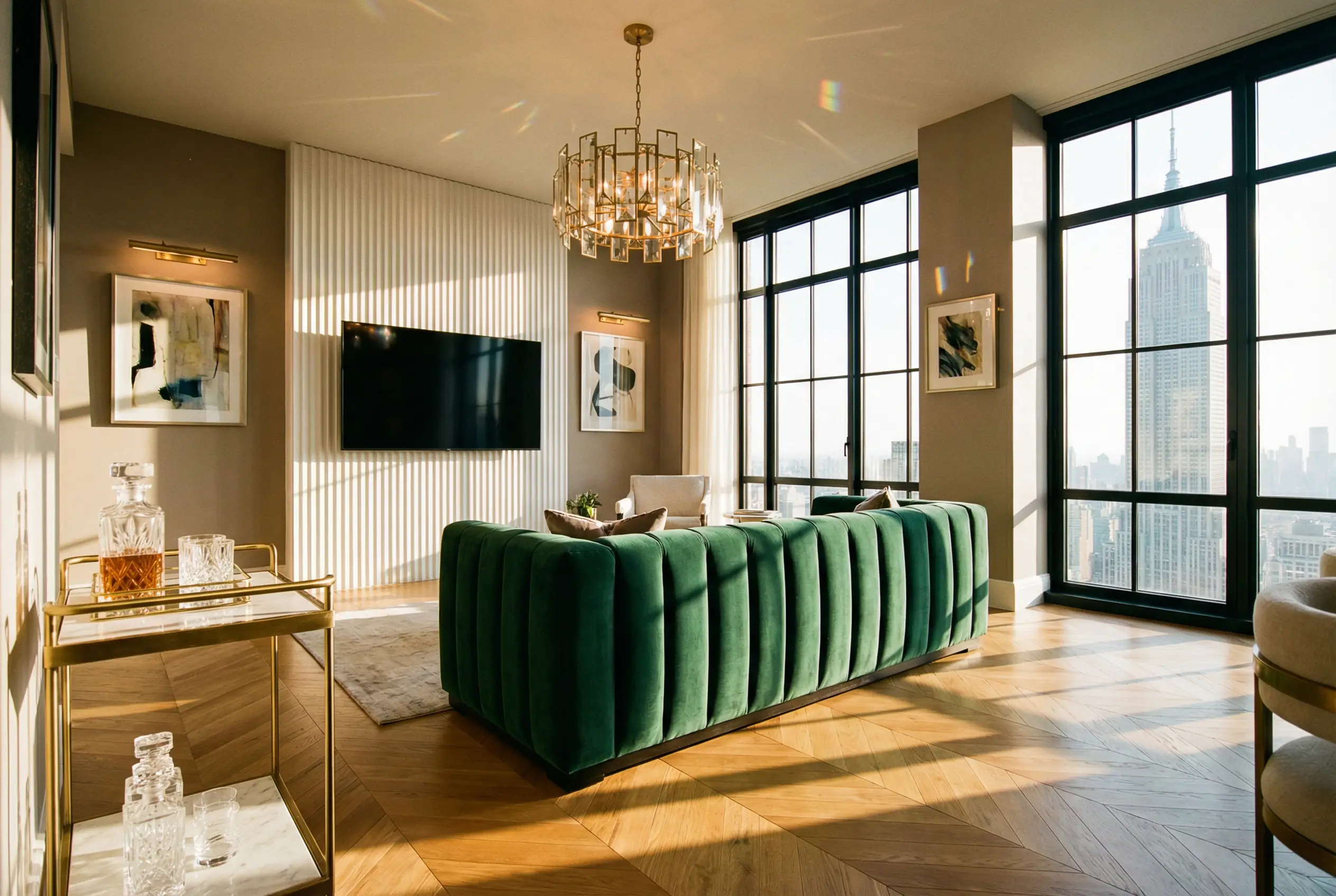
Why New Deco Is Dominating Manhattan Luxury Apartment Trends in 2026
The Perfect Storm of Nostalgia and Innovation
Manhattan's relationship with Art Deco runs deeper than mere aesthetics. The style is woven into the city's DNA, from the Empire State Building to countless pre-war apartment buildings that still define our skyline. As design trends cycle through minimalism, industrial chic, and Scandinavian simplicity, sophisticated homeowners are craving something more substantial, more rooted in New York's identity. Understanding the history of pre-war apartment architecture helps contextualize why these design elements resonate so deeply with today's homeowners.
The New Deco interior design 2026 movement responds to this hunger for substance. Unlike trends that feel imported or generic, New Deco speaks directly to Manhattan's architectural soul while offering the clean lines and functionality modern living demands. Houzz's designation as the year's top trend reflects what luxury renovation specialists have been observing: clients want spaces that feel both timeless and distinctly New York.
The Technical Advantages of Art Deco Design Elements
Beyond aesthetics, New Deco design principles offer practical benefits perfectly suited to Manhattan apartment living. The style's emphasis on vertical lines and geometric patterns creates the illusion of height in rooms with standard eight or nine-foot ceilings. Fluted wall panels add depth and texture without consuming precious square footage. Brass and bronze fixtures reflect light, brightening spaces where natural light may be limited.
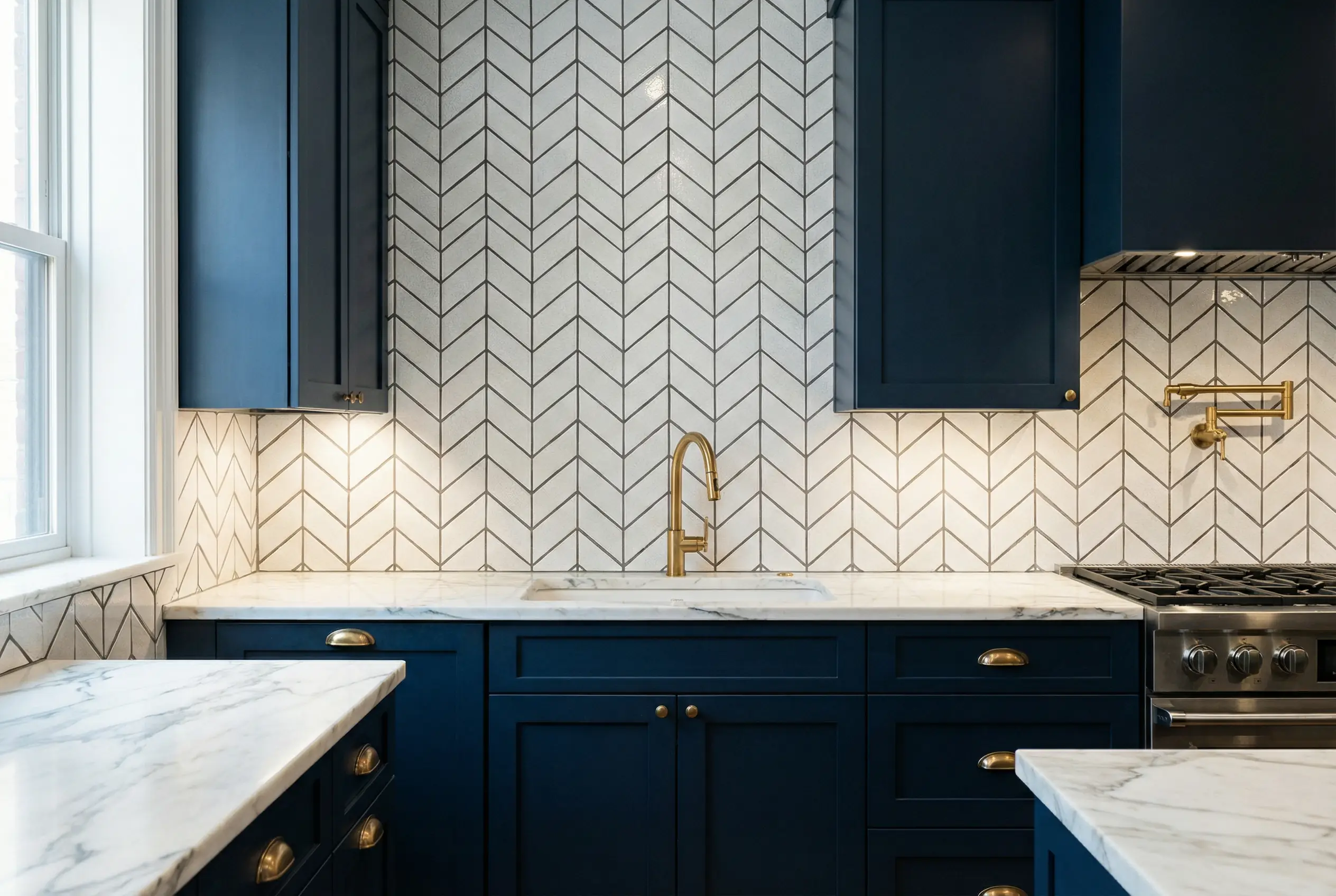
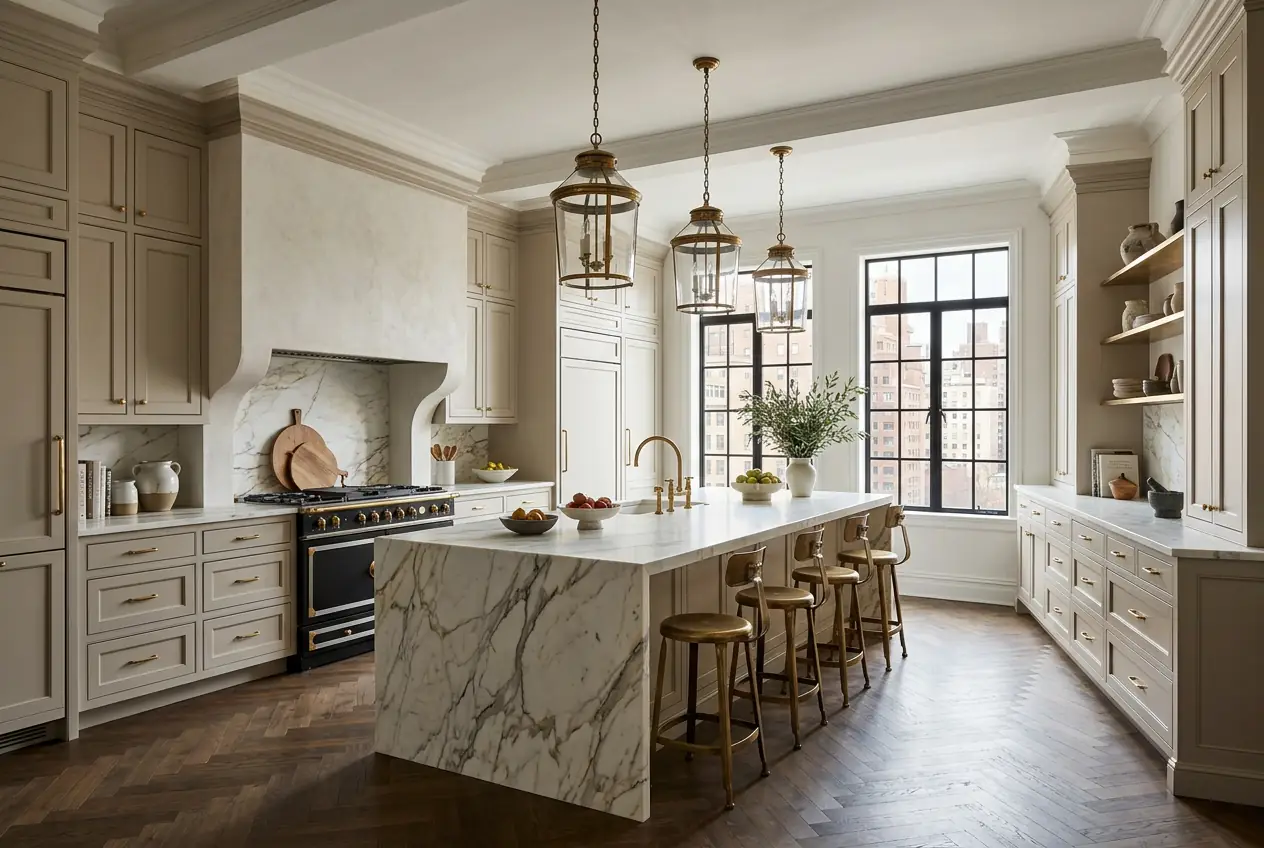
The geometric kitchen design NYC approach central to New Deco maximizes efficiency through symmetry and thoughtful organization. Chevron-patterned backsplashes draw the eye upward, making compact kitchens feel more expansive. Stepped cabinetry profiles reference Art Deco's ziggurat motifs while providing varied storage solutions for different items. For more insights on maximizing space in Manhattan kitchens, explore our comprehensive kitchen design guide.
Investment Value in Heritage Design
Luxury apartment trends come and go, but Art Deco has demonstrated nearly a century of staying power. A well-executed New Deco renovation represents not just a design choice but a smart investment in your property's long-term value. Pre-war apartments with original Art Deco details command premium prices in Manhattan's real estate market, and contemporary spaces that successfully integrate these elements position themselves within this prestigious category.
Transform your Manhattan apartment with timeless New Deco design. KS Renovation Group brings decades of experience in luxury renovations that increase both beauty and property value. Schedule your design consultation now.
Integrating Chevron Patterns Into Modern Manhattan Apartments
Flooring That Makes a Statement
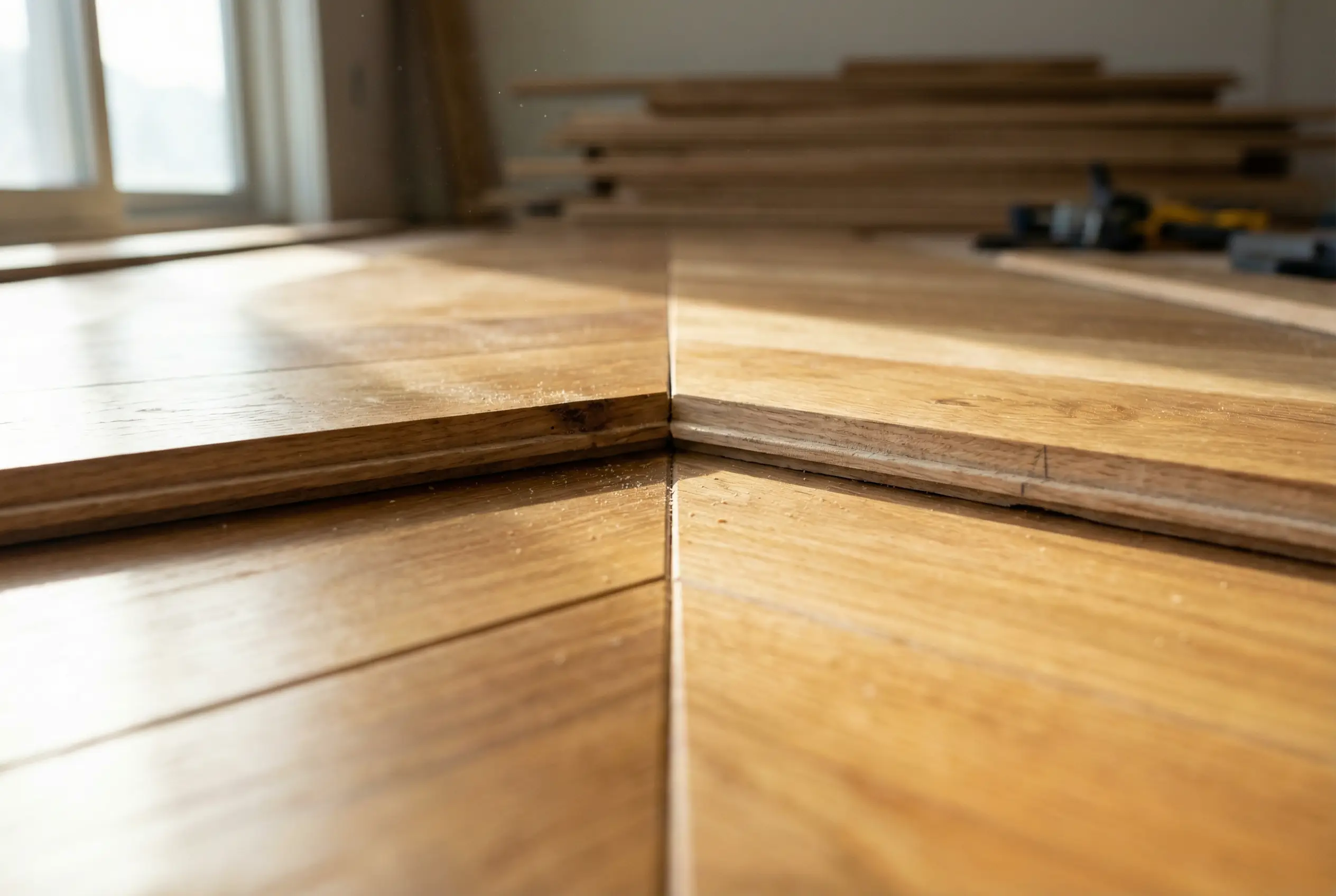
Chevron wood flooring serves as the foundation of authentic New Deco design, quite literally. Unlike the herringbone pattern that dominated earlier design trends, chevron features wood planks cut at precise angles to create continuous V-shapes that direct the eye and create dynamic visual flow. In Manhattan apartments where rooms often connect in a railroad or shotgun layout, chevron flooring provides directional guidance that makes spaces feel more cohesive and intentional.
The key to successful chevron integration lies in material selection and scale. For smaller Manhattan apartments, narrow 2-3 inch plank widths in lighter oak or walnut tones prevent the pattern from overwhelming the space. Larger residences can accommodate wider planks and bolder wood species like ebonized oak or exotic woods that reference the luxury materials popular in original Art Deco interiors.
Installation requires precision carpentry that goes beyond standard flooring work. The angle cuts must be exact, and the continuous pattern must flow seamlessly from room to room without interruption or misalignment. This level of craftsmanship distinguishes professional Art Deco Manhattan renovation work from amateur attempts. Learn more about choosing the right flooring for your Manhattan apartment in our detailed flooring guide.
Walls, Backsplashes, and Surfaces
Chevron patterns extend beyond flooring into virtually every surface opportunity. In kitchens, chevron tile backsplashes have become the signature element of geometric kitchen design NYC projects. Narrow subway tiles arranged in chevron patterns create sophisticated visual interest while remaining easier to clean than more complex geometric options. For dramatic impact, consider extending the chevron backsplash to ceiling height rather than stopping at the traditional 18-inch mark above countertops.
Powder rooms and guest bathrooms offer ideal opportunities for bold chevron applications. A single accent wall in chevron-patterned marble or porcelain tile creates a jewelry-box effect appropriate to these smaller spaces. The pattern's inherent movement prevents small bathrooms from feeling static or confined.
Subtle Integration for Cohesive Design
Not every chevron application needs to shout. New Deco design succeeds through layered sophistication rather than overwhelming pattern density. Consider subtle chevron integration through upholstery fabrics on accent chairs, the decorative profile of custom millwork, or the arrangement of rectangular tiles in entryway floors. These quieter moments of chevron patterning create rhythm throughout the apartment without competing for attention.
Mastering Fluted Details in Contemporary Spaces
Architectural Millwork That Defines Space
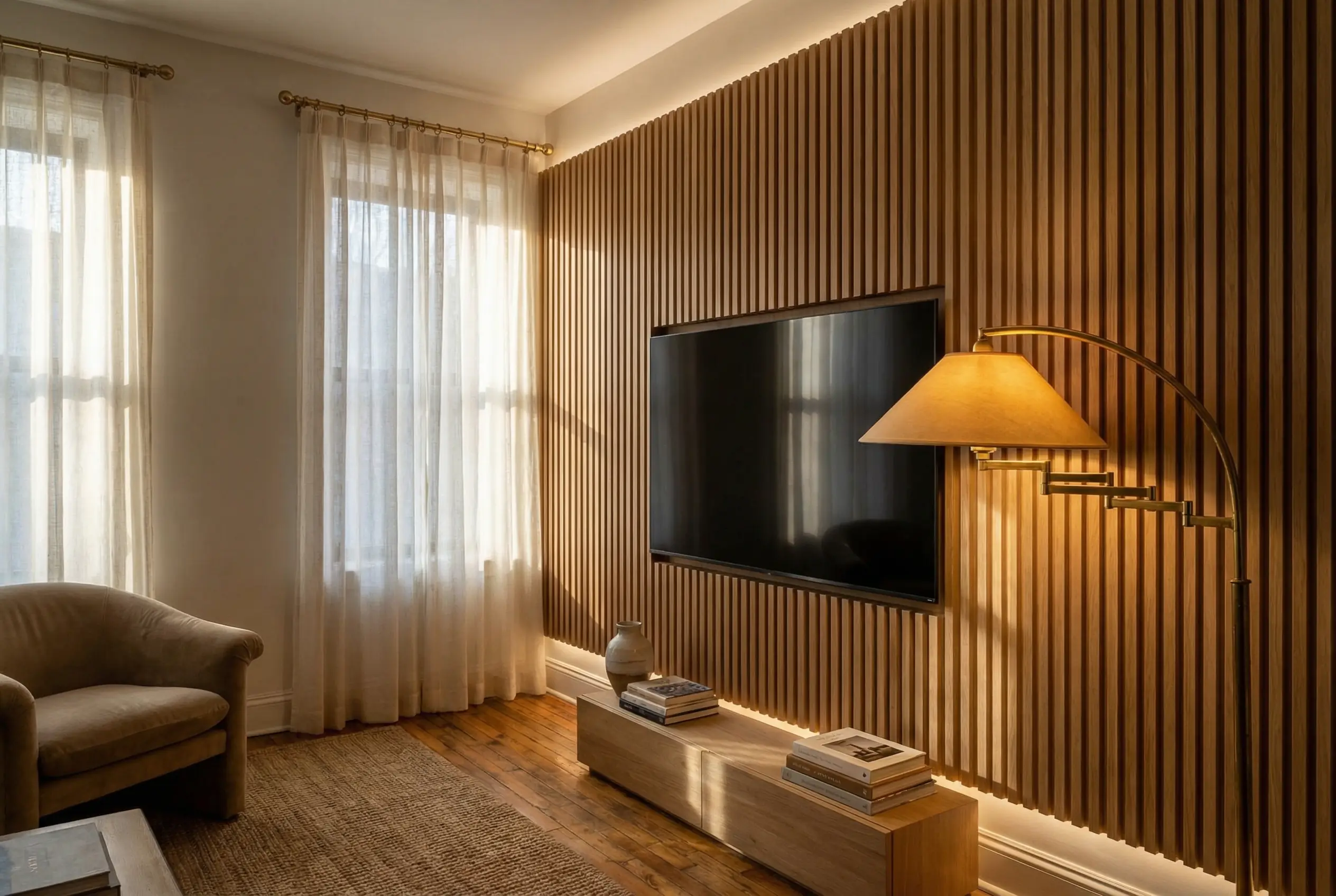
Fluted detailing, characterized by parallel vertical grooves, represents one of Art Deco's most recognizable architectural signatures. In contemporary Manhattan apartments, fluted panels serve multiple functions beyond pure decoration. They define zones within open-plan living areas, add texture to otherwise flat walls, and create a sense of vertical lift that counteracts the horizontal emphasis of modern design.
Full-height fluted wall panels behind televisions or bed headboards provide architectural interest that eliminates the need for additional artwork while concealing wiring and cables. In dining areas, a fluted accent wall anchors the space and provides a sophisticated backdrop for a statement chandelier. The vertical grooves also offer superior acoustic properties compared to flat walls, reducing echo in spaces with hard flooring and minimal soft furnishings.
Material selection determines whether fluted details read as authentic or costume-like. High-quality wood veneer or solid wood panels stained to complement your flooring create cohesive design flow. Painted MDF panels offer a more budget-friendly option while still delivering visual impact. For ultimate luxury, consider fluted panels in book-matched marble or exotic stone, a detail found in the most prestigious original Art Deco interiors. Our guide to luxury materials for Manhattan renovations explores premium options in greater detail.
Kitchen and Bath Applications
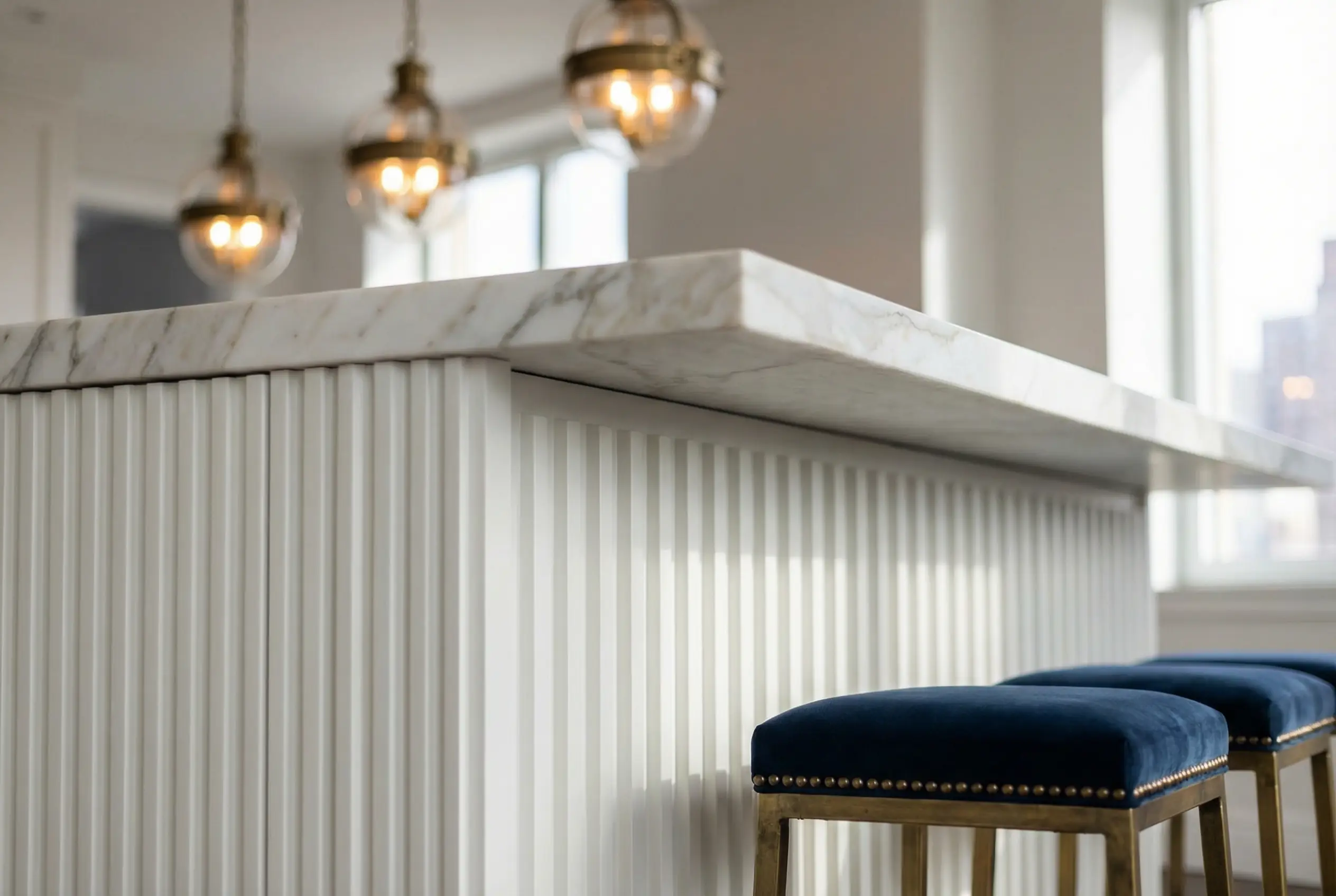
The geometric kitchen design NYC aesthetic demands fluted integration in cabinetry and millwork. Fluted cabinet door fronts transform standard kitchen boxes into custom architectural elements worthy of a luxury renovation. The vertical lines complement the chevron backsplash patterns while adding dimensional variety. Kitchen islands with fluted end panels become sculptural objects rather than purely functional work surfaces.
Bathroom vanities with fluted drawer fronts paired with brass hardware capture New Deco elegance in spaces where luxury details matter most. Consider extending fluted paneling to the side of a freestanding tub or as wainscoting in larger master bathrooms. The water-resistant properties of properly sealed fluted panels make them suitable for humid environments when installation follows best practices. For comprehensive bathroom planning advice, see our Manhattan bathroom renovation guide.
Furniture and Fixed Elements
Fluted detailing extends into furniture selection and custom built-ins. Console tables with fluted legs, credenzas with fluted door fronts, and bookcases with fluted vertical dividers maintain design continuity throughout your apartment. For a cohesive look, match the fluting profile across all applications, from wall panels to furniture pieces to door casings.
Ready to incorporate authentic Art Deco details into your Manhattan apartment? KS Renovation Group specializes in custom millwork and fluted architectural elements that transform ordinary spaces into extraordinary homes. Contact our design team today.
Brass Accents: The Finishing Touch for New Deco Luxury
Hardware and Fixtures That Define Quality
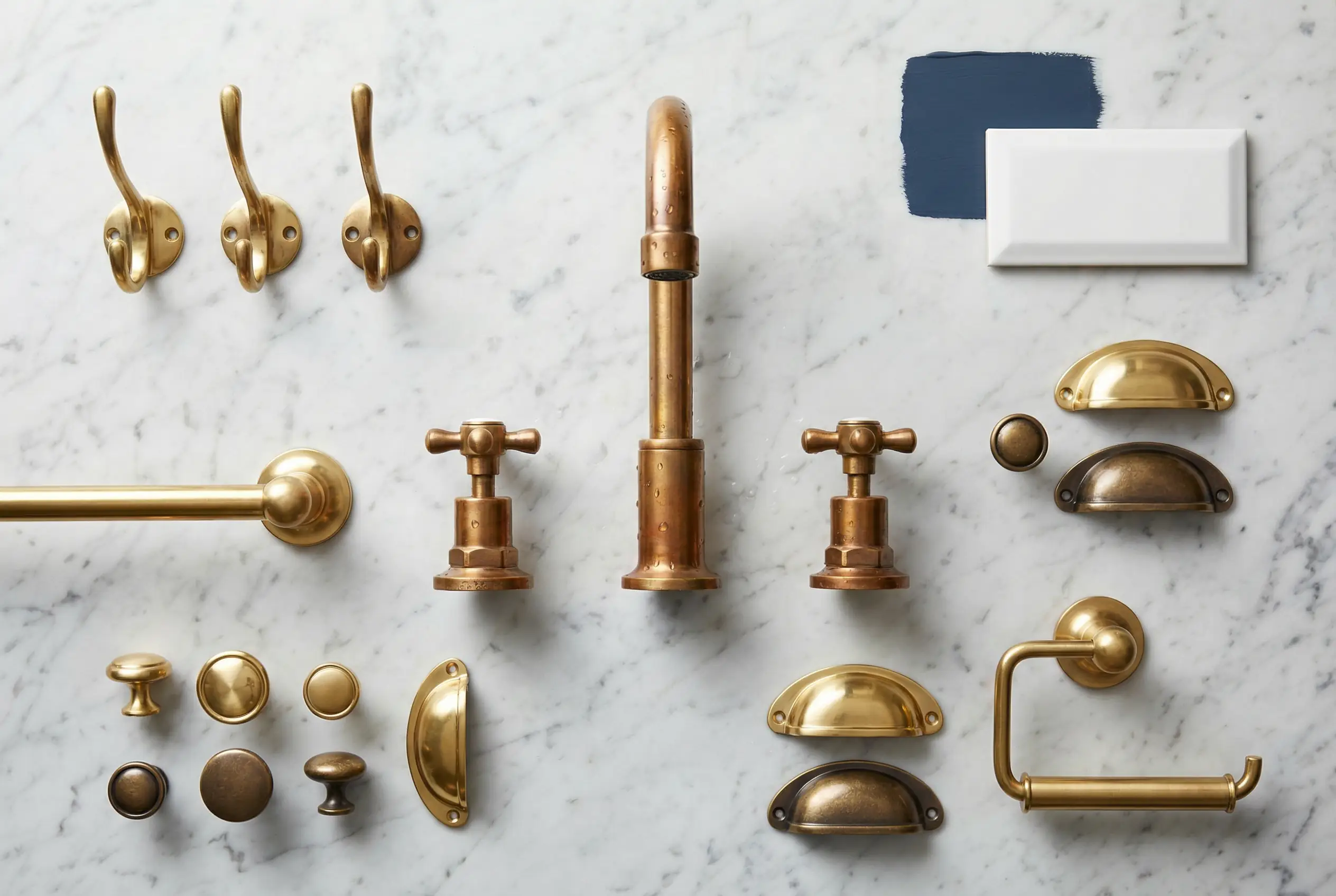
Brass accents serve as the jewelry of New Deco design, the finishing details that signal quality and attention to craft. Unlike the ubiquitous brushed nickel or chrome fixtures that dominated recent decades, brass brings warmth and character that elevates the entire design palette. The key lies in understanding the different brass finishes and selecting options appropriate to your overall aesthetic.
Unlacquered brass develops a rich patina over time, offering an authentic, living finish that references the aged brass found in historic Manhattan buildings. This choice requires commitment to the natural aging process and acceptance that the finish will evolve. Lacquered brass maintains its bright, polished appearance indefinitely, offering consistency and shine ideal for kitchen and bath applications where tarnish would be problematic.
Antique brass finishes bridge these extremes, providing the depth of aged brass with the stability of protective coating. This finish works particularly well in living areas, where brass curtain rods, picture lights, and decorative hardware benefit from the sophisticated appearance without the maintenance concerns of unlacquered options.
Strategic Placement for Maximum Impact
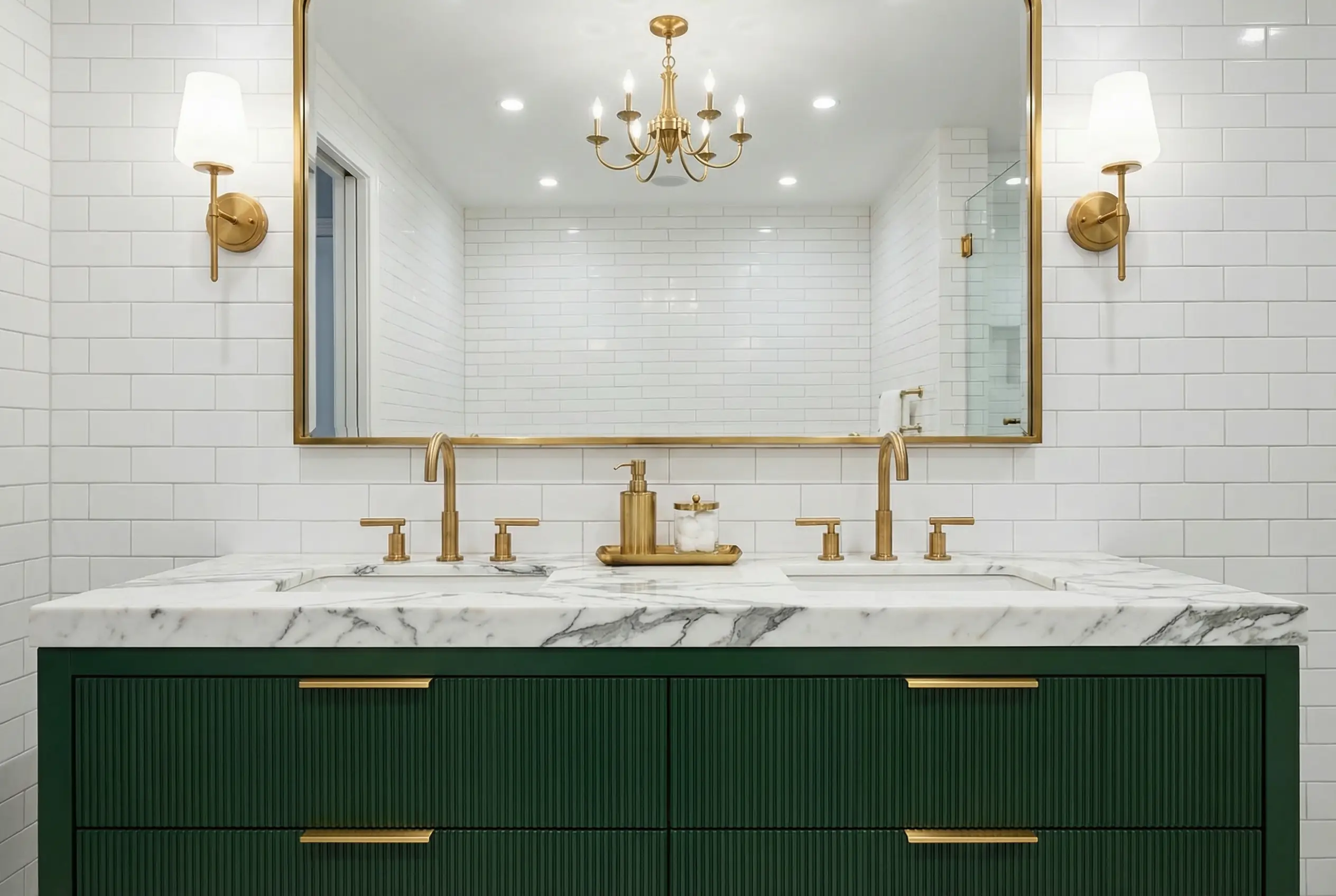
The success of brass accents depends on thoughtful distribution rather than saturation. Begin with functional elements: kitchen faucets, cabinet hardware, bathroom fixtures, and door handles. These practical applications establish the brass vocabulary throughout your apartment while serving necessary functions. A single brass finish family should be used consistently in public spaces, with potential variation allowed in private bedrooms or secondary bathrooms.
Lighting fixtures offer high-impact opportunities for brass integration. A statement chandelier with brass framework and geometric glass shades anchors the dining area. Brass sconces flanking a fluted accent wall layer lighting while reinforcing the Art Deco aesthetic. In kitchens, brass pendant lights above islands combine task lighting with decorative purpose.
Decorative brass accents provide the final layer: mirror frames, picture rail, bar accessories, and architectural details like heating vent covers or electrical switch plates in brass provide cohesive polish. These smaller elements should complement rather than compete, adding consistent notes throughout the space without overwhelming.
Mixing Metals Without Chaos
New Deco design permits metal mixing within structured guidelines. Brass serves as the dominant warm metal, but can coexist with bronze or copper in supporting roles. Chrome and stainless steel remain appropriate for appliances and certain contemporary fixtures where brass would feel forced. The key is maintaining clear hierarchy: if brass is your primary metal, it should comprise 60-70% of visible hardware and fixtures, with other metals in clearly subordinate roles.
Black metal accents, while not traditional to 1920s Art Deco, work within the New Deco framework when used for structural elements like window frames, railings, or contemporary furniture pieces. The contrast between warm brass and matte black creates visual interest while maintaining the geometric clarity central to the style.
Bringing New Deco to Life: Room-by-Room Implementation
The New Deco Kitchen: Where Function Meets Glamour
The geometric kitchen design NYC approach transforms cooking spaces into showpieces worthy of Manhattan's design legacy. Begin with cabinetry that balances clean lines with Art Deco detailing: flat-panel doors with subtle stepped profiles or vertical reeding, finished in rich navy, deep green, or classic white with brass hardware. Upper cabinets with glass fronts framed in brass mullions showcase dishware while adding vertical interest.
The chevron tile backsplash serves as the kitchen's focal point, extending from countertop to ceiling in narrow-format marble or ceramic. This vertical emphasis creates the illusion of height while protecting walls in the work zone. Consider a contrasting grout color to emphasize the geometric pattern, or match grout to tile for a more subtle, monochromatic effect.
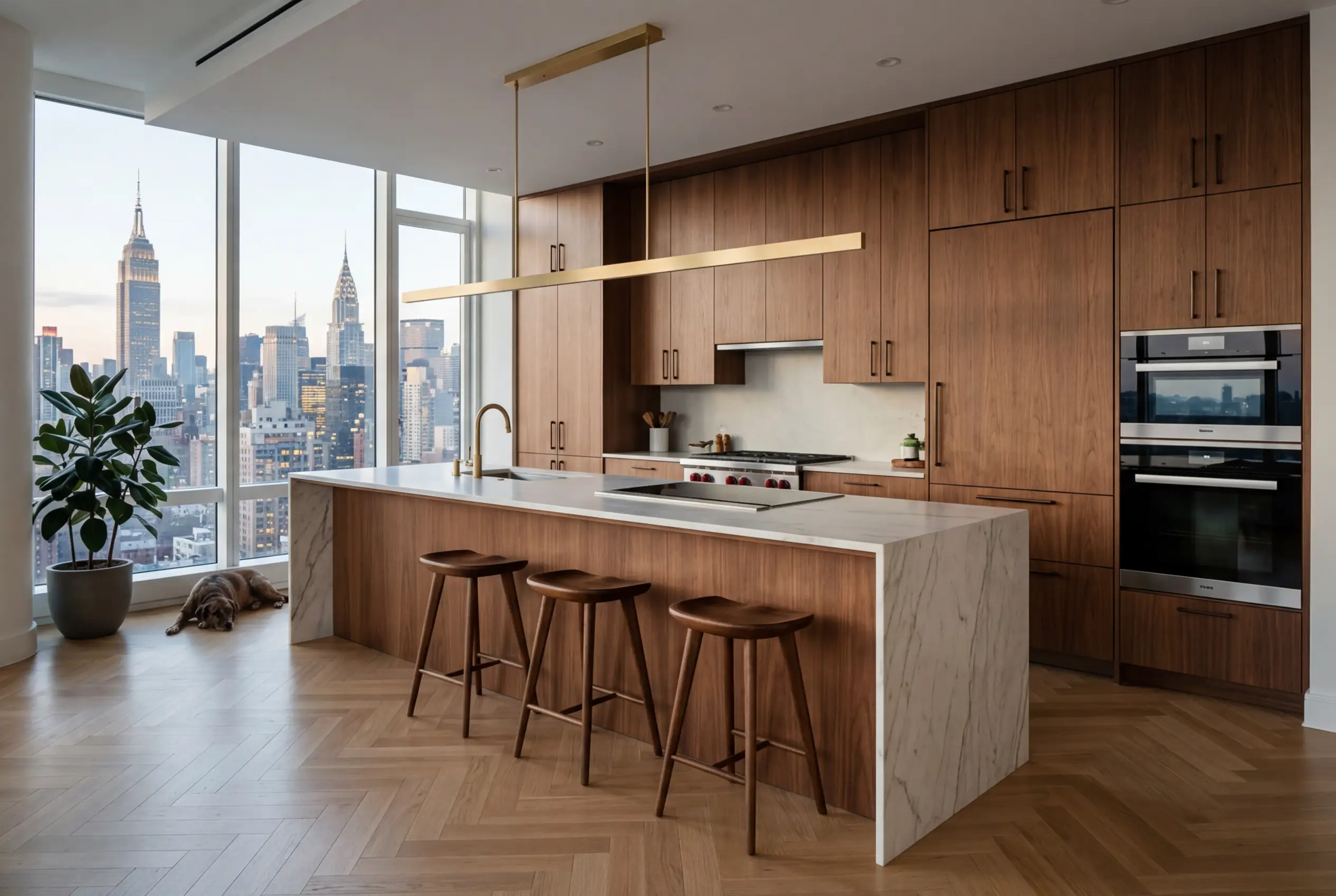
Countertops in marble with strong veining patterns or quartzite that mimics marble provide the luxury material palette essential to authentic New Deco design. Waterfall edges on islands reference the stepped profiles found in Art Deco architecture while providing a contemporary touch. Brass fixtures, from faucets to cabinet pulls to pendant lighting, unify the space while adding warmth against cooler stone and tile surfaces.

Living Spaces That Balance Comfort and Elegance
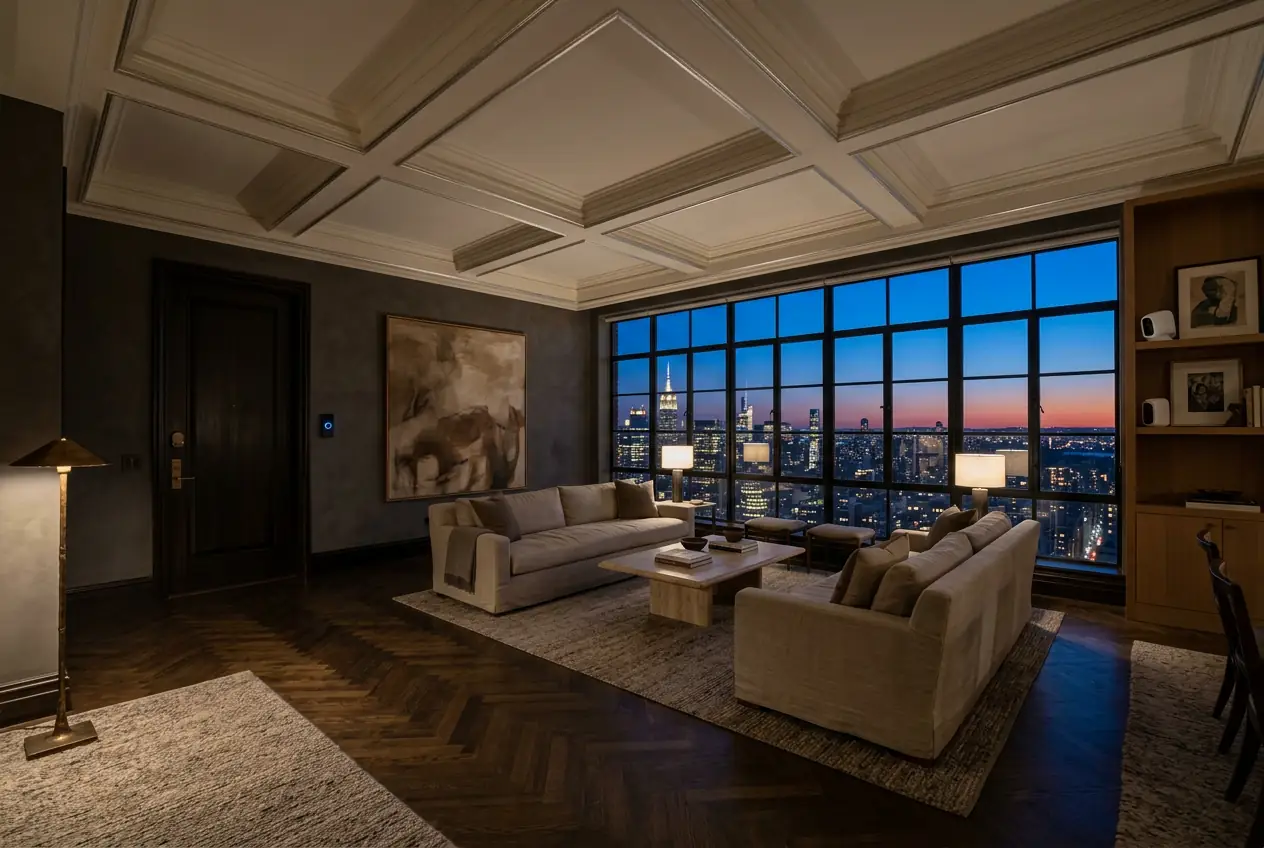
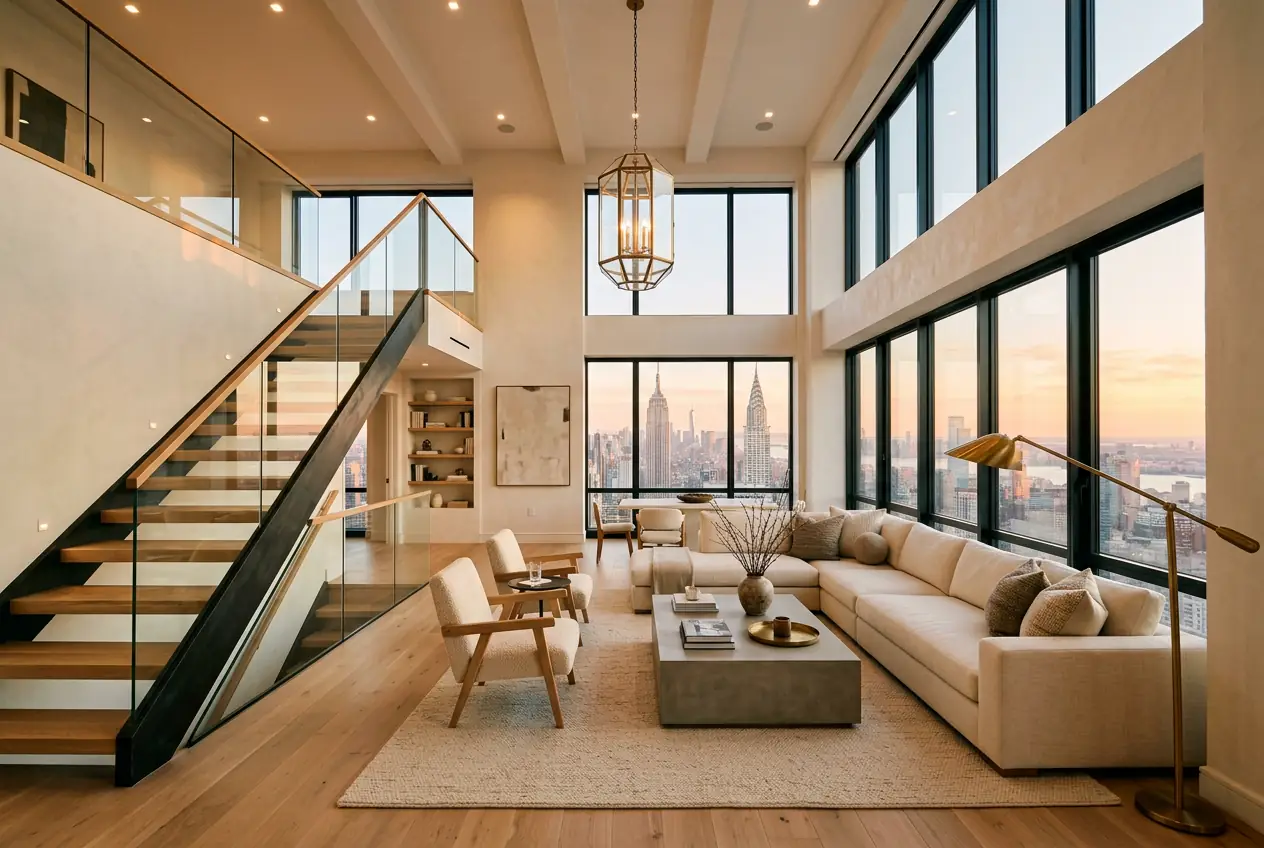
New Deco living rooms succeed through careful layering of architectural elements, furniture, and accessories. Start with a neutral wall color as your foundation - warm grays, soft taupes, or creamy whites that allow brass accents and geometric patterns to stand out. Add architectural interest through fluted panels behind your entertainment center or flanking a fireplace, creating built-in sophistication that eliminates the need for extensive furniture.
Chevron flooring establishes a pattern at ground level, directing traffic flow and creating visual movement. Balance this active floor pattern with furniture in solid colors or subtle textures rather than competing prints. A plush velvet sofa in jewel tones like emerald or sapphire honors the Art Deco color palette while providing contemporary comfort. Channel-tufted upholstery references the linear detailing found throughout New Deco design.
Lighting serves as jewelry for the room: a statement chandelier with geometric brass framework and glass elements becomes a sculptural focal point. Brass floor lamps with stepped bases and silk shades provide ambient lighting while reinforcing the design vocabulary. Layer in brass picture lights above artwork and brass-trimmed mirrors that reflect light and create depth.
Bathrooms as Private Sanctuaries
Manhattan bathrooms, often compact, benefit enormously from the vertical emphasis and reflective surfaces central to New Deco design. A fluted vanity with marble countertop and brass fixtures establishes the aesthetic immediately. Extend fluted paneling to walls or create a dramatic fluted accent behind a freestanding tub if space permits.
Geometric floor tiles in black and white or navy and white create bold foundation patterns that make small bathrooms feel intentional and designed. Hexagonal floor tiles with brass threshold strips reference Art Deco's honeycomb motifs. Subway tile walls in chevron patterns add interest without overwhelming compact spaces.
Brass fixtures throughout - faucets, shower fittings, towel bars, and lighting - maintain material consistency while adding warmth against cool stone surfaces. A geometric brass-framed mirror serves as both functional necessity and design statement. Consider heated towel bars in brass finish, merging luxury function with aesthetic coherence.
Transform your entire Manhattan apartment with cohesive New Deco design. KS Renovation Group provides comprehensive renovation services from concept to completion, ensuring every room reflects the same sophisticated aesthetic. Begin your luxury renovation journey today.
Conclusion: Your Manhattan Apartment's Art Deco Future
The return of Art Deco design to Manhattan luxury apartments represents more than a passing trend - it's a reconnection with the architectural identity that made New York the world's design capital. New Deco design offers Manhattan apartment owners the opportunity to create spaces that honor the city's golden age while embracing contemporary living standards and technology.
Successful integration of chevron patterns, fluted details, and brass accents requires expertise that goes beyond surface-level decoration. These elements must be incorporated with attention to proportion, material quality, and installation precision to achieve authentic results. The difference between a space that captures genuine New Deco sophistication and one that merely applies Art Deco motifs lies in the quality of execution and the depth of design knowledge guiding the renovation.
As luxury apartment trends continue evolving, New Deco stands apart for its connection to place, its proven longevity, and its ability to create spaces that feel both distinctly New York and timelessly elegant. Whether you're renovating a pre-war apartment to restore its original character or updating a modern space with historic references, the New Deco approach offers a path to creating interiors worthy of Manhattan's design legacy.
Ready to create your own New Deco masterpiece? KS Renovation Group has been transforming Manhattan apartments with expert craftsmanship and sophisticated design for years. Our team understands both the technical demands and aesthetic nuances of luxury Art Deco Manhattan renovation projects. Contact us today to discuss your vision and receive a detailed consultation. Let's bring the glamour of New York's golden age into your home with modern New Deco design that will remain stunning for decades to come.
Frequently Asked Questions About New Deco Renovation in Manhattan
What factors influence the scope of an Art Deco Manhattan renovation?
Art Deco Manhattan renovation scope varies significantly based on your vision, materials selection, and the level of custom detailing desired. Kitchen renovations incorporating geometric tile design, custom cabinetry with Art Deco details, and high-end brass fixtures require careful planning around material choices and finish quality. Full apartment renovations embracing New Deco design elements throughout involve considerations like custom millwork complexity, rare material sourcing, and the level of museum-quality finishes you want to achieve. The investment in authentic materials and skilled craftsmanship pays dividends in both immediate impact and long-term property value. Working with experienced renovation specialists like KS Renovation Group ensures realistic project planning and prevents mistakes that can occur when contractors lack experience with the precision required for geometric patterns and custom architectural details. During your initial consultation, we'll discuss your priorities and create a detailed scope that aligns with your vision.
Can New Deco design work in a small Manhattan studio apartment?
Absolutely. New Deco design principles actually benefit small spaces through their emphasis on vertical lines, reflective surfaces, and strategic geometry. In a studio apartment, focus on one or two strong Art Deco elements rather than attempting comprehensive integration. A chevron wood floor creates visual interest and directs the eye through the space. A single fluted accent wall behind the bed defines the sleeping zone without requiring physical partitions. Brass fixtures and hardware throughout maintain consistency without overwhelming. The key is restraint - let the geometric kitchen design speak through your backsplash while keeping cabinets simple, or invest in a stunning brass and glass chandelier as your single jewelry piece. Small spaces benefit from the vertical emphasis of fluted details and the light-reflecting properties of brass, both making rooms feel larger and more sophisticated than their actual square footage suggests.
What's the difference between traditional Art Deco and New Deco design?
New Deco represents a contemporary interpretation of Art Deco principles rather than strict historical recreation. Traditional Art Deco, popular from the 1920s through the 1940s, featured bold geometry, exotic materials, rich colors, and extensive ornamentation. New Deco interior design 2026 selectively adopts these elements - chevron patterns, fluted details, brass accents - while maintaining the cleaner lines and open floor plans of contemporary living. Where original Art Deco might feature heavily carved furniture, complex inlaid patterns, and maximum ornamentation, New Deco applies geometric principles with more restraint, allowing architectural elements to stand out against simpler backgrounds. Technology integration, modern kitchen and bath fixtures, and contemporary comfort standards merge with Art Deco's visual vocabulary. The result feels fresh and current while referencing design history, making it appropriate for modern Manhattan living in ways that pure period recreation would not be.
How long does a New Deco renovation take in Manhattan?
Timeline varies based on project scope, permit requirements, and building-specific regulations. A focused kitchen renovation incorporating geometric kitchen design NYC elements typically requires 8-12 weeks from demolition to completion. A comprehensive apartment renovation with custom millwork, chevron flooring installation, and multiple room transformations generally takes 4-6 months. Manhattan-specific factors can extend timelines: cooperative and condominium board approvals, landmark district restrictions if applicable, and building alteration agreements all add time before construction begins. The precision work required for chevron pattern installation, custom fluted millwork, and authentic Art Deco detailing cannot be rushed without compromising results. Quality chevron flooring installation alone requires careful measurement, precise cutting, and methodical installation that takes significantly longer than standard plank flooring. Working with renovation specialists experienced in Manhattan projects ensures realistic scheduling and coordination with building management to minimize delays. Read our detailed breakdown of the Manhattan apartment renovation timeline for more planning insights.
What are the best color palettes for New Deco interiors?
New Deco color palettes draw from both the rich jewel tones of original Art Deco and the more neutral foundations of contemporary design. Classic combinations include navy blue or deep emerald green cabinetry with brass hardware against white or cream walls and marble countertops. Charcoal gray or black accents provide dramatic contrast against warm brass fixtures and light wood flooring. For bolder approaches, consider peacock blue, burgundy, or forest green as accent colors in upholstery or tile selections. The key is creating contrast - Art Deco design thrives on the interplay between dark and light, warm and cool. Many successful New Deco spaces use neutral walls and floors as a sophisticated backdrop for geometric patterns in tile work and pops of rich color in furniture and accessories. Metallic accents beyond brass - bronze, copper, or even silver - can be incorporated sparingly to add additional layers without abandoning the warm metal foundation. The most important principle is avoiding muddy middle tones; New Deco succeeds through clarity and contrast rather than gradual color transitions.

You may also be interested
KS Renovation Blog
Get Inspired
Meaningful information about home remodeling for the true NYC homeowners.

OUr Clients Say

William Plotch
amy schorr
gberaka
NYC kitchen remodeling Projects and more


