Manhattan homeowners are embracing a dramatic shift: deep, luxurious dark wood interiors featuring walnut and oak. After years of light, Scandinavian-inspired spaces, this sophisticated alternative combines natural warmth with sleek, contemporary design – transforming how New Yorkers create their living spaces.
According to Houzz‘s latest design trends report, dark wood finishes have surged in popularity, with searches for walnut cabinets NYC and oak interior design 2026 increasing by over 60% in the past year. This reflects a broader biophilic design movement, where natural elements create healthier, more emotionally resonant environments – particularly valuable in Manhattan’s dense urban landscape.
When executed properly, rich walnut and oak don’t darken a space; they anchor it, providing depth and character while balancing with Manhattan’s varied light conditions. Whether you’re considering a dark wood kitchen Manhattan renovation or planning custom millwork, understanding how to harness this trend effectively is essential.
Why Dark Wood is Dominating Manhattan Interior Design in 2026
The resurgence of dark wood in Manhattan interiors isn’t accidental – it’s a response to both design evolution and lifestyle shifts. After the minimalist, all-white era that dominated the 2010s, homeowners are craving spaces with personality, warmth, and tactile richness. Dark wood delivers all three while addressing the unique challenges and opportunities of Manhattan living.
The Biophilic Design Connection
Biophilic design – the practice of incorporating natural elements into built environments – has become a driving force in contemporary interior design. Research consistently shows that natural materials, particularly wood, reduce stress, improve mood, and enhance overall well-being. In a dense urban environment like Manhattan, where connection to nature is often limited, dark wood interiors create a powerful psychological anchor.
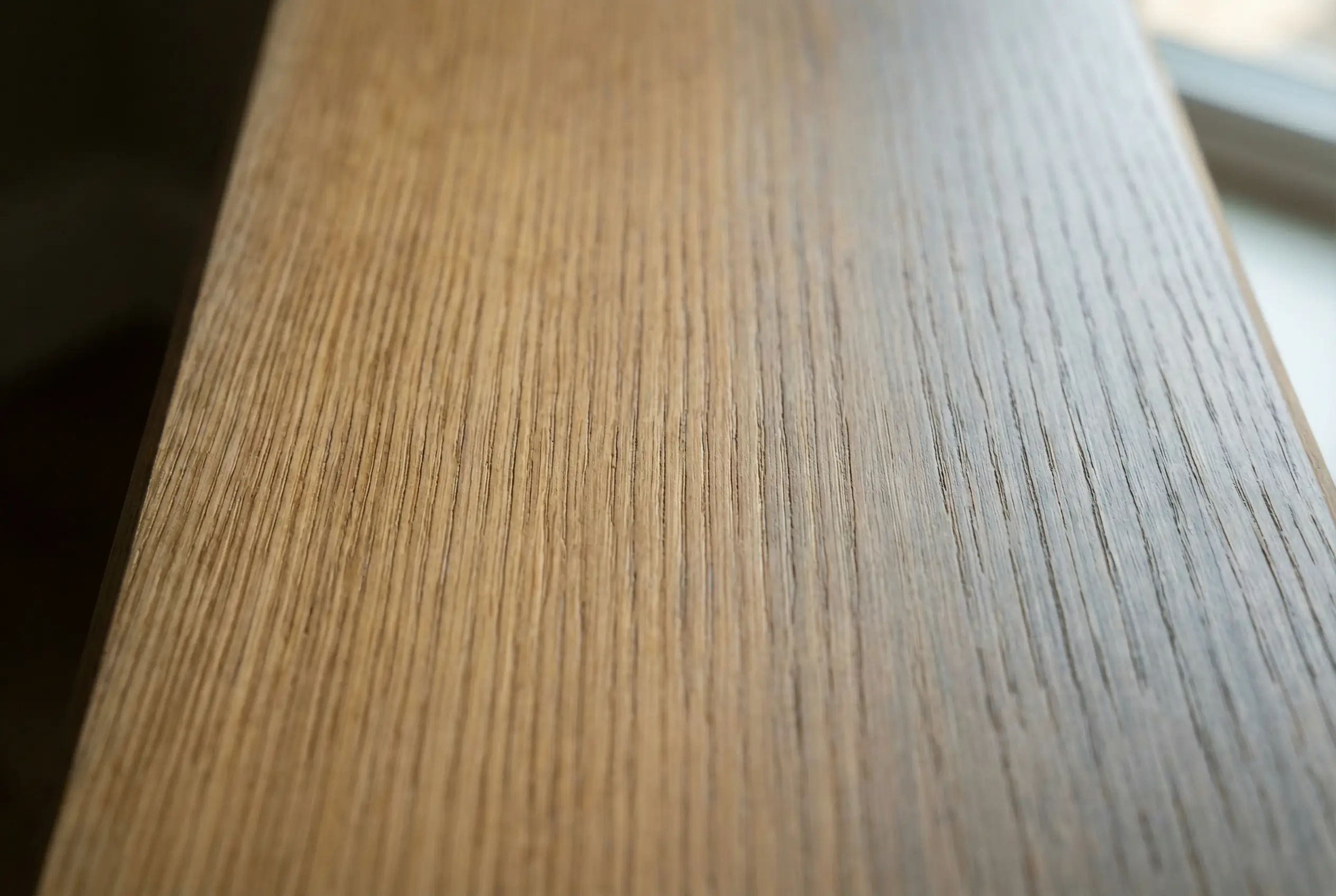
Walnut and oak bring the forest indoors, offering organic textures and grain patterns that engage the senses in ways synthetic materials simply cannot. The depth of dark wood creates visual interest without requiring additional decoration, allowing Manhattan apartments to feel both sophisticated and calming. This natural elegance resonates particularly well with professionals seeking refuge from the city’s relentless pace.
Versatility Across Manhattan Architectural Styles
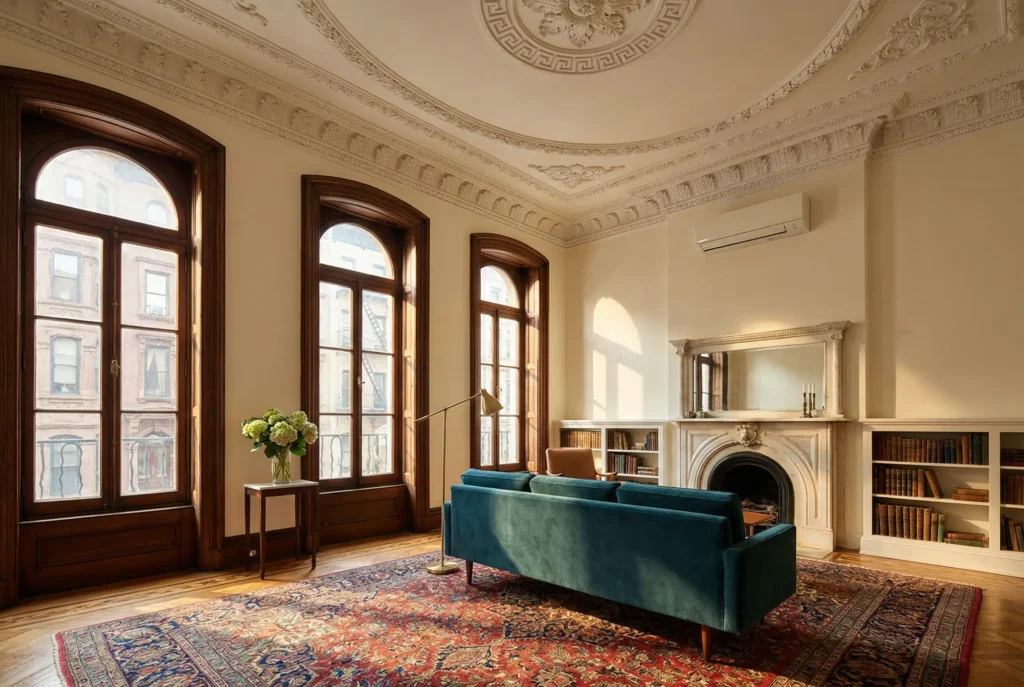
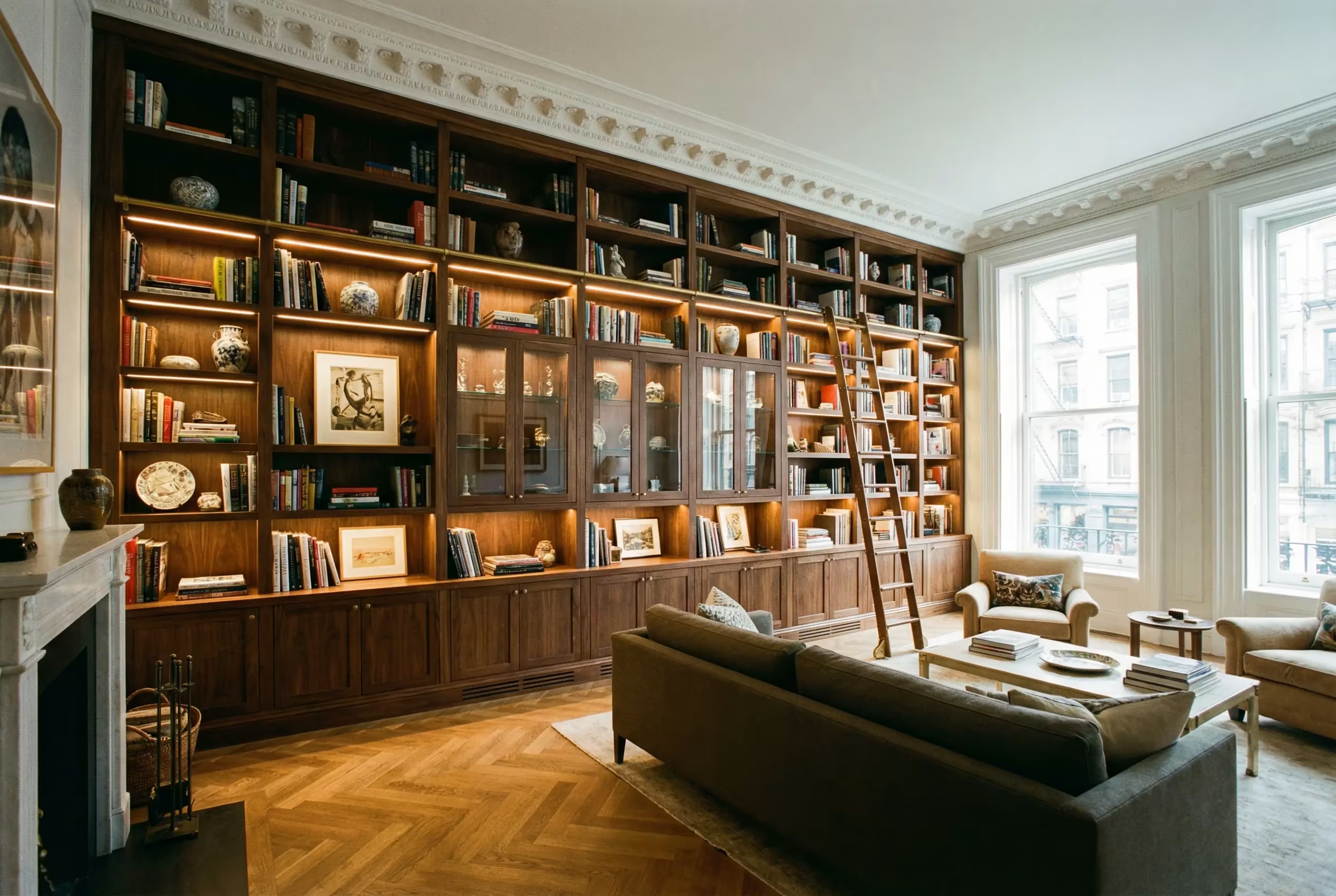
One of dark wood’s greatest strengths is its remarkable adaptability. Whether you live in a prewar building with classic details or a sleek new development with floor-to-ceiling windows, dark wood installations can be tailored to complement your architecture. In historic buildings, rich walnut millwork can honor traditional craftsmanship while feeling entirely contemporary. In modern spaces, clean-lined oak cabinetry provides warmth without compromising minimalist aesthetics.
This versatility extends to mixing styles within a single space. Dark wood serves as a neutral foundation that pairs beautifully with various design elements – industrial metals, soft textiles, contemporary art, or vintage furnishings. For Manhattan homeowners who love eclectic design, dark wood provides the grounding element that allows diverse pieces to coexist harmoniously.
Investment Value and Longevity
Manhattan real estate demands smart renovation investments, and dark wood delivers exceptional long-term value. Unlike trendy finishes that date quickly, quality walnut and oak installations remain timeless. These materials age gracefully, developing character and patina that enhances rather than diminishes their appeal. When properly maintained, dark wood features can last decades, even generations.
Professional installation of dark wood elements also significantly impacts property value. Potential buyers recognize the quality and permanence of solid wood installations, particularly custom millwork and cabinetry. A dark wood kitchen Manhattan renovation, for instance, signals both luxury and longevity – qualities that command premium prices in the competitive NYC real estate market.
If you’re considering incorporating dark wood into your Manhattan home, we specialize in custom millwork and interior renovations that honor your space’s unique character while introducing contemporary dark wood elements.
Balancing Dark Wood with Manhattan Light Conditions
Manhattan’s light conditions present unique challenges. Some apartments enjoy southern exposure with abundant natural light, while others face north into perpetual shade. Many units contend with limited windows, neighboring buildings blocking sunlight, or irregular floor plans where light doesn’t reach every room. Successfully implementing dark wood requires understanding how to work with – not against – your specific lighting situation.
Maximizing Natural Light Integration
The first step in any dark wood renovation is conducting an honest assessment of your natural light. South and west-facing windows provide the most generous illumination and can support more extensive dark wood installations without risk of the space feeling cave-like. In these conditions, walnut cabinets can cover entire walls, and oak flooring can extend throughout the apartment with stunning results.
For apartments with limited natural light, strategic placement becomes crucial. Consider installing dark wood as accent features rather than covering every surface. A stunning walnut accent wall, floating oak shelves, or a dark wood kitchen island can provide dramatic impact while allowing lighter surfaces elsewhere to reflect available light. This approach creates focal points without overwhelming the space.
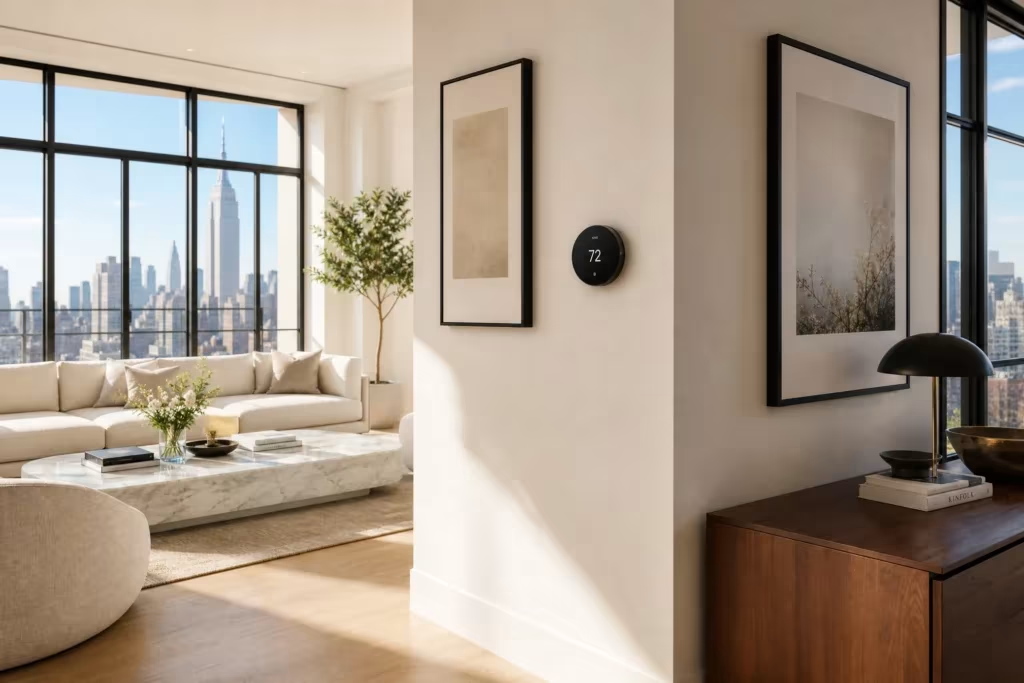
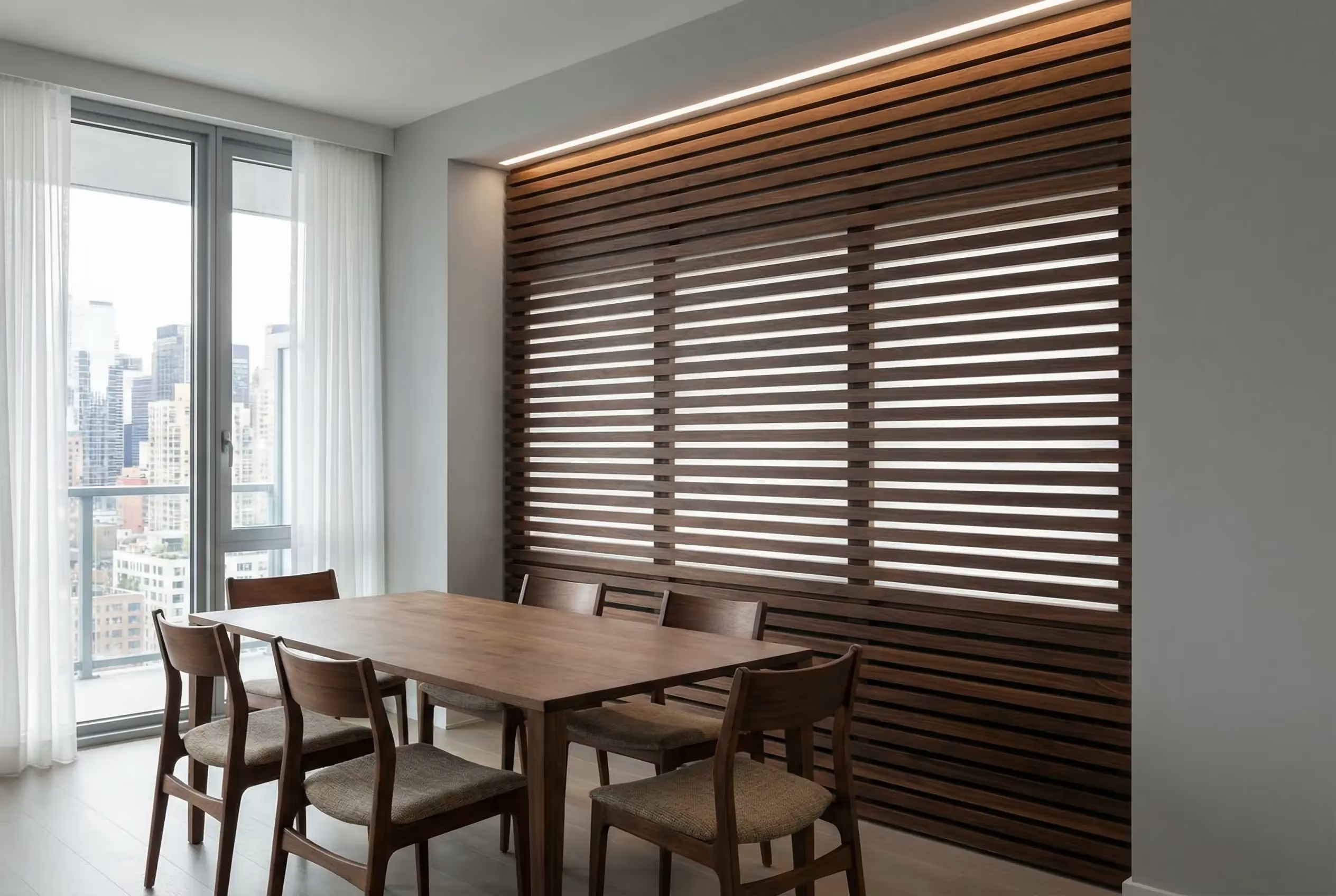
Window treatments matter enormously when working with dark wood. Heavy curtains can sabotage even the best-designed dark wood interior. Instead, opt for sheer treatments, solar shades, or minimalist blinds that maximize light transmission while providing necessary privacy. In some Manhattan buildings, removing outdated window treatments entirely and embracing architectural privacy can dramatically brighten a space.
Artificial Lighting Strategy for Dark Wood Interiors
Sophisticated lighting design transforms dark wood spaces from potentially gloomy to genuinely glowing. The key is creating layers of light at different heights and intensities throughout the room. Relying solely on overhead fixtures – a common mistake – casts harsh shadows and fails to illuminate dark wood’s beautiful grain patterns.
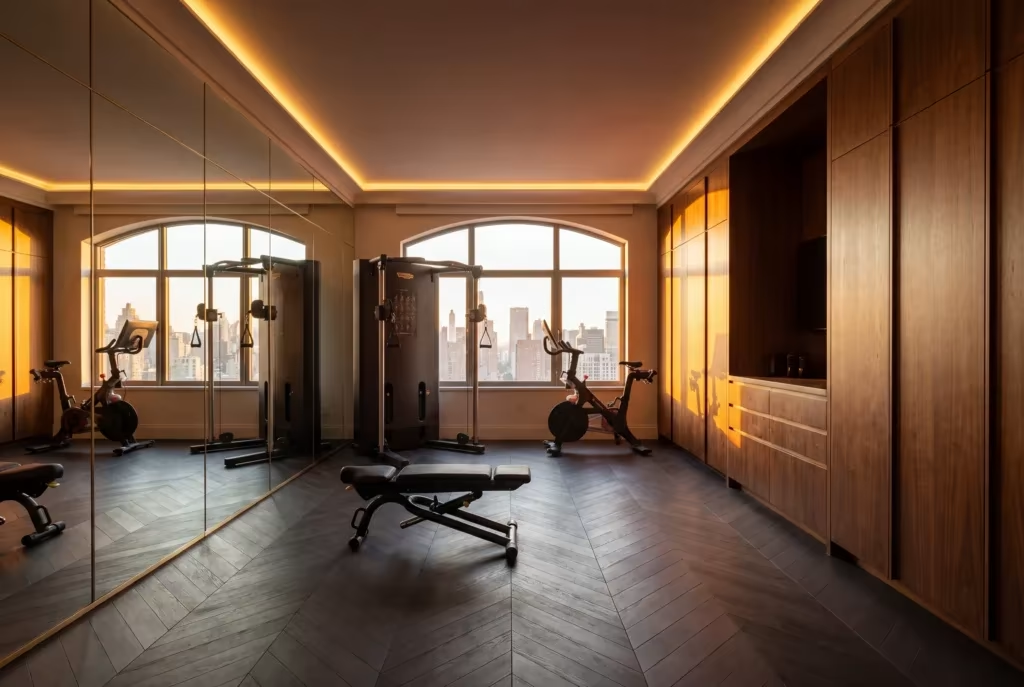
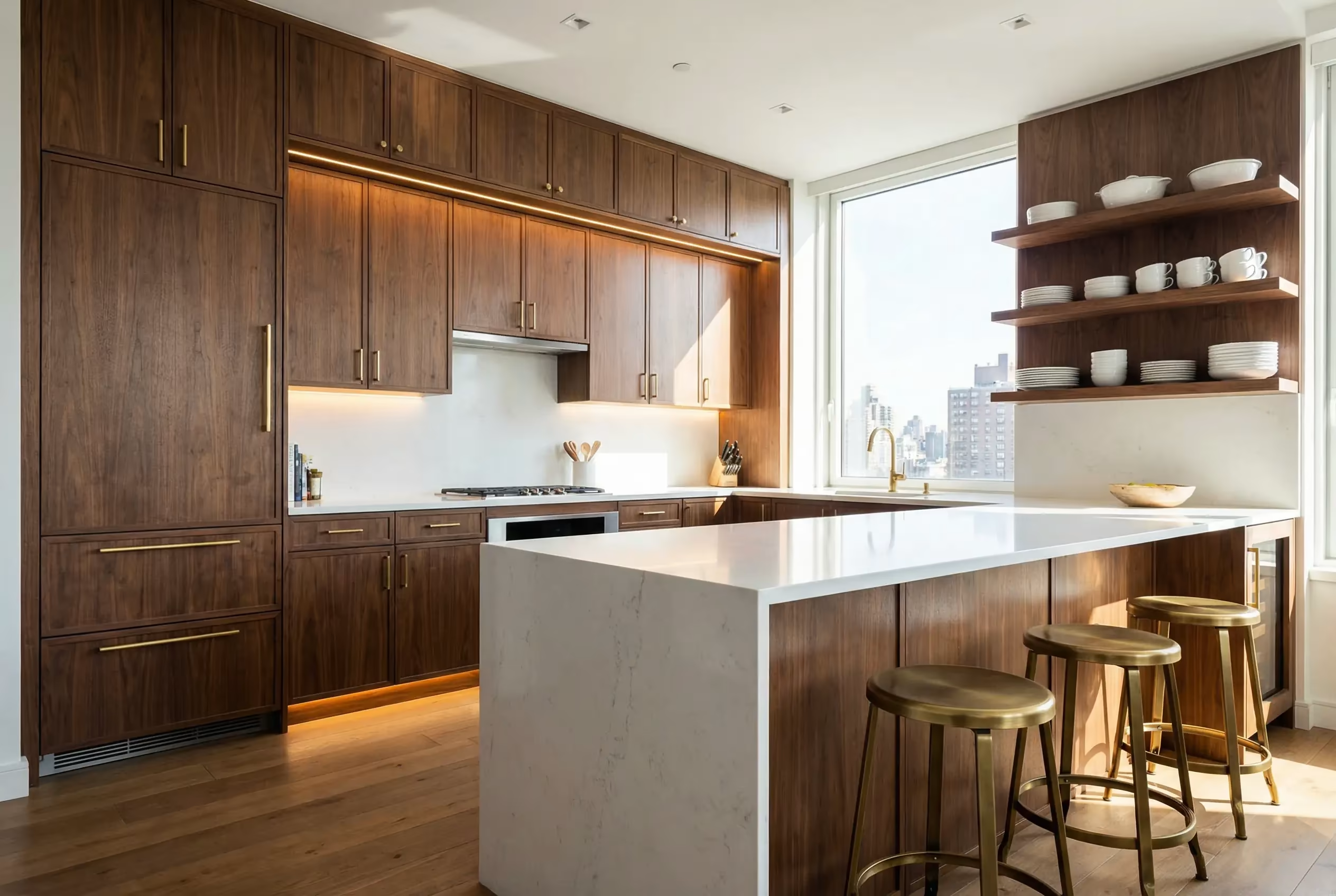
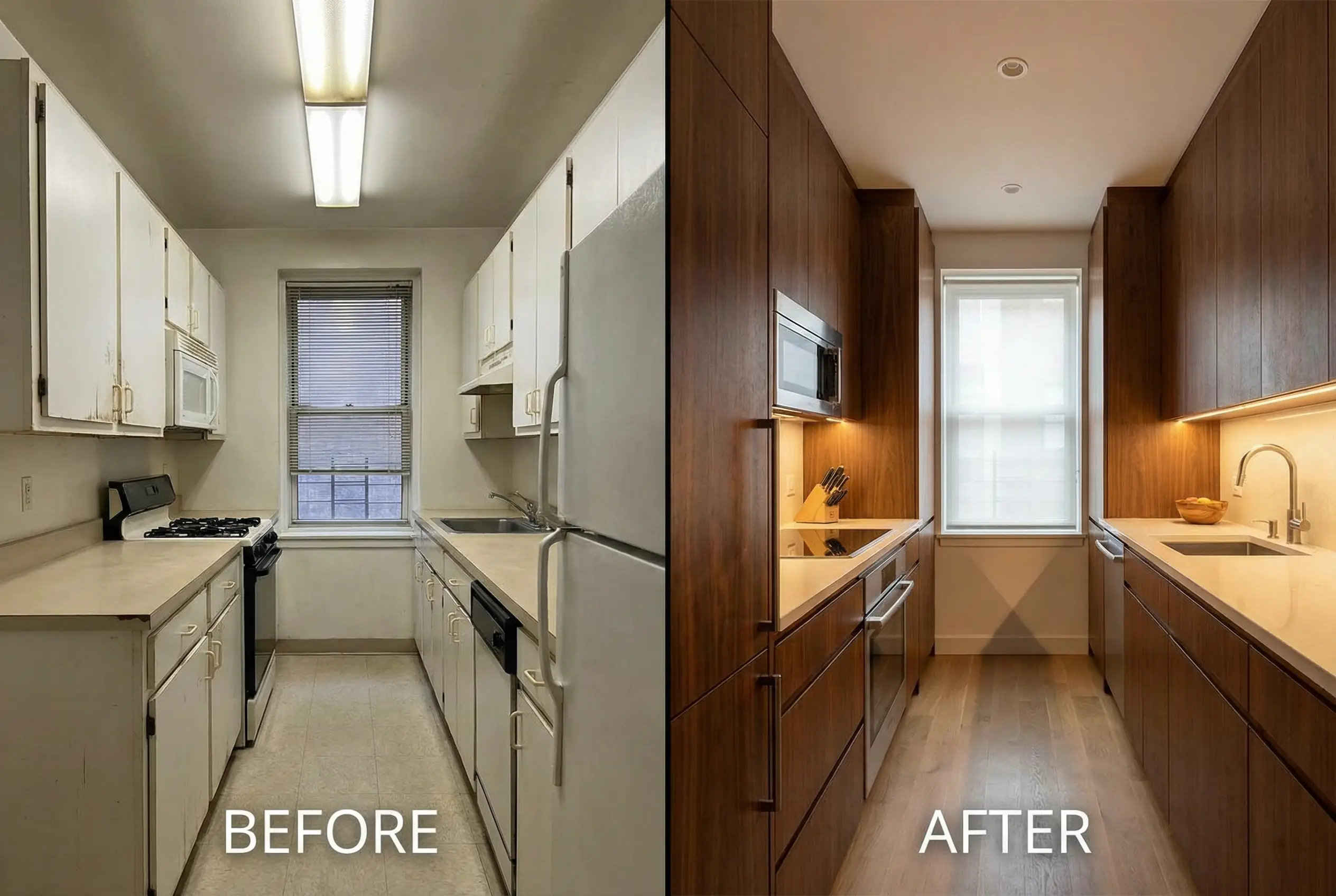
Under-cabinet lighting is essential for dark wood kitchens, providing task illumination while creating a floating effect that lightens the visual weight of cabinetry. LED strips tucked beneath upper cabinets or toe-kick lighting at floor level add dimensional lighting that makes dark wood feel modern and intentional rather than heavy.
Consider installing picture lights or directional spotlights to highlight particularly beautiful dark wood features. Grazing light across a walnut bookcase or oak paneling emphasizes texture and grain, turning architectural elements into living art. Dimmer switches on all lighting circuits allow you to adjust ambiance throughout the day, accommodating Manhattan’s seasonal light variations.
Color Palette Strategies
The colors surrounding your dark wood installations profoundly impact how the wood is perceived. Contrary to intuition, pairing dark wood with very light, bright whites can create harsh contrast that feels jarring. Instead, consider warmer whites, soft creams, or light greiges that complement wood’s natural warmth while providing adequate contrast.
Metallic finishes offer another powerful tool for balancing dark wood. Brushed brass, warm bronze, or champagne gold fixtures create gentle reflection that brightens spaces without the coldness of chrome or polished nickel. These warm metallics echo the undertones in walnut and oak, creating cohesive, sophisticated palettes.
Don’t shy away from incorporating other rich colors alongside dark wood. Deep jewel tones – emerald, sapphire, or burgundy – can create layered, luxurious spaces when used in textiles or accent pieces. The key is maintaining tonal harmony; everything doesn’t need to be light to feel bright.
Ready to explore how professional lighting design and dark wood integration can transform your Manhattan apartment? Contact us to schedule a consultation and discover custom solutions tailored to your space’s unique light conditions.
Signature Applications: Where Dark Wood Makes the Biggest Impact
Not all dark wood installations are created equal. Strategic placement maximizes visual impact while maintaining livability and light balance. Based on successful Manhattan renovations, certain applications consistently deliver outstanding results, transforming ordinary spaces into sophisticated showpieces.
The Dark Wood Kitchen Manhattan Transformation
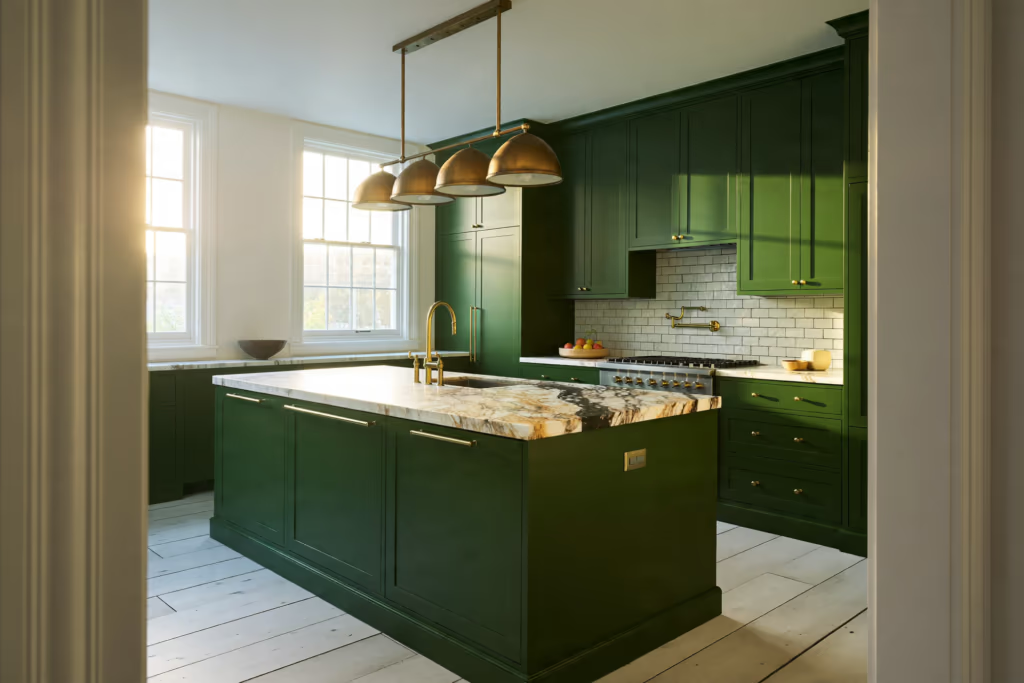
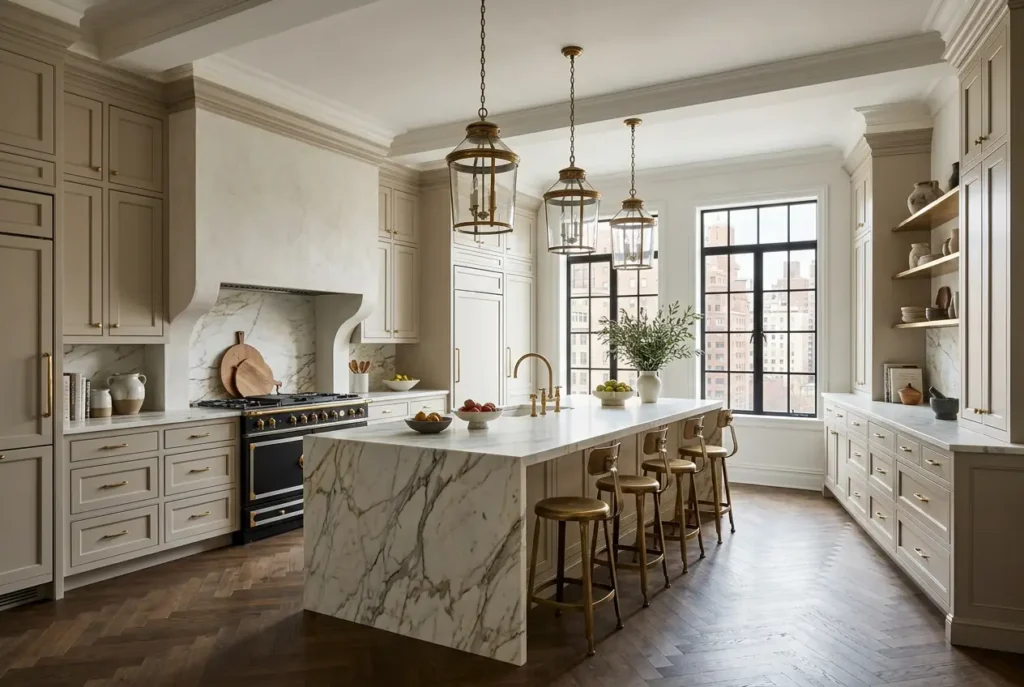
Manhattan kitchens present unique opportunities for dark wood integration. These spaces typically feature concentrated artificial lighting, making them ideal candidates for dramatic walnut or oak cabinetry. A dark wood kitchen creates instant gravitas, elevating cooking and gathering spaces from merely functional to genuinely impressive.
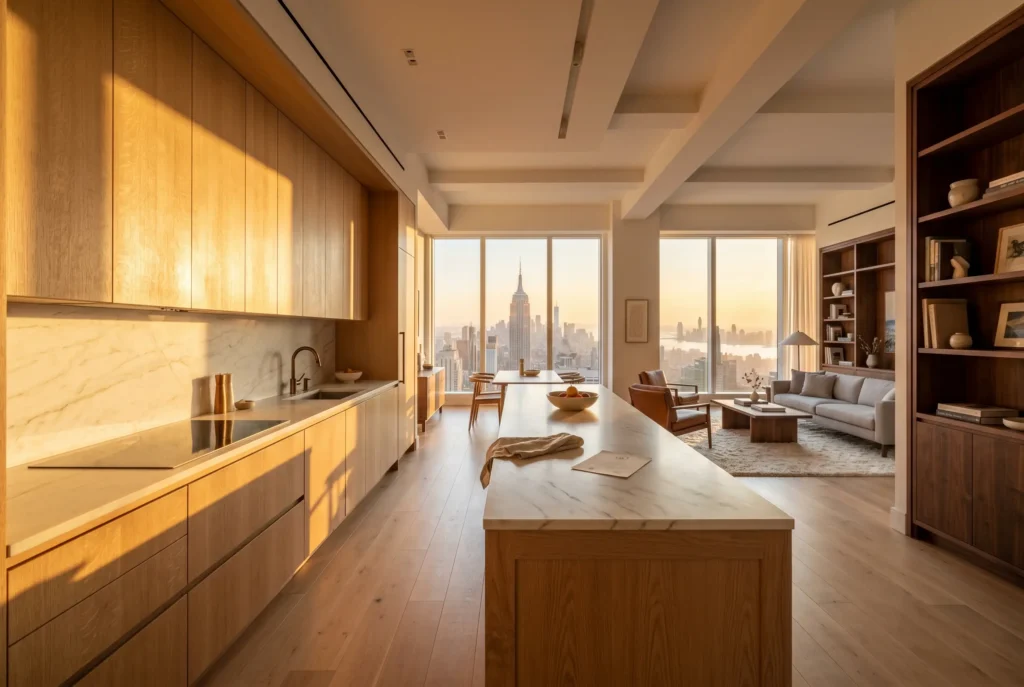
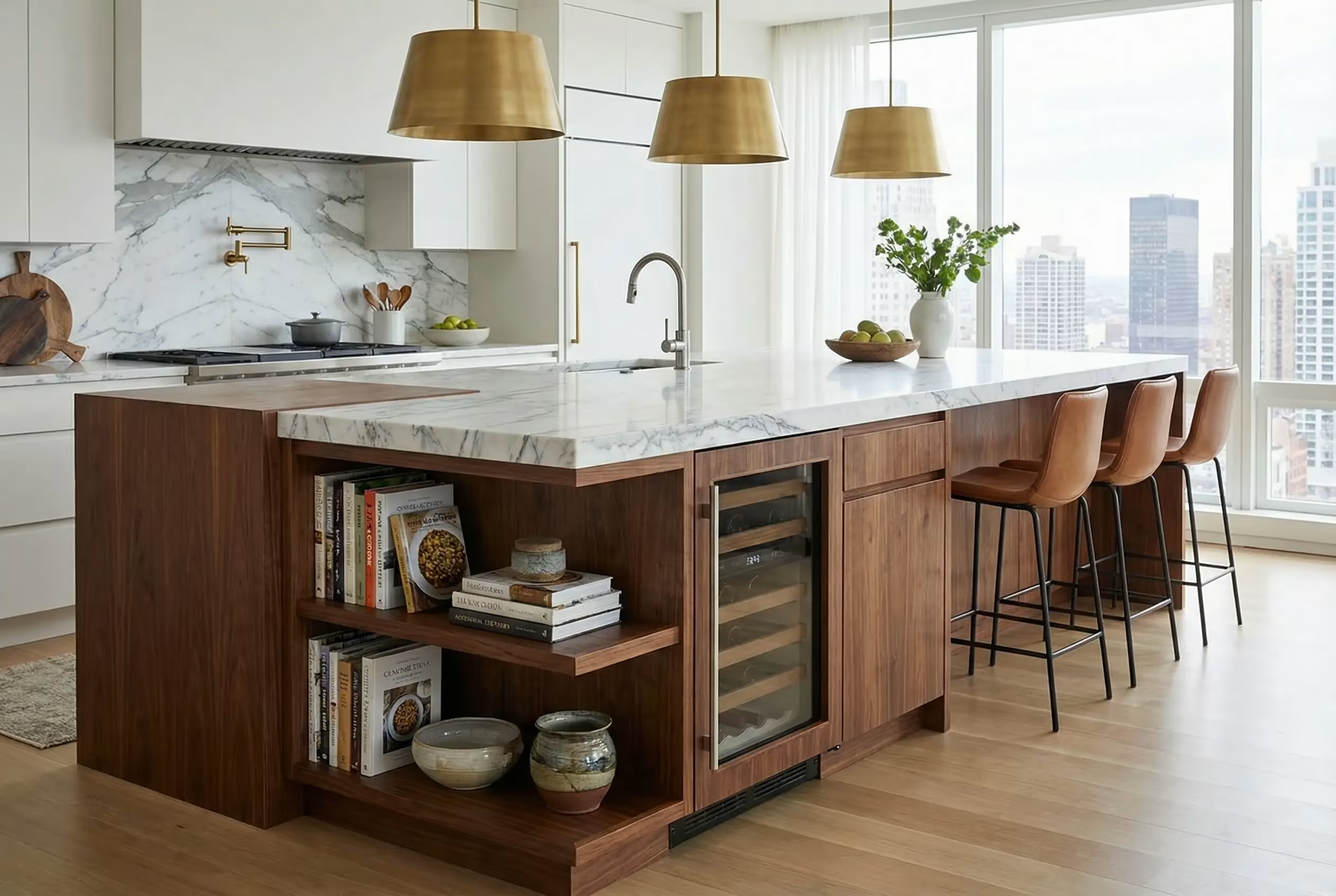
Floor-to-ceiling walnut cabinets make maximum use of vertical space – critical in Manhattan’s compact apartments – while creating a custom, built-in aesthetic that feels far more expensive than standalone furniture. Integrated appliances disappear behind matching wood panels, maintaining clean sightlines and emphasizing the material’s natural beauty.
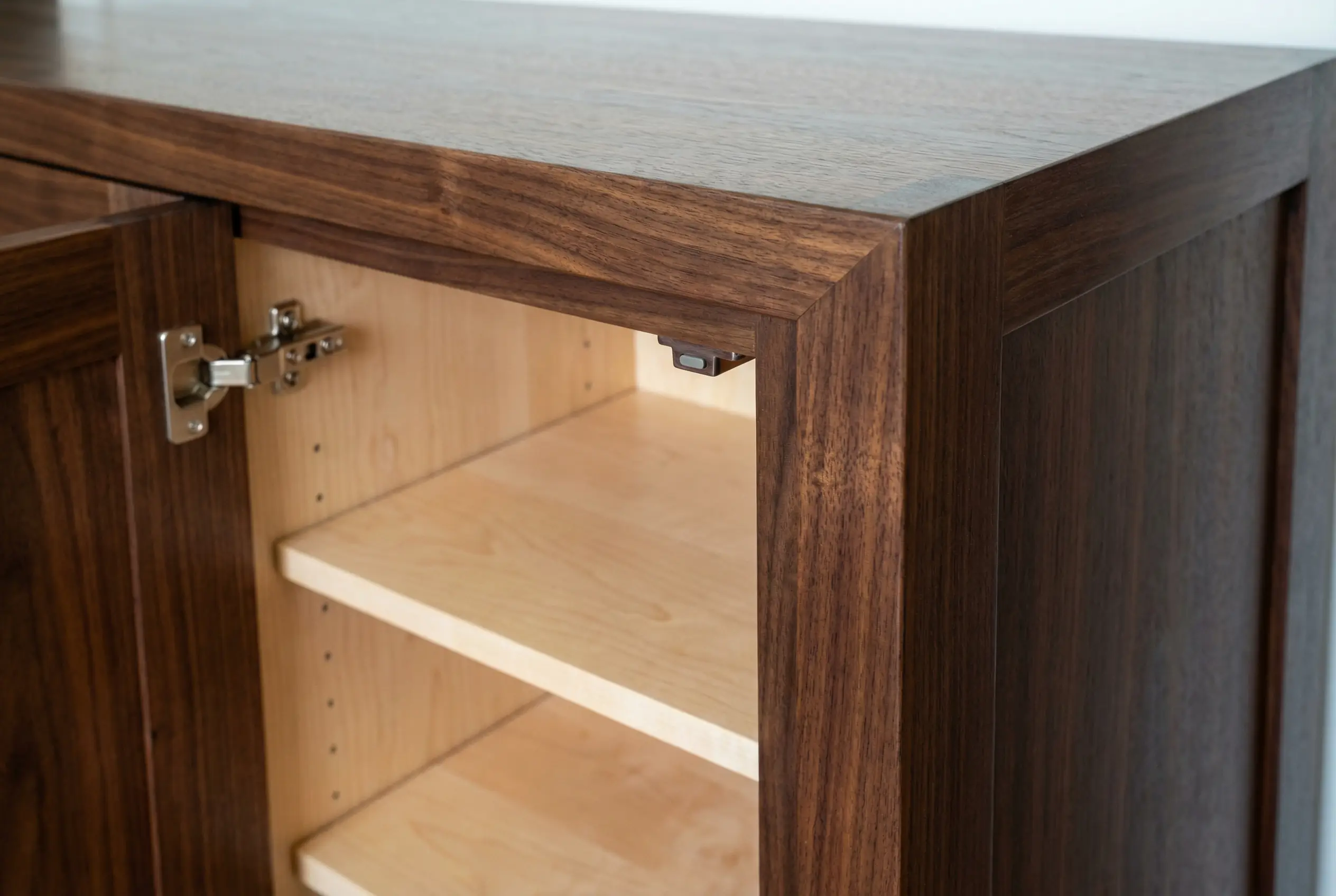
Consider mixing dark wood cabinet boxes with lighter interiors. Opening a walnut door to reveal a bright interior – perhaps in pale oak or painted white – creates delightful contrast while keeping stored items easily visible. Glass-front upper cabinets can break up expanses of dark wood while displaying curated dishware or glassware that adds personality to the space.
The kitchen island presents another prime opportunity. A substantial dark wood island anchors the space, provides essential storage and prep area, and creates a natural gathering point for casual meals or entertaining. Pairing a dark wood base with contrasting countertops – white marble, light quartz, or butcher block – adds dimensional interest while maintaining the wood’s prominence.
Millwork and Built-Ins That Define Spaces
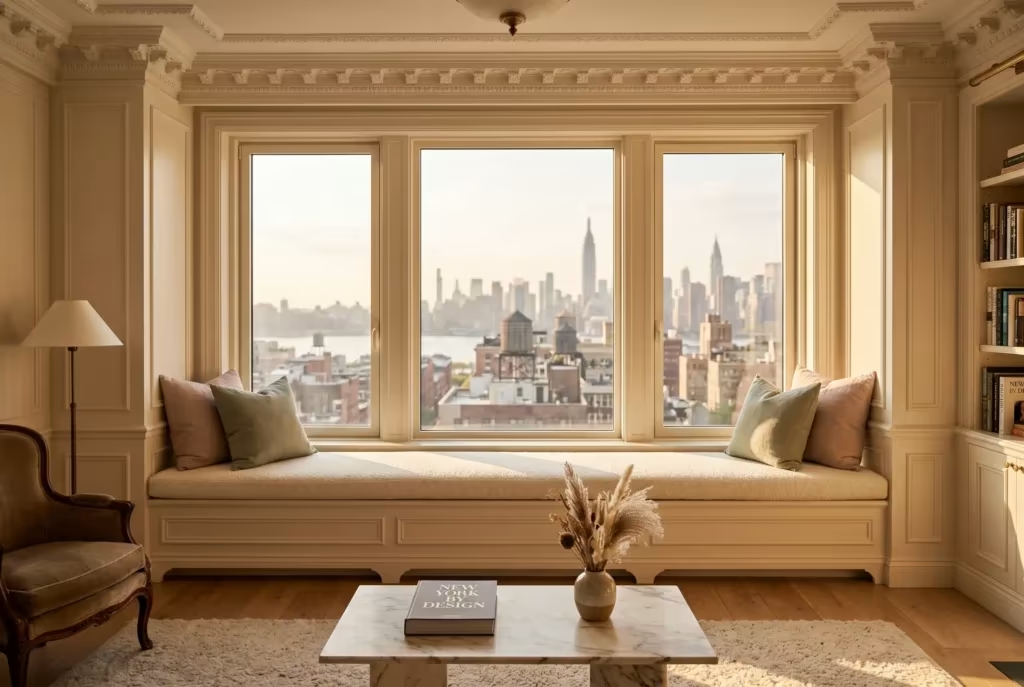
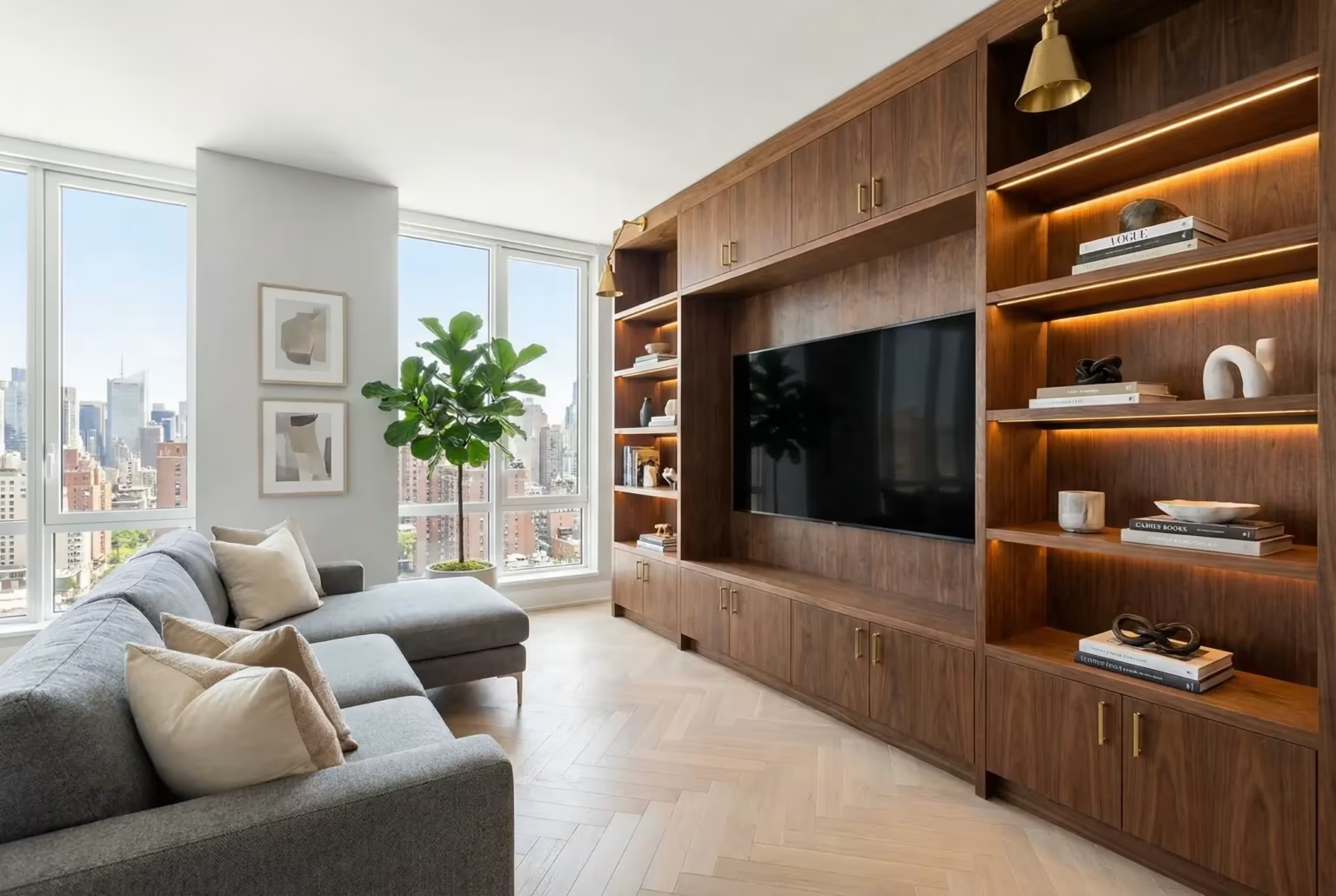
Custom millwork represents dark wood’s most sophisticated application. Unlike freestanding furniture that can appear haphazard, built-in oak or walnut installations create seamless, intentional environments that maximize Manhattan’s precious square footage. Floor-to-ceiling bookshelves, entertainment centers, or window seats in dark wood transform awkward spaces into functional, beautiful features.
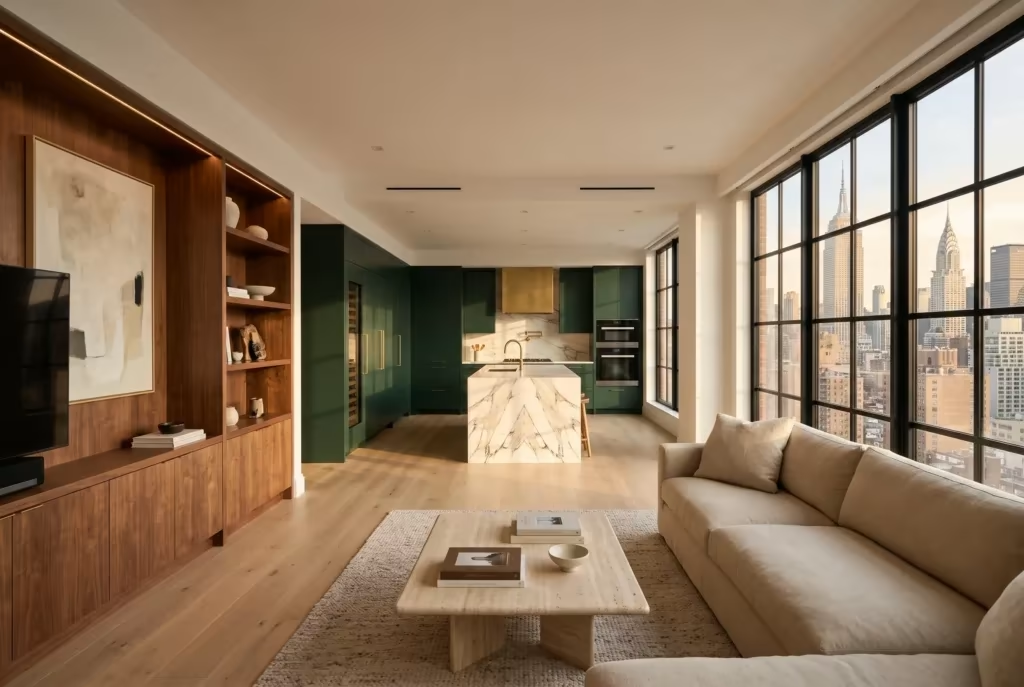
In living areas, consider a dark wood media wall that conceals electronics and storage behind elegant cabinet doors while providing display space for books, art, or collectibles. These installations create focal points that ground the room without requiring large pieces of furniture that consume floor space.
Home offices benefit enormously from dark wood millwork. Built-in desks with integrated shelving and filing create dedicated work zones that feel professional and inspiring. In Manhattan’s work-from-home era, these custom installations add both functional value and aesthetic appeal, making small spaces work harder without feeling cramped.
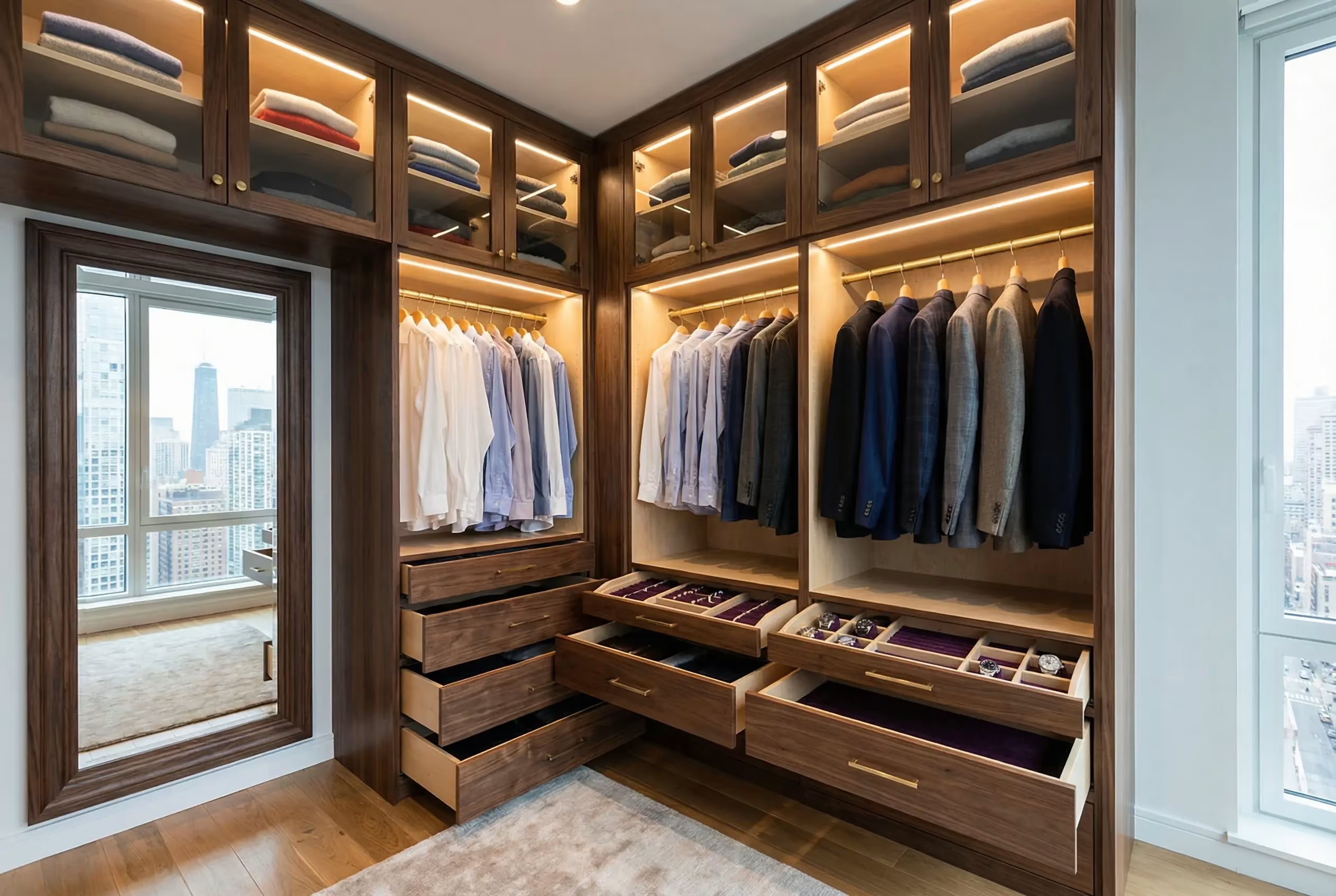
Bedroom closets and dressing areas represent another opportunity for dark wood impact. Walnut closet systems transform storage from purely utilitarian to genuinely luxurious, making the daily ritual of dressing feel special. Open wardrobe systems with dark wood framing can function as room dividers in studio or one-bedroom layouts, providing storage while maintaining sightlines.
Architectural Details and Accent Features
Sometimes the most powerful dark wood applications are the most restrained. Strategic accent features – a single dramatic element rather than comprehensive coverage – can transform a space’s character while maintaining brightness and openness.
Consider a dark wood accent wall behind a bed, sofa, or dining area. Horizontal or vertical slat installations create texture and movement while allowing some light transmission. These features provide dramatic backdrops for furniture and art without overwhelming the space.
Ceiling treatments in dark wood create unexpected sophistication. Wood beam installations or coffered ceilings in oak draw the eye upward, making rooms feel taller while adding architectural interest. This approach works particularly well in Manhattan apartments with high ceilings that might otherwise feel cavernous or impersonal.
Door and window casings in dark wood provide subtle but impactful updates. Replacing standard white trim with walnut or oak frames draws attention to architectural openings, creating visual interest without major renovation. This approach works especially well when combined with other dark wood elements, creating thematic consistency throughout the space.
Thinking about incorporating custom dark wood millwork into your Manhattan apartment? Explore our portfolio to see how expertly crafted installations can transform your space with timeless elegance.
Professional Installation: Why Expertise Matters for Dark Wood Success
The difference between a stunning dark wood interior and a disappointing one often comes down to installation quality. Dark wood is unforgiving – imperfections, poor joinery, or inadequate finishing stand out dramatically in ways they might not with lighter materials. This is particularly true in Manhattan, where close quarters mean every detail receives scrutiny.
The Precision Factor in Manhattan Spaces
Manhattan apartments rarely feature perfectly square corners, level floors, or plumb walls – especially in prewar buildings with decades of settling and previous renovations. Custom dark wood installations must account for these irregularities while appearing seamlessly precise. This requires experienced craftspeople who can scribe, shim, and adjust installations to create perfect visual alignment despite imperfect structural conditions.
Quality joinery is non-negotiable with dark wood. Visible gaps, misaligned doors, or poorly fitted panels undermine even the most beautiful walnut or oak. Professional installers use techniques like spline joints, dado grooves, and hidden fasteners that create strong, seamless connections invisible to the casual observer. This craftsmanship ensures your dark wood features look custom and intentional rather than assembled from kit components.
Finishing represents another critical expertise area. Dark wood requires careful preparation, staining, and sealing to achieve consistent color and protection. Cheaper installations often show variations in tone between adjacent panels or develop uneven wear patterns over time. Professional finishing creates uniform color, enhances grain patterns, and provides durable protection against Manhattan’s humidity fluctuations and daily wear.
Material Selection and Sourcing
Not all walnut and oak are created equal. The species, grade, cut, and source of your wood profoundly impact the final result. Quarter-sawn oak, for instance, reveals dramatically different grain patterns than flat-sawn material. Rift-sawn walnut provides the straighter, more contemporary appearance many Manhattan homeowners prefer over highly figured cathedral grains.
Experienced renovation teams maintain relationships with quality lumber suppliers and understand how to select and match wood for consistency across large installations. They can identify potential issues – knots, sapwood, or color variations – before material reaches your apartment, avoiding delays and disappointments during installation.
Sustainable sourcing has become increasingly important to Manhattan homeowners. Professional renovation companies can provide documentation verifying your dark wood comes from responsibly managed forests with FSC or similar certifications. This ensures your beautiful interior doesn’t come at environmental cost – a consideration that adds both practical and ethical value to your renovation.
Integration with Existing Architecture
Successfully incorporating dark wood into Manhattan apartments requires understanding how new installations interact with existing architectural elements. Baseboards, crown molding, door heights, and ceiling details all impact how dark wood features should be designed and installed.
Skilled renovation teams assess these relationships during the planning phase, ensuring new dark wood elements complement rather than clash with existing details. This might mean matching existing crown profiles when installing floor-to-ceiling cabinetry or carefully transitioning between different wood species or finishes in adjacent rooms.
Mechanical considerations – HVAC, electrical, and plumbing – often require creative solutions in Manhattan renovations. Professional teams coordinate between trades to route systems behind or through dark wood installations without compromising structural integrity or aesthetic appeal. This coordination prevents the common frustration of beautiful millwork interrupted by awkwardly placed vents or outlets.
Don’t leave your dark wood renovation to chance. Partner with our experienced team to ensure your Manhattan interior receives the expert craftsmanship dark wood demands, from initial design through final installation.
Maintenance and Longevity: Keeping Dark Wood Beautiful in Manhattan
One of dark wood’s greatest advantages is its durability and graceful aging – when properly maintained. Manhattan’s unique environmental conditions, from winter heating to summer humidity, require understanding how to protect your investment while allowing the wood to develop its natural patina over time.
Daily Care and Protection
Dark wood’s maintenance requirements are surprisingly modest. Regular dusting with a soft, dry microfiber cloth prevents buildup that can dull finishes over time. For cabinets and millwork that see frequent contact, occasional cleaning with a lightly dampened cloth followed by immediate drying maintains beauty without risking moisture damage.
Avoid commercial cleaning products containing silicones, ammonia, or harsh detergents, which can damage protective finishes or leave residue that attracts dirt. When necessary, use cleaners specifically formulated for finished wood or simple solutions of mild soap and water, always applied to the cloth rather than directly to wood surfaces.
Protecting dark wood from moisture is crucial in Manhattan kitchens and bathrooms. Wipe up spills immediately, use cutting boards rather than working directly on wood surfaces, and ensure adequate ventilation in humid spaces. These simple habits prevent water rings, staining, and the finish degradation that can occur with repeated moisture exposure.
Seasonal Considerations and Environmental Control
Manhattan’s dramatic seasonal shifts – from winter’s dry, heated air to summer’s humidity – can stress wood installations. During heating season, consider using a humidifier to maintain indoor humidity between 35-45%, preventing excessive drying that can cause wood to shrink or crack. Conversely, summer dehumidification prevents excessive expansion and potential warping.
Monitor your dark wood features seasonally, particularly during extreme weather. Small gaps appearing between boards during dry winter months typically close again as humidity returns – this is normal wood behavior rather than installation failure. However, persistent or growing gaps may indicate environmental control issues worth addressing.
UV protection matters, especially for dark wood near windows. While less obviously prone to fading than lighter woods, prolonged sun exposure can cause walnut and oak to lighten or develop uneven coloration. Window treatments or UV-filtering films on south and west-facing windows protect your investment while maintaining the natural light that makes dark wood shine.
When Professional Refinishing Makes Sense
Quality dark wood installations in Manhattan can last decades with basic maintenance, but eventually may benefit from professional refinishing. Surface scratches, wear patterns in high-traffic areas, or changes in aesthetic preference can all prompt refinishing consideration.
Unlike replacement, refinishing allows you to preserve existing installations while refreshing their appearance. This might involve lightly sanding to remove surface damage, restaining to adjust color intensity, or applying new protective finishes to restore luster. Professional refinishing is typically far more economical than replacement and can be completed with minimal disruption to your daily life.
The timing for refinishing varies based on use patterns and initial finish quality. Kitchen cabinets seeing daily use might benefit from refinishing after 10-15 years, while bedroom millwork in low-traffic areas might remain beautiful for decades without intervention. Annual inspections by professional craftspeople can help you stay ahead of maintenance needs rather than reacting to obvious deterioration.
Repair Considerations for Long-Term Value
When damage does occur – a deep scratch, dent, or hardware failure – professional repair maintains your dark wood installation’s integrity and value. Attempting DIY fixes often creates more visible problems than the original damage, particularly with stained and finished surfaces where color matching requires expertise.
Professional repair specialists can blend repairs invisibly into existing finishes, replace damaged components with perfectly matched materials, and address underlying issues that might have contributed to the damage. This attention to detail preserves both the beauty and resale value of your Manhattan property.
Consider establishing a relationship with a renovation company that offers ongoing maintenance and repair services. We provide maintenance support for our installations, ensuring the dark wood features that transform your Manhattan apartment today remain beautiful for decades to come.
Transform Your Manhattan Space with Timeless Dark Wood Elegance
The dark wood renaissance sweeping Manhattan interiors represents more than aesthetic trend – it’s a fundamental shift toward spaces that feel grounded, luxurious, and deeply personal. As we’ve explored, rich walnut and oak installations offer unmatched versatility, timeless appeal, and tangible value that continues appreciating long after installation.
Whether you’re envisioning a dramatic dark wood kitchen Manhattan transformation, custom millwork that maximizes your apartment’s unique architecture, or strategic accent features that anchor your design vision, the key to success lies in balancing material drama with Manhattan’s light conditions and partnering with experienced craftspeople who understand both the technical and aesthetic dimensions of working with these beautiful materials.
The biophilic design movement confirms what homeowners instinctively know: natural materials like dark wood create healthier, more emotionally resonant environments. In Manhattan’s dense urban landscape, these organic elements provide crucial connection to nature while delivering the sophisticated aesthetic modern residents demand. Your home should be a sanctuary, not just a place to sleep – and thoughtfully integrated dark wood helps create that transformative experience.
Now is the ideal time to explore how dark wood can elevate your Manhattan interior. The trend’s momentum means access to skilled craftspeople, diverse material options, and design inspiration, while incorporating these features now positions your property advantageously in the competitive NYC real estate market.
Ready to begin your dark wood transformation? Contact us today to schedule a consultation. Our experienced team will assess your space’s unique characteristics, discuss your vision, and develop a customized plan that brings the warmth, sophistication, and timeless beauty of walnut and oak into your Manhattan home. Don’t settle for ordinary when extraordinary is within reach – discover how expertly crafted dark wood installations can transform your living experience.
Frequently Asked Questions About Dark Wood in Manhattan Interiors
Will dark wood make my small Manhattan apartment feel even smaller?
Not when implemented correctly. The key is strategic placement and proper lighting design. Dark wood actually creates depth and dimension that can make spaces feel more sophisticated rather than smaller. Focus on vertical installations like floor-to-ceiling cabinetry that draw the eye upward, and ensure adequate layered lighting including under-cabinet, task, and accent fixtures. Many compact Manhattan apartments feel significantly more spacious and intentional with carefully placed dark wood features than with all-light finishes that can feel flat and characterless.
How do I choose between walnut and oak for my Manhattan renovation?
Both walnut and oak offer distinct aesthetic qualities. Walnut features rich brown tones with purple undertones and dramatic grain patterns – ideal if you want statement-making drama and contemporary sophistication. Oak ranges from warm honey tones in white oak to reddish-browns in red oak, with prominent grain that reads as more traditional. Consider your existing architecture (prewar buildings often pair beautifully with oak’s classic appeal, while modern construction suits walnut’s contemporary character), your color palette preferences, and which wood species appears elsewhere in your home. Many successful Manhattan interiors actually combine both species in different rooms, creating variety while maintaining natural material consistency.
Is dark wood harder to maintain than lighter wood or painted cabinets?
Surprisingly, no. Dark wood actually shows dust and fingerprints less obviously than very light woods or painted surfaces. The key maintenance requirement is protecting the finish from moisture and using appropriate cleaning products. Regular dusting and occasional wiping with appropriate wood cleaners keeps dark wood looking beautiful with minimal effort. Quality finishes applied during professional installation provide durable protection against daily wear, often outperforming painted surfaces that can chip or show wear patterns more readily. The perception that dark wood requires intensive maintenance is largely myth – proper installation and basic care ensure decades of beauty.
Can I incorporate dark wood if my apartment doesn’t have great natural light?
Yes, with careful planning. Limited natural light doesn’t disqualify dark wood – it simply requires more intentional artificial lighting design. Focus on creating multiple light sources at varying heights, install ample under-cabinet and toe-kick lighting in kitchens, and use dark wood as accent features rather than covering every surface. Consider lighter wood species like white oak rather than deep walnut if light is severely limited. Many north-facing Manhattan apartments feature stunning dark wood installations that feel warm and inviting thanks to sophisticated lighting strategies. A professional consultation can assess your specific conditions and develop solutions that make dark wood work beautifully in your space.
How does dark wood renovation impact my Manhattan apartment’s resale value?
Quality dark wood installations typically enhance property value significantly, particularly in Manhattan’s competitive market. Buyers recognize the permanence and luxury of solid wood cabinetry and custom millwork versus lower-quality alternatives. Dark wood signals that renovations were done with quality materials and attention to detail, commanding premium prices. However, execution quality matters enormously – poor installation or inappropriate placement can detract from value. Professional renovation using quality materials and expert craftsmanship represents sound investment that you’ll enjoy while living in your apartment and recover when selling. This is especially true for kitchens, where dark wood cabinetry has become synonymous with high-end Manhattan renovations that buyers actively seek.